Best Bow Saw for Cutting Trees and Pruning in the Yard
The best bow saws for cutting trees combine sturdy frames, sharp blades, and comfortable grips for efficient pruning and limb removal. This guide reviews five popular options, highlighting blade quality, tension systems, and suitability for green wood, dry wood, or brush clearing. Each pick balances durability, ease of use, and replacement convenience to help you tackle yard projects with confidence.
| Product | Brand | Core Strength | Best For |
|---|---|---|---|
| Bahco 10-24-23 Bow Saw | Bahco | High blade tension, Ergo handle | Construction sites, tough environments |
| Bahco 332-21-51 21 Inch Bow Saw | Bahco | Pointed nose for tight spaces | Pruning and roofing work |
| GreatNeck BB24 Bow Saw | Great Neck | Tubular steel frame, quick blade changes | Tree trimming and brush clearing |
| Truper AJT-21 Bow Saw | Truper | Cam-lever tension, field-ready | Larger branches in the field |
| Bahco 10-30-23 30-Inch Ergo Bow Saw | Bahco | Long blade for green wood | Green wood cutting and heavy-duty use |
When selecting a bow saw, consider blade length, frame strength, tension systems, and blade compatibility. Longer blades reach deeper into logs and branches but require steadier control. A tubular steel frame typically offers rugged durability, while a comfortable ergonomic handle reduces fatigue during long sessions. Replacement blades should be readily available, and quick-release tension mechanisms can save time between cuts. This overview focuses on models that balance performance with practical features for American yards and typical outdoor projects.
Bahco 10-24-23 Bow Saw With Ergo Handle
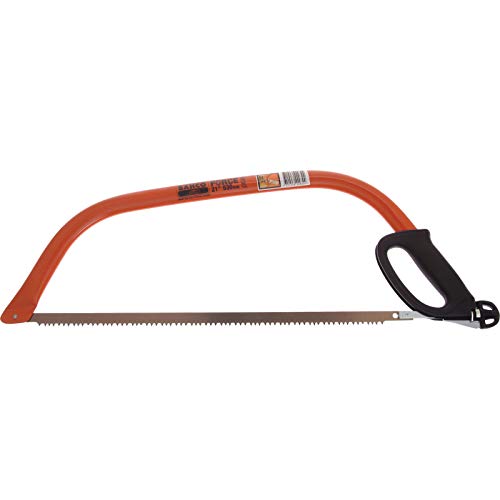
The Bahco 10-24-23 is designed for demanding construction-site tasks and tough environments. It features an innovative tensioning mechanism that achieves high blade tension for straight, clean cuts, and an ergonomic handle with a knuckle protector for comfort and safety during extended use. Its 24-inch blade length provides a versatile balance between reach and control, making it suitable for pruning large branches and felling smaller limbs. The saw’s robust construction supports frequent, heavy-duty cutting tasks in yard and job-site settings.
Bahco 332-21-51 21 Inch Pointed Nose Bow Saw

The Bahco 332-21-51 is a compact, 21-inch bow saw with a pointed nose designed for tight spaces. Its streamlined profile makes pruning and roofing work more precise when logs or branches are in awkward positions. This model emphasizes portability without sacrificing blade performance, ideal for homeowners who need a versatile saw for smaller limbs or pruning tasks in tight spots. The pointed nose helps navigate around obstacles and reach stubborn knots with less effort.
GreatNeck BB24 Bow Saw 24″

The GreatNeck BB24 features a tubular steel frame for durable, long-lasting performance in outdoor tasks such as pruning, brush clearing, and cutting dry wood. It supports quick blade changes with an action blade tightener release, minimizing downtime. The chrome alloy blade is described as especially hard, delivering efficient cuts through thick branches and logs up to about 6-1/2 inches deep. This model suits homeowners and professionals needing a robust, easy-to-maintain bow saw for regular tree care work.
Truper AJT-21 21″ Bow Saw Tubular Steel Frame

The Truper AJT-21 is a 21-inch bow saw built on a tubular steel frame. It comes with a cam-lever tension system to keep the blade tight during field work, promoting consistent cuts on larger branches. The design also emphasizes ease of maintenance, advising users to clean the equipment after each use and oil it for longevity. This model is well-suited for ongoing yard tasks where reliable tension control and straightforward maintenance are priorities.
Bahco 10-30-23 30-Inch Ergo Bow Saw

The Bahco 10-30-23 offers a longer 30-inch blade designed to cut through green wood efficiently. Its Ergo bow saw construction emphasizes comfort during extended use and targets demanding applications common on construction sites. The longer blade length enhances reach for larger limbs while maintaining cutting power and stability, making it a strong option for yard projects that involve thick, living wood.
Buying Guide
Key considerations for choosing a bow saw include blade length, frame durability, and tension mechanisms. Longer blades increase reach but can be harder to control; ensure the frame feels sturdy in your hand. Look for quick-release or cam-lever tension systems to minimize downtime and ensure consistent blade tension. For pruning and brush clearing, blades optimized for green wood offer smoother cuts and longer life. If you frequently work in tight spaces, a model with a pointed nose can improve maneuverability. Replacement blades and readily available spare parts should factor into your decision to reduce long-term maintenance costs.
When evaluating options, compare blade materials—chromium or hardened steels tend to hold an edge longer. Ergonomics matter: a knuckle guard and comfortable handle reduce fatigue, especially during back-and-forth cutting sessions. For yard tasks, a robust tubular steel frame balances weight and durability, while quick blade changes reduce downtime between cuts. Consider your typical project scope—small pruning versus thick, dry limbs—and select a model that aligns blade length, tensioning ease, and maneuverability with your normal workflow.
Performance varies with wood type. Green wood responds well to sharper, open-cut blades and stable frame tension. Dry wood requires robust blade toughness to resist dulling and bending. For mixed tasks, a versatile bow saw with good blade change options and reliable tension control provides the best overall value. Always follow manufacturer maintenance guidelines for lubrication, blade care, and storage to extend tool life.