Best Brush Cutter for Small Trees: Top Tools for Clean, Healthy Landscaping
Choosing the right brush cutter setup for small trees means balancing cutting power, maneuverability, and blade durability. This guide highlights five top options that help trim saplings, dense brush, and limb growth efficiently while protecting plant health. Each pick emphasizes compatibility with straight-shaft trimmers, ease of installation, and fast, clean cuts suited to residential yards and small-scale forestry tasks.
| Product | Brand | Image | Key Benefit |
|---|---|---|---|
| Fiskars 28″ Loppers for Tree Trimming | Fiskars | 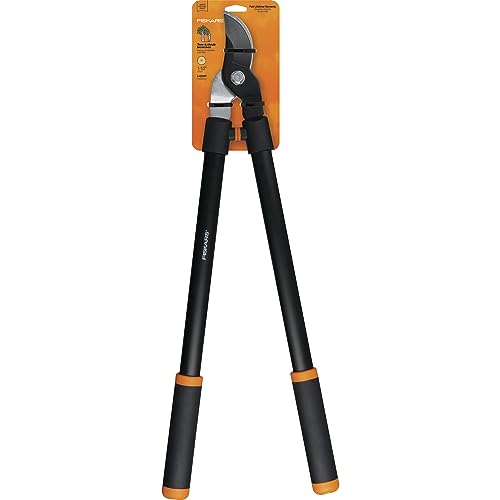 |
Excellent leverage for thicker branches up to 1.5″ dia. |
| FORESTER Chainsaw Brush Cutter Blade + File Set 9″ x 20 Teeth | FORESTER |  |
Heavy-duty chainsaw teeth for fast, aggressive cuts. |
| FORESTER Chainsaw Brush Cutter Blade 7″ x 14 Teeth | FORESTER | 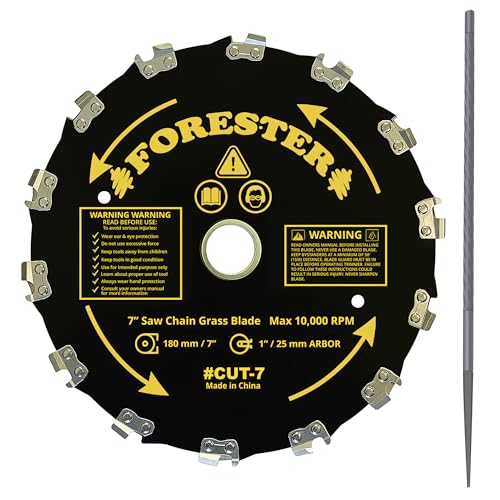 |
Smaller diameter blade for precise control on tight spaces. |
| FORESTER Carbide Tip Brush Cutter Blade 8″ x 40 Teeth | FORESTER |  |
Carbide tips deliver sharper cuts and longer life. |
| AR-PRO 9″ x 36 Teeth Carbide Tip Brush Blades | AR-PRO |  |
Fiskars 28″ Loppers for Tree Trimming
The Fiskars 28″ loppers feature a steel bypass blade designed to glide through branches up to 1.5 inches in diameter. The long handle provides substantial leverage for easier cuts, which helps maintain plant health by reducing tearing at the pruning site. A rust-resistant coating on the blade reduces corrosion over time, while a non-slip grip improves control during pruning sessions. This tool is well-suited for pruning tree limbs and larger shrubs in home landscapes, complementing brush cutter use by preparing larger branches for removal.
FORESTER Chainsaw Brush Cutter Blade 9×20 Teeth
This nine-inch chainsaw-tooth brush cutter blade is designed for straight-shaft trimmers and provides aggressive cutting performance for saplings, thick brush, and small trees up to several inches in diameter. An included file helps maintain edge sharpness, and compatibility notes emphasize the need for the appropriate conversion kit for brush cutter setups. The 20mm bushing and 1-inch arbor hole support a range of standard trimmer configurations, enabling faster cleanup of overgrown yard areas with fewer passes.
FORESTER Chainsaw Brush Cutter Blade – 7×14 Teeth
This 7-inch brush cutter blade with 14 teeth focuses on maneuverability in tighter spaces while still delivering chainsaw-like cutting power. It fits most straight-shaft trimmers and uses a 1-inch arbor hole with a 20mm bushing for adaptable installation. The blade is designed for heavy-duty work on dense brush and smaller trees, helping you clear undergrowth without excessive effort. A conversion kit is often required for seamless fit with your existing trimmer head.
FORESTER Carbide Tip Brush Cutter Blade 8×40 Teeth
With carbide-tipped teeth, this eight-inch blade is built for longevity and efficient cutting through tough brush and saplings. It’s designed for straight-shaft trimmers and includes a universal adapter kit to simplify installation across a range of trimmer brands. The carbide tips deliver cleaner cuts with less vibration, which can help protect the health of nearby trees and reduce pruning-related stress on the plants.
AR-PRO 9″ x 36 Teeth Carbide Tip Brush Blades
This 9-inch blade features 36 carbide-tipped teeth for fast, aggressive cuts through dense undergrowth and small trees. The carbide tips sharpen less frequently than standard steel, extending blade life under demanding conditions. A universal adapter kit ensures compatibility with most straight-shaft trimmers, simplifying upgrades for homeowners seeking more capable brush-cutting performance without replacing the entire trimmer.
Buying Guide: Key Purchase Considerations
- Target task and blade size: For small trees and dense brush, larger blades (8–9 inches) with many teeth offer quicker clearance, while smaller blades excel in tight spaces and precise pruning around delicate trees.
- Material and teeth: Carbide-tipped teeth stay sharp longer and cut more cleanly through tough vegetation. Consider blades with 20–40 teeth depending on intended density of brush.
- Shaf t compatibility: Most blades fit straight-shaft trimmers. Check arbor size (commonly 1 inch) and any required bushings or adapters to ensure secure mounting.
- Installation and conversion: Some blades require a conversion kit to adapt a standard trimmer head to brush cutter use. Verify compatibility with your specific model and brand.
- Durability and maintenance: Look for blades designed for rust resistance and easy edge maintenance. A included file can help maintain cutting efficiency between sharpenings.
- Safety: Use appropriate protective gear and follow manufacturer instructions for installation and operation to minimize kickback and injury risk.
- Budget vs. longevity: Carbide-tipped blades may have a higher upfront cost but longer life in demanding conditions, reducing replacement frequency.
- Plant health impact: Choose blades that provide clean, controlled cuts to minimize wounding on trees and shrubs and reduce disease exposure.