Best Cement Paint for Garage Floor: Top Coatings for Durability and Finish
Choosing the right cement paint for a garage floor involves balancing durability, ease of application, and suitability for indoor and outdoor use. The following selections highlight epoxy acrylic and latex options that resist scuffs, chemical exposure, and wear from vehicle traffic. Each product menu item includes a brief overview of its strengths, surface compatibility, and application notes to help homeowners and contractors compare options quickly.
| Product | Finish | Surface | Best For |
|---|---|---|---|
| KILZ Slate Gray 1-Part Epoxy | Satin | Interior/Exterior Concrete | Basements, Garages, Porches |
| KILZ Silver Gray 1-Part Epoxy | Satin | Interior/Exterior Concrete | Garages, Driveways, Pool Decks |
| Rust-Oleum 320172 Concrete & Garage Floor Paint | Satin | Concrete & Garage Floors | Outdoor/Indoor Horizontal Surfaces |
| DWIL Garage Floor Epoxy Kit | High-Gloss | Concrete | Garage high-traffic areas |
| Rust-Oleum 251965 EPOXYSHIELD Kit | Gloss | Interior Concrete | Garage floors and workshops |
KILZ 1-Part Epoxy Acrylic Concrete & Garage Floor Paint, Slate Gray

KILZ Slate Gray 1-Part Epoxy Floor Paint is a durable epoxy acrylic coating designed for concrete floors in garages, basements, porches, and driveways. The satin finish offers a balanced sheen that hides minor surface imperfections while withstanding scuffing, fading, and wear from tire traffic. Suitable for interior and exterior use on properly prepared porous concrete, masonry, stone, and brick, it is not recommended for vertical surfaces or areas with hydrostatic pressure. Residential use ensures a broad, approachable option for DIY projects.
KILZ 1-Part Epoxy Acrylic Concrete & Garage Floor Paint, Silver Gray

This Silver Gray version shares the same epoxy acrylic formula as the slate variant, offering similar durability and a satin finish ideal for concrete floors in basements, garages, porches, driveways, and pool decks. It’s designed for horizontal surfaces indoors or outdoors and works best on properly prepared, porous concrete, masonry, stone, or brick. As with other 1-part epoxy products, it isn’t intended for areas exposed to hydrostatic pressure or forklift traffic, but it provides reliable protection for residential spaces.
Rust-Oleum 320172 Concrete & Garage Floor Paint and Primer

This Rust-Oleum kit combines a 1-part epoxy acrylic coating with primer for concrete and garage floors, delivering UV and weather resistance for enhanced outdoor performance. The satin finish provides a low-glare look that’s easy to clean and maintain on exterior and interior horizontal surfaces. Ideal for garages, basements, porches, and driveways, it’s a user-friendly option for improving surface longevity and appearance in mixed environments.
DWIL Garage Floor Epoxy Kit

The DWIL kit emphasizes durability with a high-gloss finish designed to reflect more light and create a cleaner, brighter garage space. Its water-based formulation keeps odor and VOCs lower, helping indoor air quality during application. The kit claims a 5-10 year lifespan, providing long-term protection against vehicle traffic and drag marks. Fast-curing characteristics allow foot traffic within 2-3 hours and vehicle traffic after about a week, minimizing downtime for typical garages.
Rust-Oleum 251965 EPOXYSHIELD Garage Floor Coating Kit
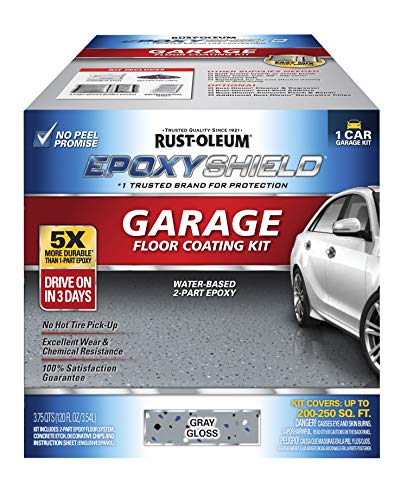
This Rust-Oleum two-part epoxy kit is specifically designed for interior concrete surfaces like garage floors and workshops. It yields a professional glossy finish and offers long-lasting protection that is notably harder than some 1-part epoxies. A short walk-on time (24 hours) followed by a few days to drive-on readiness (about 3 days) makes it suitable for busy spaces that need reliable coverage with robust cure times.
Buying Guide: Key Considerations For Choosing Cement Paint For Garage Floors
- Traffic and durability: For garages with frequent vehicle movement, prioritize epoxy-based coatings or two-part epoxy systems that resist hot tire pickup, abrasion, and chemical exposure.
- Finish and appearance: Satin finishes hide surface imperfections well, while high-gloss finishes maximize light reflection in dim garages. Choose based on preference and maintenance ease.
- Indoor vs. outdoor exposure: Some products are formulated for both indoor and outdoor use, but verify that the coating can withstand sun exposure, temperature fluctuations, and moisture if applicable.
- Surface preparation: Proper cleaning, etching, and priming are critical for adhesion and longevity. Follow manufacturer guidelines for porous concrete, masonry, or brick surfaces.
- Cure time and downtime: Consider downtime required before usable space. Single-component products generally cure slower than two-component systems; faster curing products reduce disruption.
- Safety and VOCs: Water-based or low-VOC formulas are preferable for better indoor air quality, especially in attached garages or living spaces nearby.
- Maintenance: Choose finishes that are easy to clean and resist staining; lighter colors may show wear sooner but can brighten spaces when well maintained.
- Application tools and kits: Some kits include rollers, trays, or rollers suited for DIY projects, while others may require additional tools or professional installation for best results.
- Warranty and coverage: Coverage area and warranty terms vary; verify the expected square footage per gallon and ensure it aligns with the garage size.
In summary, the best cement paint for a garage floor depends on traffic, climate, and maintenance preferences. The options above provide various finishes, cure times, and application profiles to fit most residential projects—from quick-drying, low-VOC acrylic coatings to robust epoxy systems meant for heavy use. When choosing, align the product type and finish with your garage’s exposure, prepare thoroughly, and follow the manufacturer’s instructions for best results.