Best Ceramic Honing Rods for Sharper Kitchen Knives in 2025
Finding the right ceramic honing rod can improve edge maintenance for chef knives, santokus, paring knives, and serrated blades. Ceramic rods offer a harder, finer surface than steel sharpeners, enabling precise edge refinement without excessive material removal. This guide compares five top ceramic honing rods, highlighting angle guides, grit options, safety features, and ergonomic design to help American cooks choose a dependable tool for daily use.
Summary of Selected Products
| Product | Brand | Grit/Finish | Key Benefit |
|---|---|---|---|
| Work Sharp Kitchen Ceramic Honing Rod | WORK SHARP | Fine ceramic (unspecified grit) | Angle guides for repeatable honing, stabilizing rubber tip |
| Sharpeak 17.5″ Ceramic Rod | sharpeak | 3000 Grit | Built-in angle guides and anti-breaking cap |
| Kimura 10″ Ceramic Honing Rod | Kimura | 1200 Grit | Ergonomic handle, versatile for many knives |
| Green Elephant 11″ Ceramic Rod | Green Elephant | 1500 Grit | Lightweight with vibration-absorption design |
| SHARPAL 118H Ceramic Rod | SHARPAL | 3000 Grit | Built-in 20-degree guide, anti-break cap |
Work Sharp Kitchen Ceramic Honing Rod

The Work Sharp ceramic honing rod uses built-in angle guides to deliver a consistent sharpening angle. The rod’s ceramic surface removes only a small amount of material to refine blades back to a working edge. A rubber-tipped end stabilizes the rod on a cutting board or bench, helping users hone safely and efficiently. Ideal for chefs seeking repeatable results without heavy material removal.
Sharpeak Ceramic Sharpening Rod 17.5″ (3000 Grit)

Sharpeak offers a long 17.5-inch rod with 3000-grit ceramic wear. It includes built-in 20-degree angle guides and a hexagonal hand guard that prevents rolling, contributing to safer use. The ceramic material is described as harder than steel, helping to polish and refine edges with high abrasion resistance for durable performance.
Kimura 10 Inch Professional Ceramic Honing Rod

Kimura’s 10-inch honing rod uses a pure white ceramic with a 1200-grit finish. The polypropylene handle is non-slip and ergonomically shaped to provide comfort and steady control during honing. This rod is positioned as highly versatile for knives of various sizes and shapes and includes a hanging loop for convenient storage.
Green Elephant Ceramic Sharpening Rod — 11 Inch
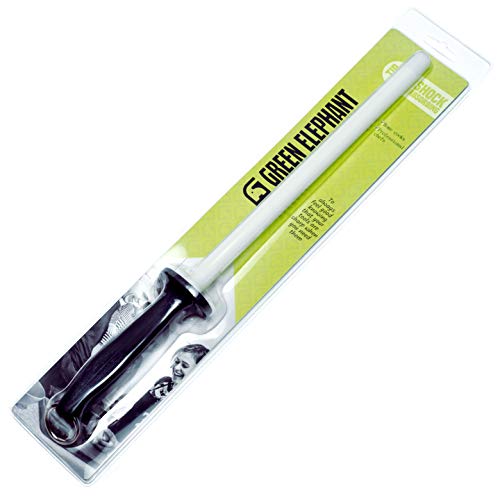
Green Elephant emphasizes durability with a 9 Mohs ceramic rating and 1500-grit surface. The rod includes a shock-absorbing design to reduce risk of shattering if dropped and a lightweight handle for comfortable use. This model aims to balance rugged reliability with user-friendly handling for professionals and home cooks alike.
SHARPAL 118H Ceramic Honing Rod

SHARPAL’s 118H provides built-in 20-degree angle guides and a durable 3000-grit ceramic surface. The hexagonal hand guard helps prevent rolling during use and adds safety. This option is designed for consistent precision when fine-tuning edges on a variety of kitchen blades.
Arkansas Sharpeners Ceramic Rod
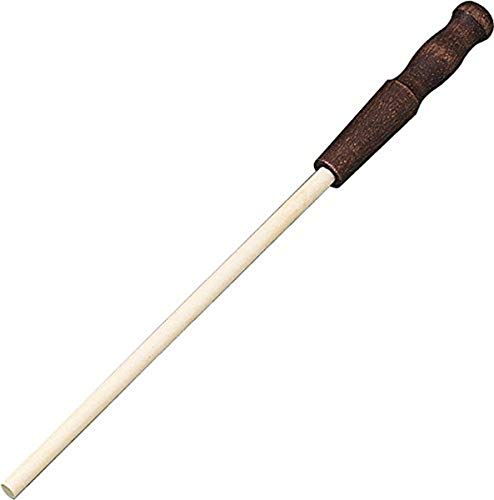
Arkansas Sharpeners presents a traditional 11.5-inch ceramic rod with a wood handle. The product emphasizes American manufacturing and bulk-packed presentation. It is positioned for cooks who favor a classic wooden-handle design and a reliable honing rod for everyday knife upkeep.
Noble Home & Chef Ceramic Honing Rod
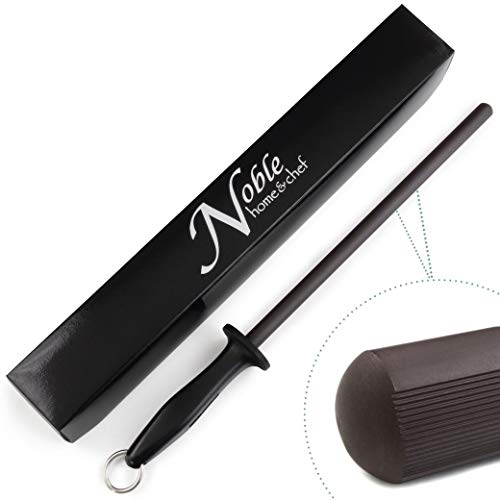
Noble Home & Chef offers a dual-grit option on a single rod, with 2000 and 3000 grit surfaces. The design emphasizes high-quality Japanese ceramic, two-grit versatility, and a firm grip without plastic or rubber tips at the end, aiming to protect knife edges while delivering controlled honing sessions.
Mac Knife Ceramic Honing Rod
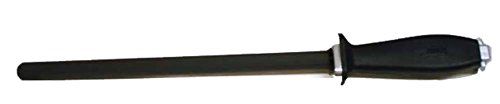
Mac Knife’s 10-1/2-inch black ceramic honing rod emphasizes edge refreshment for Mac knives, with a note that black ceramic tends to be harder than white ceramic or steel and does not rust. This model focuses on maintaining sharp edges specifically for Mac blade lines, offering a straightforward honing option.
Buying Guide: Key Considerations For Ceramic Honing Rods
Blade type and edge maintenance goals vary by kitchen. When choosing a ceramic honing rod, consider grit level, angle guides, and safety features. Grit affects refinement speed and final edge polish; higher grit like 3000 provides a razor-like finish, while lower grit is more aggressive for dulled edges. Built-in angle guides help ensure consistent honing across sessions, especially for home cooks who value repeatability.
Handling and safety features are important. Rods with anti-roll guards, hexagonal hand guards, or textured handles reduce slipping and accidental contact with the blade. Some models include vibration absorption or shock-resistant construction to guard against accidental drops in busy kitchens. The rod’s length should suit your knife collection; longer rods work well for chef and santoku knives, while shorter rods fit paring knives and travel setups.
Material quality and compatibility with knife steel are critical. Ceramic is typically harder than steel and can refine edges without removing excessive material. Some rods use Japanese ceramic, renowned for uniformity and durability, while others emphasize rustic or domestic ceramic formulations. For serrated or specialty blades, verify that the honing rod can safely contact the edge without chipping.
Maintenance and storage also matter. Look for ergonomic handles, hanging loops, or storage features that help keep the rod protected and accessible. A rod with a hanging loop is convenient for kitchens with limited drawer space. Finally, consider price-to-performance balance and durability in relation to your knife arsenal and how often you sharpen.