Best Ceramic Rods for Knife Sharpening: Precision Honing for Every Kitchen
Ask for a reliable ceramic honing rod and you’ll get a tool that realigns edges, reduces the frequency of full sharpenings, and protects delicate blades. This guide highlights five ceramic honing rods that suit different cooks—from pros seeking pro-level edge maintenance to home chefs wanting simple, safe honing. Each option is evaluated for best use case, comfort, and potential limits so you can choose with confidence.
| Product | Best For | Key Benefit |
|---|---|---|
| Shenzhen Knives White Ceramic Knife Sharpener Honing Rod | Professional kitchens, frequent sharpeners | High hardness and 1000 grit for edge realignment |
| Kimura Professional Ceramic Honing Rod, 10 Inch | All-purpose home cooks | 1200 grit finish for smooth honing |
| Work Sharp Kitchen Ceramic Honing Rod | Home cooks who use angle guides | Built-in angle guides for repeatable honing |
| Arkansas Sharpeners Ceramic Sharpening AC46 | Traditional wood-handled, US-made kits | Wood handle and simple ceramic surface |
| SHARPAL 118H Ceramic Honing Rod | Precision and safety-focused users | 20-degree built-in guides and anti-break cap |
Buyer profile guidance: choose a rod with a higher grit for refined edge polishing; a built-in angle guide benefits beginners or busy kitchens; a comfortable handle and guard improve safety for longer honing sessions.
Shenzhen Knives White Ceramic Knife Sharpener Honing Rod
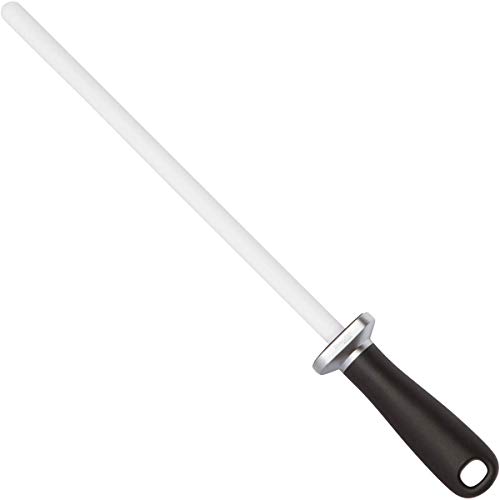
Best for professional sharpening routines, this 12-inch white ceramic honing rod emphasizes durability and edge realignment. Features note a 68 HRC ceramic rating and a slightly abrasive 1000 grit finish designed to realign the edge rather than remove heavy material.
Who it’s for: chefs and serious home cooks needing consistent edge maintenance without frequent complete reshaping. Why selected: superior hardness supports frequent use with hard steel knives. Limitation: realignment focus means heavy regrinding tasks still require a dedicated sharpener.
Kimura Professional Ceramic Honing Rod, 10 Inch

Best for general kitchen use with a focus on comfort, this 10-inch rod uses a 1200 grit finish and a non-slip polypropylene handle for steady honing. It is versatile enough for a range of chef knives and can be stored easily with a hanging loop.
Who it’s for: home cooks seeking a balanced, easy-to-use rod with refined edge polishing. Why selected: ergonomic design enhances control, and the 1200 grit finish provides a smooth edge realignment. Limitation: not a heavy-duty professional tool but excellent for routine maintenance.
Work Sharp Kitchen Ceramic Honing Rod

Best for guided honing, this model includes built-in angle guides that help maintain a consistent angle during honing. The fine ceramic surface removes only a small amount of material, refining the edge back to a sharp state.
Who it’s for: cooks who value repeatable performance and a safe honing experience. Why selected: angle guides promote precision; the rubber-tipped stand provides stable operation. Limitation: may require familiarity with angle guides for optimal use.
Arkansas Sharpeners Ceramic Sharpening AC46
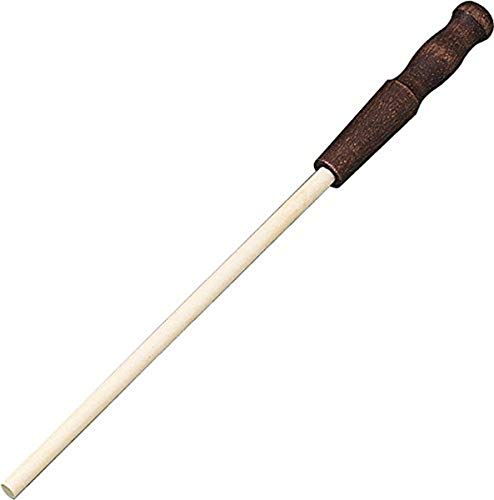
Best for traditional setups that emphasize basic ceramic honing with a wood handle, this model offers straightforward use for everyday sharpening needs. It comes from a US-based brand with a simple, practical design.
Who it’s for: hobbyists and traditionalists preferring a straightforward ceramic rod without extra frills. Why selected: dependable basic honing option. Limitation: lacks advanced safety features and built-in guides found in higher-end models.
SHARPAL 118H Ceramic Honing Rod

Best for precision sharpening with safety features, this rod includes built-in 20-degree angle guides and an anti-break cap to prevent accidents during honing. The 3000 grit ceramic surface polishes and refines edges for a razor-like finish.
Who it’s for: cooks who want precise and consistent honing with added safety. Why selected: higher grit and angle guides support careful edge refinement. Limitation: higher precision features may have a steeper learning curve for novices.
Buying Guide: Ceramic Rods For Knife Sharpening
What to evaluate when choosing a ceramic honing rod:
- Grit rating and edge goal: 1000–3000 grit rods offer varying levels of edge realignment and polishing. Higher grit provides a finer finish but may remove less material.
- Angle guides: built-in guides help beginners maintain a consistent honing angle. Pros include safer operation and repeatable results; cons include potential rigidity for experienced users who prefer manual control.
- Handle design and safety features: look for non-slip handles and guards or caps that prevent slips and protect fingers during use.
- Rod length: longer rods give more room for larger knives; shorter rods are easier to maneuver with small prep knives.
- Material quality: high-hardness ceramic (high HRC ratings) resists wear and maintains edge alignment longer but can be brittle if mishandled.
Frequently Asked Questions
- What is the main purpose of a ceramic honing rod?
To realign and refine knife edges with minimal material removal, extending the time between full sharpenings. - Are built-in angle guides necessary?
Not strictly, but they help beginners achieve consistent angles and safer honing. - Can ceramic rods sharpen serrated knives?
Most ceramic rods are designed for straight-edged blades; use care or avoid for serrated edges depending on the tool’s design. - Is a higher grit better for maintenance?
Not always; higher grit provides finer polishing but may remove less material, so pairing different grits can be effective. - How should I maintain a ceramic honing rod?
Wipe clean after use, store in a dry area, and handle with care to prevent chipping or cracking. - What size rod is best for a home kitchen?
A 10–12 inch rod suits most standard chef knives; smaller rods are adequate for paring knives.