Best CNC Plasma Cutter for Precision Cutting and CNC Compatibility
The market offers a range of CNC-ready plasma cutters for home shops, hobbyists, and small fabrication jobs. This guide highlights five highly capable models that balance cutting power, CNC integration, and value. Each product section includes a quick overview, a visual reference, and key features to help you compare performance, control, and compatibility with standard CNC setups.
Summary of selected products:
| Product | Brand | Power | Max Cut / Clean Cut | CNC Ready |
|---|---|---|---|---|
| LOTOS LTP6300DCNC | LOTOS | 63A | 3/4″ clean, 1″ severance | THC port outputs installed |
| LOTOS LTP8050 CNC | LOTOS | 80A | 1″ clean, 1.5″ severance | Pre-installed CNC interface |
| SILATU Plasma Cutter (65A) | SILATU | 65A | 3/5″ clean, 1″ max | CNC compatible with blow-back pilot arc |
| YESWELDER Plasma Cutter 60A | YESWELDER | 60A | 5/16″ @110V, 5/8″ @220V; 1/2″ max @110V | CNC-friendly, blowback start |
| Bestarc Plasma Cutter (65A) | Bestarc | 65A | 5/8″ clean, 1.18″ max | Non-HF CNC with blow-back arc |
Note: This article focuses on models that deliver solid CNC integration, reliable arc starts, and consistent cut quality for hobbyist and small shop users. Always verify current specs and compatible control systems with the manufacturer before purchasing.
LOTOS LTP6300DCNC 63A CNC Plasma Cutter

The LOTOS LTP6300DCNC combines a robust 63A cutting power with CNC-ready features designed for automated workflows. It delivers up to 3/4″ clean cuts and 1″ severance, suitable for auto-body patches, farm maintenance, trailer frames, and metal art. A non-HF blowback start supports stable starts on painted or rusty surfaces, reducing EMI. The machine includes a pre-installed CNC port that provides Torch Height Control and ARC OK signals for reliable integration with common controller boards, enabling consistent starts and automated cutting across CNC setups.
Key considerations:
– Cutting power supports a wide range of metals, including stainless, alloy, mild steel, aluminum, and copper.
– Non-HF arc initiation minimizes interference in CNC environments.
– CNC-ready interface simplifies hookup to breakout boards and controllers, reducing wiring complexity for automated jobs.
Bestarc Plasma Cutter With Blow-Back Pilot Arc (50A CNC)

This bestarc model provides strong 50A performance with dual-voltage capability (110V/220V) and CNC-friendly features. It supports up to 5/8″ cuts at 110V and up to 1″ at 220V, with a non-HF pilot arc and a blow-back start to minimize interference with CNC controls. The unit offers an integrated air sensor display and a quick-connect air fitting, aiding setup on CNC benches where precise airflow is critical for clean kerfs. Drag-cut capability helps with template and freehand work using compatible consumables.
Why it matters for CNC users:
– Blow-back pilot arc and non-HF design improve stability on CNC tables and reduce interference.
– Clear air pressure display helps operators dial-in right away.
– Widely adjustable via dual voltage for different shop power setups.
Bestarc Plasma Cutter 80A Non-HF CNC Machine

Designed for heavier-duty work, this 80A bestarc unit brings higher capacity for thick materials and demanding fab tasks. It features a 1″ cut with 1.57″ max severance at higher voltages, making it suitable for thicker stock and larger templates. The CNC-ready interface and non-HF blowback arc ensure smoother integration with automated cutting tables, reducing EMI and improving precision on complex parts. An air-sensor system aids operators in maintaining consistent cuts in variable shop environments.
Important notes:
– Ensure your CNC controller is configured to handle 1:1 arc voltage outputs and 5-pin signal control.
– High current requires stable 220V or appropriate 110V circuits with adequate breaker capacity.
– Dry/compressed air supply is essential for achieving stated cut thicknesses.
YESWELDER Plasma Cutter 60A Non-HF CNC

YESWELDER’s 60A model provides a balanced blend of portability and CNC compatibility. The blow-back start minimizes interference with CNC systems, while 60A capacity supports clean cuts of roughly 5/16″ at 110V and 5/8″ at 220V. The unit relies on intelligent digital control technology to ensure clean, deep cuts with consistent kerfs. With a digital display and dual voltage operation, this tool is suitable for automotive repairs, metal art, and home fabrication projects that require reliable CNC interfacing.
Key considerations:
– Blow-back arc initiation contributes to stable CNC starts without high-frequency noise.
– Dual voltage operation expands compatibility with various shop power configurations.
– Ensure adequate air supply and a suitable circuit breaker for long-duration cuts.
Bestarc Plasma Cutter 65A Non-HF CNC Machine
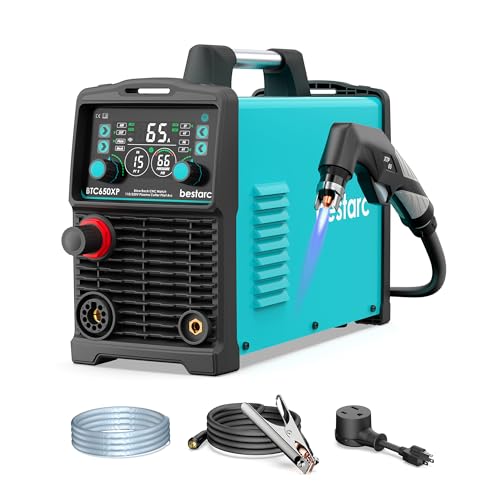
This 65A Bestarc unit targets a middle ground between light-duty hobby work and more substantial fabricating tasks. It delivers up to 5/8″ clean cuts and up to 1.18″ max cuts at higher voltage, with a non-HF pilot arc and blow-back arc for CNC compatibility. The unit includes an air-sensor display and a back-end air connector for straightforward connection to a compressor. The CNC-ready interface supports precise torch control and stable arc starts on automated setups.
Considerations for buyers:
– Choose a model with a suitable max cut for your typical material thickness.
– Confirm compatibility with your CNC controller and ensure you have the correct connectors and control signals.
– Plan for proper ventilation and safe handling of hot metal parts during automated cycles.
Buying Guide: CNC Plasma Cutter Purchase Considerations
- CNC compatibility: Look for units with Torch Height Control (THC) and ARC OK signaling, or clear documentation for integration with common control boards and breakout boards.
- Arc start technology: Blow-back/pilot arc systems minimize interference with CNC electronics and provide stable starts on painted or rusty surfaces.
- Power and cutting capacity: Match amperage to your typical material thickness. Consider future needs for thicker plates or faster production, but avoid oversizing beyond your shop’s electrical capacity.
- Air system requirements: Most units require an air compressor. Check recommended PSI and flow rates, as well as any notes about air quality or filtration.
- Ventilation and safety: Plasma cutting generates fumes and UV radiation. Ensure proper ventilation, eye and skin protection, and safe handling of hot metal.
- Controls and automation: If CNC automation is critical, verify the availability of compatible software interfaces, signal types, and documentation for your preferred controller (Mach3/GRBL-based, on LinuxCNC, etc.).
- Maintenance and consumables: Consider the cost and availability of consumables (nozzles, electrodes, cups) and the ease of maintenance in your shop setup.
- Power supply considerations: Dual-voltage units give flexibility, but confirm you have stable 110V or 220V service with appropriate breakers and wiring.
- Accuracy and kerf control: Review kerf width, notch quality, and repeatability, especially for sheet metal templates and CNC-fitted parts.
- Budget vs. capability: Balance upfront cost with long-term reliability, after-sales support, and warranty coverage for CNC integration features.