Best CNC Plasma Tables for Small Business: Durable, Precision Cutting Solutions
Choosing the right CNC plasma table is essential for small businesses that need reliable, accurate metal cutting. This guide highlights five capable options, detailing their key strengths, what to expect in workflow, and how they fit diverse shop setups—from compact garages to growing fabrication shops. Each option prioritizes control, stability, and ease of integration with common CNC systems.
| Product | Brand | Key Strengths | Typical Use |
|---|---|---|---|
| Langmuir Systems CrossFire CNC Plasma Table Bundle | Langmuir Systems | High cut speeds, precise ball screw control, expandable kit | Small-to-mid sized production |
| Eastwood Versa-Cut 4’X4′ CNC Plasma Table | Eastwood | User-friendly controller, integrated USB, robust axes | Beginner to intermediate fabrication |
| LOTOS LTP6300DCNC 63A Plasma Cutter with THC | LOTOS | THC height control, non-HF arc start, CNC-ready interface | Small shop with automation needs |
| Quaintfab 32″ H x 21″ W x 30″ L Plasma Table | Quaintfab | Solid carbon steel, replaceable slats, slag tray | Heavy plate cutting and hobby fabrication |
| Baileigh CNC Plasma Cutting Table PT-22 | Baileigh | Fully assembled, handheld torch control, reliable 24″ x 24″ cut area | Compact professional workshop |
Below are five product sections detailing each option, focusing on practical features, typical capabilities, and how they fit a small business workflow. The information reflects listed specifications and common use cases.
Langmuir Systems CrossFire CNC Plasma Table Bundle

The CrossFire table is designed for speed and precision. It features cut speeds up to 300 IPM and a precise ball screw and stepper motor system, achieving accuracies around 0.002″ per 12″ of travel. The XL Expansion Kit broadens the cutting area to 24″ x 33″ and includes a water table for chip and slag management. This setup suits shops that need faster throughput with room to scale as demand grows, and it pairs well with standard CNC controllers for automation-ready workflows.
LOTOS LTP6300DCNC 63A Plasma Cutter with THC

LOTOS offers a 63A cutting power with THC (Torch Height Control) and a non-HF arc start, which helps reduce interference and provides cleaner starts on painted or rusty metal. The CNC-ready interface ensures straightforward connections to most controller or breakout boards, making it suitable for shops seeking automation without custom wiring. This table is ideal for mid-volume production lines that require dependable cutting across steel, aluminum, and mixed metals.
Baileigh CNC Plasma Cutting Table PT-22
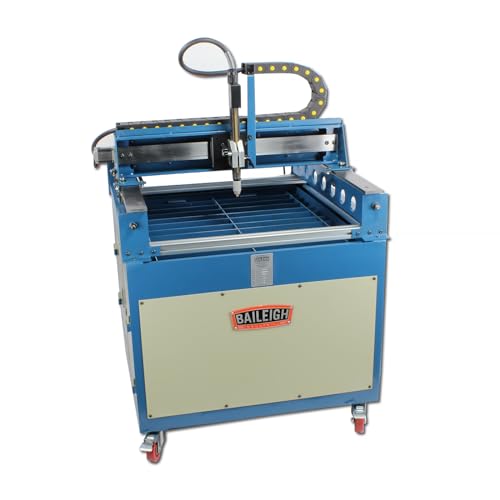
The Baileigh PT-22 emphasizes a compact yet capable design. It runs on 110V power and provides a 24″ x 24″ cutting area with a 3/4″ mild steel capacity. The unit ships fully assembled with proper alignment, reducing setup time. The handheld jog panel for X and Y axes, plus start/stop controls, supports straightforward operation for shops prioritizing a plug-and-play solution with dependable performance.
Quaintfab – 32″ H x 21″ W x 30″ L Plasma Cutting Table

Quaintfab offers a sturdy carbon steel build with a 250-pound capacity, enabling cutting of heavy plate steel. A slag catch tray helps prevent debris from reaching the shop floor, while 23 replaceable slats provide durability and arc penetration control. At 32″ H x 21″ W x 30″ L, it fits compact workshops and supports precise, comfortable cutting height for extended sessions.
SHUANGBING WELDER Portable CNC Machine with THC

This portable CNC machine integrates Torch Height Control (THC) with a flexible flame/plasma cutting setup. It offers a broad effective cutting range (59″ x 98″) and a sizeable track rail (84″ x 118″), with flame cutting thickness from 0.2″ to 7.87″ and speeds up to 23.6 inches per minute. It supports different fuel types (propane, acetylene, natural gas + oxygen), making it adaptable for on-site and shop-based projects where mobility and versatility are beneficial.
Buying Guide: Key Considerations for Small-Business CNC Plasma Tables
- Cutting capacity and materials: Assess maximum thickness, material types (mild steel, stainless, aluminum), and whether you need plasma, flame, or dual capabilities. For heavier work, options with adjustable torch height and robust frames fare better.
- Work area and scalability: Match table size to typical parts and floor space. Look for expandable kits or larger workable areas if you anticipate growth or more complex parts.
- Control system and ease of use: User-friendly interfaces, built-in controllers, and compatibility with common CAM/CNC software streamline workflows. THC and arc-start features improve reliability on painted or rusty stock.
- Dust, slag, and coolant management: Water tables, slag trays, and slat systems reduce cleanup time and extend tool life. Coolant options matter for certain cutting environments and material finishes.
- Installation and maintenance: Fully assembled options save setup time, while modular systems offer upgrades. Check service support, spare parts availability, and standard warranty terms.
- Power requirements and electrical compatibility: Confirm voltage compatibility (110V vs 220V) and power draw with shop electricals. Plans for future expansion may influence your choice.
- Safety and cost of ownership: A solid frame, guard features, and proper ventilation reduce risk. Consider total cost of ownership, including consumables, replacement slats, and potential upgrades over time.