Best Composite Lattice and Deck Tiles for Outdoor Spaces
Looking for durable, low-maintenance deck tiles and lattice panels that stand up to weather and heavy use? This guide highlights top composite lattice and deck tile options that are well-suited for American decks, patios, and garden spaces. Each product entry explains who it’s best for, why it was chosen, and a practical caveat to consider before you buy. The selections focus on ease of installation, weather resistance, and maintenance savings.
| Product | Best For | Why It Was Selected |
|---|---|---|
| Yaheetech 55pcs Patio Deck Tiles | DIY patio upgrades and poolside areas | Interlocking fir wood tiles with a durable base; good for indoors and outdoors; easy to cut and fit around corners. |
| ShunHong Polymer Composite Interlocking Deck Tiles | All-weather outdoor decks | HDPE and wood fiber composite with thicker tiles; waterproof and low maintenance; easy tool-free installation. |
| NewTechWood 1/6 ft. x 1 ft. Quick Deck Tiles | Corner and edge installations | Water drainage friendly; durable, with no fading or cracking; simple snap-together design. |
| Pure Garden Interlocking Deck Tiles (Mocha Brown) | Budget-friendly patio refresh | Six-pack tiles with non-slip, grooved texture; tool-free assembly; versatile pattern layouts. |
| Pure Garden Interlocking Deck Tiles (Brown) | Standard outdoor patio or balcony upgrades | Similar to mocha version with durable, fade-resistant composition and easy maintenance. |
Yaheetech 55pcs Patio Deck Tiles Interlocking Wood Composite Deck Tiles

The Yaheetech tiles are interlocking 12×12 inch units made from natural fir wood with a durable polypropylene base. They are processed through high-temperature drying to resist humidity, making them suitable for both indoor and outdoor use. Best for DIYers seeking a wood-look deck tile that snaps together quickly and can be cut to fit corners or poles. A limitation is that fir wood may require occasional moisture protection in extreme climates to prevent warping.
ShunHong Polymer Composite Interlocking Deck Tiles
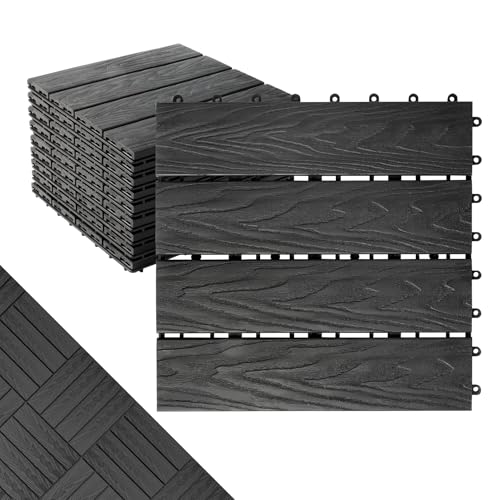
ShunHong uses a durable polymer composite of HDPE and recycled wood fibers to create thick, weather-resistant deck tiles. The tiles interlock for tool-free installation and can be cut with common tools. They resist water and maintain a low-maintenance profile, making them a solid choice for all-season patios. Avoid this if you require ultra-flexible wood aesthetics, as composite tones may appear more uniform than natural wood.
NewTechWood 1/6 ft. x 1 ft. Quick Deck Tiles Corner Fascia

NewTechWood’s 2-piece corner fascia set provides a neat edge finish for deck tile installations. Built to enable drainage while protecting tiles, it helps create a clean look around corners or stair edges. It’s ideal for DIYers who want a professional seam at borders and edges. Choose this if you want a finished look; otherwise, standard tiles suffice for flat areas.
Pure Garden Interlocking Deck Tiles (Mocha Brown)

Pure Garden’s 6-pack Mocha Brown tiles feature a fade-resistant composite mix with a non-slip grooved texture. They are designed for straightforward snap-together installation and provide drainage to prevent water pooling. Best for quick, pattern-friendly layouts on patios and balconies. A potential limitation is that color uniformity may vary between batches.
Pure Garden Interlocking Deck Tiles (Brown)

The Brown version mirrors the Mocha Brown tile construction with a fade-resistant composite and a non-slip surface. It’s suitable for decks, balconies, or poolside areas where a durable, low-maintenance finish is desired. Choose this if you prefer the standard brown color palette for outdoor décor. A note: as with all composite tiles, excessive heat can affect edge finishes over time.
Buying Guide: Key Purchase Considerations
- Material and appearance: Wood vs. polymer composite vs. wood-plastic composite (WPC). Wood adds natural warmth but may require more maintenance; composites offer water resistance and lower upkeep.
- Installation method: Interlocking tiles offer tool-free assembly, but consider whether you need edge pieces or corner fascias to finish the space.
- Drainage and weather resistance: Look for tiles designed for drainage and outdoor exposure to prevent water pooling and warping.
- Tile thickness and durability: Thicker tiles often handle higher foot traffic and outdoor conditions better, though weight and handling increase.
- Maintenance expectations: Some options require occasional cleaning or sealing, while others are designed to be maintenance-free beyond basic cleaning.
- Cutting and fitting: If your space has corners, poles, or irregular shapes, ensure the tiles can be cut to fit or that edge pieces are available.
- Color and aesthetic: Consider how the color and grain pattern will complement your outdoor décor and existing structures.
Comparison Snapshot
- Best for natural wood look with easy cut-to-fit capability: Yaheetech.
- Best all-weather durability with low maintenance: ShunHong.
- Best for edge finishing and border aesthetics: NewTechWood corner fascia.
- Best budget-friendly option with grooved non-slip surface: Pure Garden Mocha Brown.
- Best standard brown aesthetic with reliable drainage: Pure Garden Brown.
Frequently Asked Questions
Are composite deck tiles easy to install for beginners?
Yes. Interlocking designs allow tool-free assembly, though some corners may require cutting with basic tools.
Which tile is best for a damp outdoor area?
Polymer and wood-plastic composites perform well in moisture-prone spaces due to water drainage features and moisture resistance.
Do I need to seal composite tiles?
Most composite tiles are maintenance-free, but check the product’s guidance; some wood-based options may benefit from occasional sealing.
Can these tiles be used indoors?
Many options are suitable for indoor use, especially in sunrooms, basements, or near pools, but verify the product’s intended environment.
Will the color fade over time?
Some composites are designed to resist fading; color stability varies by material and exposure to sunlight.
How do I cut tiles to fit around obstacles?
Most tiles can be trimmed with standard tools like shears or a saw; plan layouts to minimize unnecessary cuts.