Best Concrete Cutting Saw Options for Smooth, Safe, and Efficient Work
Finding the right concrete cutting saw depends on the job size, whether you need wet or dry cutting, and how much portability matters on the site. The following selections highlight balanced power, durability, and ease of use for American contractors, homeowners, and DIY enthusiasts tackling foundations, sidewalks, or masonry projects. Each option offers strong performance, reliable safety features, and versatile cutting depths to help you choose with confidence.
| Product | Brand | Max Cut Depth | Motor | Best Use |
|---|---|---|---|---|
| Evolution R230DCT | EVOLUTION | 3-1/2 in | 15A | Masonry, light demolition |
| WORKPRO 16 Inch Wet Concrete Saw | WORKPRO | 6.69 in | 1600W | Indoor/outdoor projects |
| Evolution R12DCT | EVOLUTION | 4-1/2 in | 15A | Dust-suppressed cutting |
| VEVOR Electric Concrete Saw | VEVOR | 3.5 in | 1800W | Precise wet cutting |
| Evolution Power Tools R300DCT | EVOLUTION | 4-1/2 in | 15A | Heavy-duty cutting |
Evolution R230DCT 9-Inch Concrete Saw

The Evolution R230DCT 9-inch concrete saw combines the practicality of a dedicated masonry cutter with the control of an angle grinder form factor. With a powerful 15A motor and a 9″ diamond masonry blade included, this tool is designed for safer, more precise cuts than a traditional grinder. The ergonomic design helps maintain proper posture during extended use, reducing fatigue on long masonry tasks such as cutting bricks or pavers. It delivers reliable performance for drywall and foundation work where clean, straight cuts matter. The included diamond blade expands the cut depth capabilities for small- to mid-scale projects.
WORKPRO 16 Inch Wet Concrete Saw

This 16-inch wet-cut concrete saw from WORKPRO is built for higher-throughput projects. A 1600W motor provides strong cutting speed up to 3100 RPM, while a built-in water connection supports continuous cooling and dust reduction. The wet cutting system improves blade life and reduces airborne dust, making it suitable for indoor renovations or dusty exterior work. Note that the included diamond blade is for masonry only; users should switch blades when cutting wood or different materials. The unit is designed for durability and practical handling in job sites where clean lines and dust control are crucial.
Evolution R12DCT 12-Inch Concrete Saw
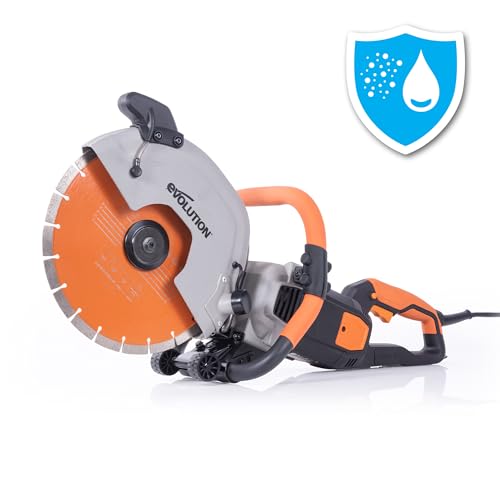
The Evolution R12DCT focuses on dust suppression and depth capability. Its water-fed dust suppression system helps meet OSHA standards, especially in indoor projects or sites requiring careful air quality control. The saw provides a robust 4-1/2-inch cut depth, enabling efficient vertical and horizontal cutting with an adjustable blade guard. With a 15A electric motor and the elimination of gas or pull cords, this model emphasizes reliability and low maintenance for frequent-cut tasks, such as concrete blocks or masonry features. It’s a solid choice where clean cuts and dust control are priorities.
VEVOR Electric 9-Inch Concrete Saw

The VEVOR 9-inch electric concrete saw focuses on a balance of power and user safety. It uses an 1800W motor and features a wet cutting option to minimize dust, while a water line attachment directs cooling water directly to the blade. The design emphasizes secure operation with a double switch and built-in safety features such as overload protection and GFCI integration to reduce risk during use. This setup suits precise, controlled cuts on masonry, concrete slabs, and stone, with an emphasis on long-term blade life and reduced debris exposure on the job site.
Evolution Power Tools R300DCT 12-Inch Concrete Saw

The Evolution Power Tools R300DCT is engineered for heavy-duty cutting with a generous 4-1/2-inch depth capacity. It pairs a 15A electric motor with a robust blade system, providing reliable, continuous operation for longer jobs. The blade guard is adjustable and designed for one-handed operation, enabling easier vertical cutting while maintaining control. This model is well-suited for contractor-scale tasks that demand higher capacity and consistent performance across masonry, concrete, and disc-cutting applications.
Buying Guide: Key Purchase Considerations
- Cut depth: Choose based on the masonry density and required reach. Deeper cuts reduce the number of passes on thick blocks.
- Power source: Electric saws offer clean operation with no fuel mixing but require a stable power supply. Gas-powered options provide mobility on large outdoor sites but add maintenance.
- Wet vs dry cutting: Wet cutting cools blades and reduces dust, ideal for indoor or dusty environments. Dry cutting is more portable but may increase dust and blade wear.
- Dust suppression: Integrated water delivery or dust collection helps meet OSHA standards and improves air quality on site.
- Safety features: Look for double switches, GFCI protection, and blade guards that facilitate safe one-handed operation for vertical cuts.
- Blade compatibility: Ensure the included blade suits masonry work; plan for interchangeable blades if you cut through concrete, brick, and stone.
- Weight and ergonomics: Lighter units reduce user fatigue on long jobs, while ergonomic handles support better posture and control.
- Maintenance: Electric tools with fewer moving parts generally require less maintenance. Consider models with accessible parts and straightforward blade changes.
- Noise and vibration: For residential sites, prefer models with balanced weight distribution and vibration dampening to protect user comfort and compliance with local rules.
- Warranty and service: A solid warranty and accessible service network protect your investment for ongoing masonry work.
Across these options, the common strengths include strong electric motors, robust blade systems, and practical safety features. For small to mid-sized projects, models with 9- to 12-inch blades and dust-control capabilities deliver consistent results with manageable maintenance. For heavier-duty demands, larger-capacity saws provide deeper cuts and longer service intervals. When selecting, weigh job size, indoor vs outdoor use, and the preferred cutting method to ensure a tool that balances performance, safety, and long-term value.