Best Condenser Pad Options for Outdoor Units and Concrete Pad Alternatives
Answering the common question for outdoor condenser installation: selecting the right pad base improves stability, reduces vibration, and extends the life of your unit. This guide highlights five top concrete- or pad-based options, ideal for different outdoor setups. Best for installers seeking a sturdy, drillable base; better for those prioritizing load support; choose this if you need moisture resistance or easy one-person installation; avoid this if you require a heavy-duty concrete block solution with mortar anchoring. The table below compares key picks at a glance.
| Product | Size | Material | Best For |
|---|---|---|---|
| Diversitech EL3636-3 E Lite | 36″ x 36″ x 3″ | Plastic (Polypropylene) | Lightweight, easy mounting for outdoor HVAC units |
| Toutgood 32″ x 32″ x 3″ | 32″ x 32″ x 3″ | Plastic | High load-bearing with anti-slip surface for moderate to large condensers |
| Cambridge 24″ x 48″ x 3″ | 24″ x 48″ x 3″ | Plastic | Long, stable base for wider condensers and noise reduction |
| Pearwow 32″ x 32″ x 2″ | 32″ x 32″ x 2″ | Plastic | Universal fit for multiple outdoor units, budget-friendly |
| Toutgood 24″ x 24″ x 3″ | 24″ x 24″ x 3″ | Plastic | Compact base for smaller condensers or pool equipment |
Diversitech EL3636-3 E Lite Equipment Pad

Best for: HVAC outdoor units requiring a lightweight, stable mounting base. This plastic pad is ideal when ease of handling and corrosion resistance are priorities.
Key features: Durable plastic construction; injection-molded polypropylene ensures long-lasting performance in varied weather; top texture provides anti-slip stability, preventing equipment shift. It’s drillable for secure mounting to the pad, enhancing installation confidence on uneven ground.
Why selected: The 36″ square footprint supports mid-sized condensers while remaining manageable for one-person installation. Its lighter weight reduces handling strain without compromising base integrity, making it a practical choice for raised decks or compact outdoor spaces.
Caution: While weather-resistant, this pad is plastic and may not provide the same mass or subsoil damping as larger concrete alternatives in high-wind or highly vibrational environments. Ensure ground is level before installation.
Toutgood Mini Split Pad, 32″ x 32″ x 3″

Best for: Condenser units in soil, grass, or gravel where a stable, load-bearing base is essential. The pad’s reinforced design helps distribute weight and reduce sliding on uneven substrates.
Key features: Reinforced design with anti-slip texture; thicker polypropylene with anti-aging agents; solid wall construction to prevent cracks. It supports 7,000–100,000 BTU condensers and up to 880 lbs, offering broad applicability for various outdoor setups.
Why selected: Its large surface area and robust construction make it a versatile choice for mid-to-large condensers and even non-condensing outdoor equipment. It also tolerates diverse environments well.
Caution: The 32″ x 32″ footprint may be excessive for very small condensers or tight installations where space is a premium. Confirm unit base dimensions before purchasing.
Cambridge Black AC Condenser Pad/Base
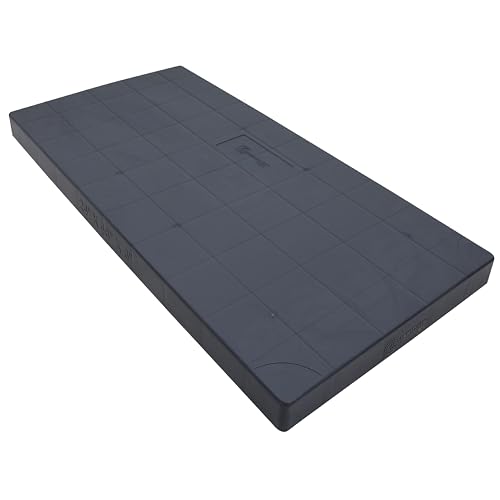
Best for: Units requiring a wider, long base to reduce moisture exposure and dampen vibration. The ribbed construction supports heavier units while maintaining a quiet operation profile.
Key features: Wide 24″ x 48″ footprint with solid wall construction; textured surface reduces shifting; lightweight for easy one-person setup and drillable for secure anchoring.
Why selected: The extra width offers substantial stability for longer condenser bodies, particularly when ground conditions are not perfectly level. It balances weight distribution and vibration control effectively.
Caution: While lighter than concrete, it may not deliver the same inert mass as solid concrete pads for extreme wind loads. Check local installation guidelines for foundation requirements.
Toutgood Mini Split Pad, 24″ x 24″ x 3″

Best for: Smaller condensers or base-level installations where space is constrained. This compact pad provides stable footing with a simple setup.
Key features: Reinforced design with anti-slip texture; thicker polypropylene with anti-aging agents; supports 7,000–100,000 BTU condensers and up to 770 lbs, offering solid load-bearing for compact units.
Why selected: Its small footprint makes it ideal for limited outdoor spaces, porches, or tight yards. It’s compatible with a range of outdoor equipment beyond condensers as needed.
Caution: The smaller surface area may not suit larger condensers or units with wide footprints. Verify the condenser base dimensions before purchasing.
Pearwow Equipment Pad for Air Conditioner Heat Pump Systems

Best for: General outdoor condenser base needs with a universal size and straightforward installation. Suitable for HVAC, pool pumps, and other outdoor equipment.
Key features: Universal size at 32″ x 32″ x 2″ with UV-resistant, weatherproof plastic; supports up to 300 lbs; simple ground placement on flat soil or hard surfaces.
Why selected: It provides a budget-friendly, easy-to-install option without sacrificing basic stability for many common outdoor units.
Caution: The weight rating is lower than some larger bases; ensure your condenser weight and footprint fit within the pad’s capacity.
VEVEVA Mini Split Pad, 18″ x 38″ x 3″

Best for: Longer, narrow condenser configurations or where space dictates a slim base with strong anti-slip properties.
Key features: Polypropylene construction; anti-slip textured surface; universal compatibility with most mini-splits and outdoor units; lightweight and weatherproof.
Why selected: Its elongated shape provides stability for slim outdoor units, aiding alignment and reducing vibration across a narrower footprint.
Caution: Not ideal for very wide condensers or high-load scenarios where a broader base improves weight distribution.
Buying Guide: Key Considerations for Condenser Pads
- Size and footprint: Match the condenser’s base dimensions to avoid overhangs or stability issues. Bigger bases distribute weight better on soft ground.
- Material choice: Plastic pads are lightweight and corrosion-resistant but may offer less inert mass than concrete. Consider the ground type, climate, and unit size when choosing.
- Load-bearing capacity: Verify the pad’s weight and BTU range compatibility. Higher BTU units generally require sturdier bases with broader contact areas.
- Terrain compatibility: Anti-slip textures and reinforcement ribs help on soil, gravel, or grass. On hard surfaces, ensure the pad can be drilled or anchored as needed.
- Installation ease: Drillable pads allow secure attachment. Lighter pads enable solo installation but may require careful handling on uneven ground.
- Vibration and noise: Textured tops and ribbed designs reduce movement and dampen vibrations, contributing to quieter operation.
- Weather resistance: UV-stable plastics resist sun damage; ensure the material suits your climate to avoid cracking or warping over time.
FAQ
- What is the main difference between plastic condenser pads and concrete pads?
Plastic pads are lightweight, corrosion-resistant, and easy to install, suited for many residential setups. Concrete pads offer greater mass and potential vibration damping, beneficial in high-wind or high-vibration environments but require more effort to install.
- How do I choose the right pad size for my condenser?
Measure the condenser’s footprint and select a pad with a surface area that fully supports the base with some overhang allowed. A wider pad improves stability on uneven ground.
- Can I drill into plastic pads to secure my unit?
Many pads are designed to be drillable, allowing you to anchor the unit for additional stability on windy or sloped sites. Follow manufacturer guidelines for drilling.
- Is it okay to use a pad on soil, grass, or gravel?
Yes, most pads are designed for outdoor use on various ground types. Check the pad’s anti-slip surface and load rating to ensure compatibility with your terrain.
- Do pads affect condenser efficiency or airflow?
Generally, a level, stable base maintains proper clearance and reduces vibration, which can help achieve consistent airflow and performance. Avoid placing pads on soft ground that could settle over time.
- Are concrete pads necessary for all condensers?
No. For many residential setups, a high-quality plastic pad is sufficient. Concrete bases are more common in install sites requiring extra mass or in spaces where long-term ground settlement is a concern.