Best Concrete Sealer for Basement: Top Picks for Moisture and Radon Protection
Basement environments demand sealers that block water, moisture, and radon gas while maintaining the concrete’s appearance and durability. This guide evaluates five concrete sealers favored for basement applications, focusing on penetration, breathability, and long-term protection. Each product below is selected for performance, safety, and suitability for indoor spaces.
| Product | Brand |
|---|---|
| RadonSeal Plus Deep-Penetrating | RadonSeal |
| Siloxa-Tek 8500 Ready to Use | Ghostshield |
| Liquid Rubber Basement Sealant (5 Gal) | Liquid Rubber |
| Lithi-Tek 9500 Ultra Concentrate | Ghostshield |
| McKinnon Concrete Sealer (5 Gal) | McKinnon Materials |
RadonSeal Plus Deep-Penetrating Concrete Protectant

RadonSeal Plus Deep-Penetrating is designed to seal concrete from the inside out. It penetrates up to four inches, blocking water, vapor, efflorescence, and radon gas—critical for basements where moisture and radon entry are concerns. The formula reinforces the internal matrix, reducing dusting and degradation caused by salts and freeze-thaw cycles, which helps prolong basement concrete life. Because it is water-based with zero VOCs, it is suitable for indoor use with minimal odor and no health risks. Application is straightforward with standard equipment, and the product dries clear, preserving the surface appearance.
Siloxa-Tek 8500 Ready to Use
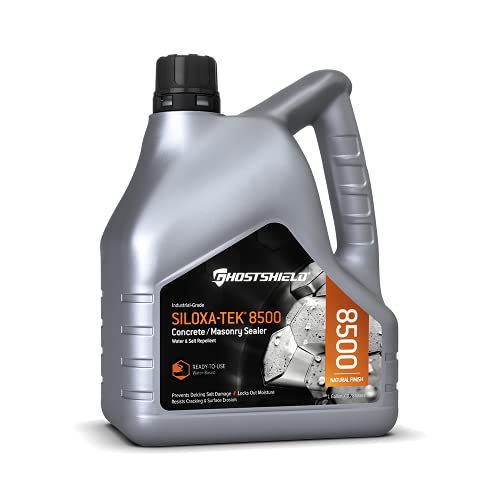
Siloxa-Tek 8500 is a water-based silane/siloxane penetrating sealer that reduces water intrusion while preserving the surface’s natural look. It is breathable, non-film forming, and DOT-approved, designed to withstand chlorides and deicing salts. The high-actives formulation provides long-lasting protection against wind-driven rain and freeze-thaw damage, helping basements resist spalling, cracking, and moisture-related issues without altering aesthetics. Being 100% breathable, it won’t trap moisture behind the surface, making it a strong choice for ongoing basement humidity control.
Liquid Rubber Basement and Foundation Sealant (5 Gal)

This liquid rubber sealant forms a flexible, permanent waterproof membrane ideal for basement waterproofing and foundation leaks. Its high elongation (up to 900%) accommodates movement and temperature changes, offering robust resistance to active leaks. It doubles as a universal barrier for concrete, masonry, wood, metal, and foundation surfaces, making it suitable for retrofit projects and DIY basement waterproofing plans. The product’s versatility and durable adhesion help create a continuous coating that remains flexible over time, reducing the risk of future cracking or moisture intrusion.
Lithi-Tek 9500 Ultra Concentrate

Lithi-Tek 9500 is a concentrated penetrating sealer and densifier designed to strengthen concrete while reducing moisture and vapor intrusion. As an industrial-grade product, it densifies the concrete, improves abrasion resistance, and helps prevent efflorescence. It reduces hydrostatic pressure and supports long-term moisture control, which is particularly beneficial in basements prone to dampness. The concentrate format makes it economical for larger areas, and the sealed surface remains breathable to prevent trapped moisture, aligning with safe, indoor-use principles.
McKinnon Concrete Sealer (5 Gal)

McKinnon’s penetrating sealer is designed for versatility across substrates, including concrete, brick, natural stone, and tile textures. The product is a water-based acrylic sealer that provides a penetrating, long-lasting seal while avoiding peeling or cracking. It is suitable for both indoor and outdoor use, preserving the natural look of the surface, and offers a reliable option for basements seeking a balance between protection and aesthetic appeal. The 5-gallon size is practical for larger basement areas or multiple project zones.
Buying Guide: Key Considerations For Basement Sealers
- Penetration depth vs. surface film: Deep-penetrating sealers strengthen the internal matrix, while surface sealers create a barrier. For basements with radon concerns, deeper penetration can reduce gas movement through pores.
- Breathability: Choose breathable formulas to prevent moisture from becoming trapped behind the coating, which can cause efflorescence or mold growth.
- VOC content and indoor safety: Low or zero VOCs reduce odor and health concerns for occupied spaces. Water-based formulas are often preferred for basements.
- Water repellency vs. vapor blocking: Ensure the product offers water repellency without inhibiting moisture migration necessary to avoid moisture buildup behind the coating.
- Freeze-thaw and deicer resistance: Basements in cold climates benefit from formulations that resist cracking and spalling due to freeze-thaw cycles.
- Application method and cure time: Look for products that are easy to apply with standard tools and offer reasonable cure times to minimize downtime.
- Surface compatibility: Consider whether the sealer is suitable for concrete, masonry, brick, or stone present in the basement.
- Long-term maintenance: Some sealers require reapplication after several years; others offer longer service intervals. Assess maintenance needs against cost and labor.
- Radon-specific performance: If radon reduction is a priority, prioritize products that demonstrate pore-blocking or gas mitigation characteristics and documented performance in basements.
When selecting a basement sealer, prioritize products that balance moisture control, radon mitigation, surface appearance, and long-term durability. The choices above cover penetrative protection, surface sealing, and flexible membranes designed to adapt to basement conditions. For best results, follow manufacturer directions for surface preparation, application conditions, and curing times to maximize performance and safety in indoor spaces.