Best PVC Pipe Coupler Options for Home Projects and Irrigation
Answering the common question, which PVC pipe coupler should I choose? This guide highlights five reliable PVC couplers that fit common sizing needs, from 1/2 inch to 4 inch connections. Each product is suited for specific tasks — from sprinkler lines and garden supports to quick repairs. Use cases are noted to help buyers pick the right fit, whether you’re assembling a DIY shelving structure, expanding irrigation, or repairing leaks. The table below provides a quick snapshot of the featured products and their best uses.
| Product | Best For |
|---|---|
| 4″ PVC Pipe Coupling Adapter (Lswteiz) | Center connections on 4″ lines; heavy-duty DIY projects |
| HayEastdor 2″ PVC Couplings | Sprinkler and drip irrigation extensions |
| HayEastdor 1/2″ PVC Couplings | Multiple small-diameter extensions and repairs |
| NDS Pro-Span 3/4″ Expansion Repair | Repairing broken 3/4″ PVC pipes |
| DLYYPLUS 1-1/2″ Flexible PVC Coupling | Flexible, leak-proof connections with clamps |
Buyer types: DIY homeowners building garden structures or shelves, irrigation installers, and quick-leak repair hobbyists. The selections emphasize ease of installation, compatibility with common PVC systems, and practical limitations to avoid installation issues.
4″ PVC Pipe Coupling Adapter Socket x Socket

Product overview: Heavy-duty coupling for connecting two pipes of the same diameter in a straight run. Fits 4″ inside diameter and 4.50″ outside diameter PVC pipe. Made for high-impact strength with frost and corrosion resistance. Intended for systems not exceeding 140°F. Installation requires primer and solvent cement. Best for: center connections in larger-diameter PVC projects, such as shelf supports or garden structures. Caution: temperature limit; do not use in hot-water or high-heat systems.
HayEastdor 2-Pack 2-Inch PVC Coupling Adapters

Product overview: Two 2-inch slip socket fittings for connecting two straight pipes of the same diameter. Constructed from high-density PVC; lighter than steel and resistant to wear and corrosion. Uses primer and solvent cement for sealing. Best for: sprinkler and drip irrigation extensions where a lightweight, durable connector is needed. Caution: ensure correct primer and cement use for a watertight seal; avoid applying to high-pressure lines without verifying system specs.
HayEastdor 12-Pack 1/2-Inch PVC Couplings
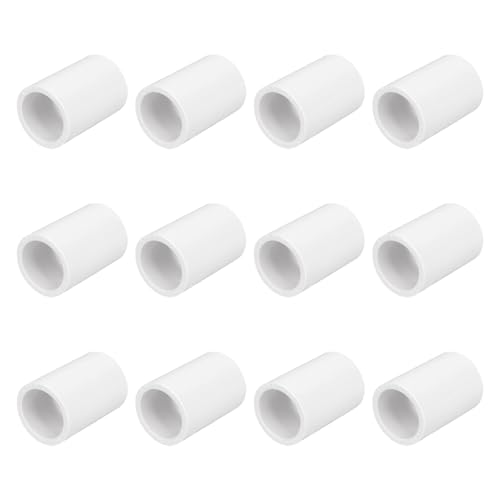
Product overview: A dozen 1/2-inch slip socket fittings suitable for replacement needs in irrigation and piping. Made from high-density PVC; lightweight yet durable and resistant to wear and corrosion. Ends are socket-type for easy connection with primer and solvent cement. Best for: small-diameter irrigation lines and repairs where multiple connectors are needed. Caution: ensure compatibility with your pipe OD and intended pressure rating.
NDS Pro-Span PVC Expansion Repair Coupling

Product overview: An expandable repair coupling designed to repair damaged 3/4″ PVC pipe. Connects two 3/4″ PVC ends using solvent weld for a watertight joint. Utilizes a piston-spigot mechanism for quick installation once cut ends are prepared. Best for: fast, in-ground pipe repair where a temporary to permanent fix is needed. Caution: requires proper pipe prep and solvent welding technique; install in dry conditions for best results.
DLYYPLUS 1-1/2″ Flexible PVC Coupling With Clamps
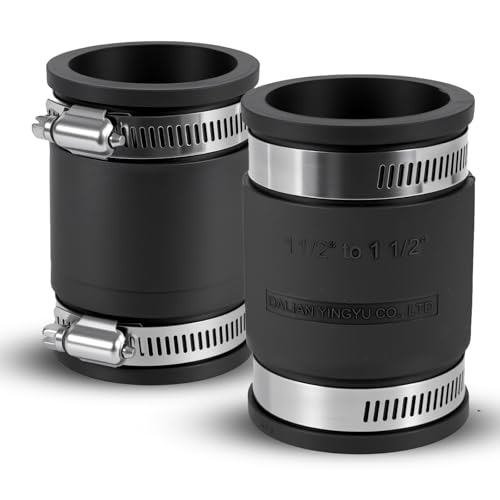
Product overview: Flexible PVC pipe coupling designed for nominal 1-1/2 inch pipes, featuring stainless steel clamps for a secure hold. Works with multiple pipe materials and is designed for leak-proof connections in non-pressurized drain and vent systems, as well as dust/hose applications. Best for: applications requiring flexibility and quick assembly, such as renovation projects or temporary extensions. Caution: check compatibility with pressure requirements and chemical exposure when used in non-drain lines.
Buying Guide
What size do I need? Measure the outside diameter (OD) of your existing pipe to pick the correct internal diameter (ID) or socket size. Look for PVC compatibility across materials (PVC, CPVC, ABS) and ensure the coupling matches the pipe’s diameter and wall thickness (Schedule 40 vs other schedules).
What material should I choose? Most garden and irrigation projects use PVC due to affordability and corrosion resistance. For flexibility or quick repairs, flexible PVC couplings with clamps (like the DLYYPLUS option) offer easier installation without specialized tools. For long-term leaks, consider elastomeric or expansion repair couplings designed for a watertight seal.
Are there temperature or chemical limits? Many PVC couplers are rated for typical household temps; avoid high-heat systems surpassing the product’s specified limit (e.g., up to 140°F for some heavy-duty PVC). If chemicals or sewer gases are present, verify chemical resistance in the product specs.
What installation method is required? Most PVC couplers require primer and solvent cement to seal joints. Flexible couplings with clamps may require just tightening clamps. Follow manufacturer instructions for deburring, cleaning ends, and curing time for a durable joint.
Which type is best for irrigation vs. structural use? For irrigation, choose corrosion-resistant, lighter PVC couplers with suitable ID/OD; for structural supports or shelving frames, heavy-duty or larger-diameter couplers (like 4″) provide robust connections. Always match the fit to the intended load and exposure.
FAQ
- What is the difference between socket and slip PVC fittings? The term socket refers to the recessed ends that receive the pipe; slip fittings are designed for solvent-weld connections to form a continuous joint.
- Do I need primer and cement for all PVC couplers? Most do; check the product instructions. Some flexible couplers with clamps may not require solvent cement.
- Can these couplers be used for pressurized systems? Many are suitable for non-pressurized or irrigation use; verify pressure ratings for each product before use in pressurized lines.
- How do I prevent leaks at the joints? Clean and deburr pipe ends, apply primer and cement evenly, and allow proper cure time. For flexible couplers, ensure clamps are tightened securely.
- Which size should I buy for a repair? Choose a size that matches the pipe OD or ID of the existing pipe and the connector ends. When in doubt, measure both ends and compare to product specs.
- Are these fittings suitable for outdoor use? Most PVC fittings resist frost and corrosion, but check product temperature and UV exposure recommendations for outdoor installations.