Best Dehumidifier for Wet Basement: Top Picks to Dry Out Damp Spaces
Keeping a damp basement dry is essential for mold prevention, storage health, and overall home comfort. The following dehumidifiers are specifically suited for wet basements, large rooms, and spaces prone to high humidity. Each option is evaluated on capacity, energy efficiency, quiet operation, and ease of drainage to help you choose the right fit for your space.
Overview of chosen products:
| Product | Approx. Coverage | Key Benefit |
|---|---|---|
| AEOCKY 80 Pint/Day Smart Compressor Dehumidifier | 4500+ sq ft | High efficiency with Energy Star 2025 rating and integrated humidistat |
| WPSOERT 45 Pint Dehumidifier | Up to 4,000 sq ft | Two drainage options and ultra-quiet operation |
| DGUAM 80 Pint Dehumidifier | Up to 4,500 sq ft | Smart humidity control and low noise at 40 dB |
| GE 50 Pint Dehumidifier | Basements and high-humidity spaces | Built-in pump with flexible drainage |
| KNKA 34 Pint Dehumidifier | 2500 sq ft | Three modes and quiet operation with continuous drainage option |
AEOCKY 80 Pint/Day Smart Compressor Dehumidifier

The AEOCKY model targets spaces over 4500 sq ft with an 80-pint daily capacity. It operates at 95°F and 95% RH for humid basements during peak season, and 86°F/80% RH for cooler basement conditions, delivering strong dehumidification under challenging conditions. The unit emphasizes energy efficiency with a 2025 Most Efficient Energy Star rating, promising potential annual electricity savings. It uses a high-efficiency rotor compressor and a 3+3 structural design, featuring copper piping and advanced heat exchange materials. A humidistat and smart controls facilitate automated operation.
Key features include: a very high dehumidification rate for large basements, emphasis on energy savings, and a design that minimizes running costs. The model also notes considerations about total ownership costs including ongoing energy use, not just upfront price. The blue hydrophilic aluminum foil and copper pipes are highlighted as efficiency innovations. It includes drain hose options for continuous drainage and set-and-forget operation.
WPSOERT 4000 Sq.Ft Dehumidifier for Basement

This 45-pint capacity dehumidifier is designed for large rooms and basements up to 4,000 sq ft. It provides a practical balance of capacity and efficiency, particularly suitable for damp spaces that require steady moisture control. Features include three modes and intelligent humidity control, enabling fine-tuning to achieve target humidity levels in common ranges (around 30–80%). The unit runs quietly—well suited for living areas, bedrooms, or home offices—while maintaining mold- and mildew-free conditions. A 24-hour timer enhances scheduling flexibility, and auto defrost helps in cooler environments.
Drainage options are a standout point: continuous drainage via a provided hose or a fully automatic tank shut-off system. The full-tank indicator helps prevent accidental overflows. This model emphasizes low maintenance and convenience with a washable filter and kid safety lock, making it a practical choice for busy homes.
DGUAM 80 Pint Dehumidifier for Basement

The DGUAM model is designed for basement cooling and humidity control up to 4500 sq ft, delivering up to 80 pints per day, with a focus on high humidity environments. It emphasizes smart humidity control via automated sensors and a user-friendly control system. The device operates quietly at around 40 dB, which makes it suitable for bedrooms and living areas adjacent to damp spaces. It includes a vent mode and energy-efficient operation to reduce overall energy consumption, along with a robust drainage system for continuous operation.
Additional benefits include a power-saving chip, memory for last settings, and overload protection to safeguard against surges. The unit targets mold prevention by maintaining consistent humidity levels and adapting to changing conditions in basements and damp rooms. It is built for long-term reliability in spaces with persistent moisture challenges.
GE Portable Dehumidifier with Smart Dry
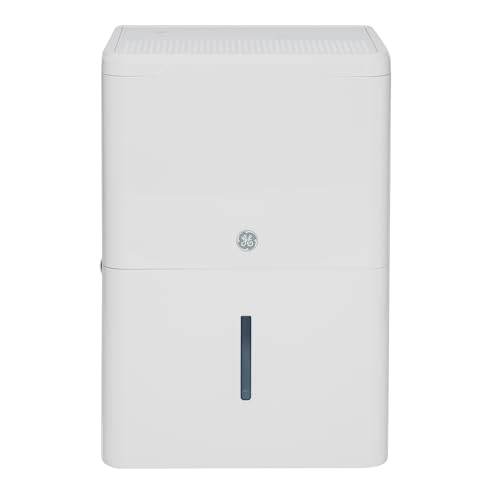
The GE 50-pint model is a versatile option for wet spaces, including basements and garages. A built-in pump and drain hose allow either auto drain or manual drain options, giving flexibility to fit your drainage setup. The unit automatically adjusts fan speed based on room humidity, improving efficiency without manual changes. This makes it a practical choice for spaces that experience variable humidity patterns, ensuring consistent dryness with minimal user intervention. The product is designed for quiet operation, supporting a comfortable environment in adjacent living spaces.
The pump drainage feature is particularly convenient for spaces where a direct drain line is available or where gravity drainage is not feasible. This makes it a good option for basements with limited sump access or irregular drainage paths. The auto-adjusting fan helps balance energy use with effective humidity removal.
KNKA 34 Pint Dehumidifier for Basement

KNKA offers solid performance for spaces up to about 2500 sq ft, with a 34-pint daily capacity suitable for basements, bedrooms, or living areas with persistent dampness. It features three smart modes—DEHU, DRY, and CONT—for customizable humidity control and clothes-drying capabilities. The unit supports both manual and continuous drainage via a drain hose included in the package, reducing maintenance and preventing overflow. The product emphasizes energy efficiency while maintaining comfortable indoor humidity in the 50–70% target range, making it a compact option for mid-sized damp spaces.
The KNKA model also highlights a timer function to help manage operation during specific hours and reduce unnecessary running time. As a compact basement dehumidifier, it offers a straightforward setup with clear indicators for tank fullness and drainage status, contributing to hassle-free, long-term use in basements and other damp rooms.
Buying Guide: Key Factors For Choosing A Basement Dehumidifier
- Room size and capacity: Match the dehumidifier’s pint-per-day rating to your basement square footage and the typical humidity level. Larger basements may need models rated 50–80 pints per day, while smaller spaces can be well-served by 30–40 pints.
- Drainage options: Consider whether you prefer continuous drainage via a hose or a tank that requires manual emptying. Units with auto-shutoff for full tanks reduce risk of spills.
- Energy efficiency: Look for Energy Star or equivalent efficiency markings. Over time, energy-efficient models reduce running costs, especially if the space runs continuously.
- Noise level: For living areas or bedrooms adjacent to the basement, choose models with low dB ratings (generally 30–40 dB in silent modes) to minimize disruption.
- Smart features and controls: Humidity sensors, automatic defrost, timers, and memory settings simplify use and maintain consistent humidity. Some units offer intelligent humidistats and auto-adjustment for different conditions.
- Drain hose compatibility and length: Ensure included hose length meets your setup or confirm if extended hoses are available for basement drains or sump pump discharge.
- Durability and warranty: Check build quality, refrigerant type (R290 is common in energy-efficient models), and warranty coverage for long-term basement use.
- Special considerations: If mold growth is a concern, prioritize units with stable humidity control (targetting ~45–55% RH) and consistent performance in high humidity.
All selected models emphasize practical drainage options, energy-conscious operation, and quiet performance suitable for basements and adjacent living spaces. When choosing, weigh initial price against long-term energy costs, space constraints, and the preferred drainage setup to achieve a reliably dry basement environment.