Best Door Alarm Sensors for Home Security and Quick Alerts
Protecting your home starts with reliable door alarm sensors that alert you the moment a door or window is opened. This guide highlights five top options, covering compact battery life, simple installation, and versatile usage for homes, offices, and storefronts. Each product section explains core features, installation tips, and scenario-based usefulness to help you compare based on real-world needs.
| Product | Brand | Why It Stands Out | Ideal For |
|---|---|---|---|
| Ring Alarm Contact Sensor – 2nd Gen | Ring | Slim design with instant mobile alerts and easy, tool-free installation | Kitchens, doors, and windows with limited frame space |
| GE Personal Security Window and Door Alarm 2 Pack | GE | Simple dual-pack for wider coverage and reliable 120dB alert | Two-point coverage for bedrooms or small apartments |
| GE Personal Security Window and Door Alarm 4 Pack | General Electric | Higher coverage for multi-room protection and easy setup | Homes with multiple entry points |
| VOXON Door Alarms For Kids Safety Pack of 2 | VOXON | 100dB alarm with OFF/CHIME/ALARM modes and multi-scenario use | Homes with children or pool/garage access points |
| PLOJOP Security Door Window Alarm 4 Pack | PLOJOP | High-volume 90dB alarm, easy paste installation | Offices or rentals needing broad coverage |
Ring Alarm Contact Sensor – 2nd Gen
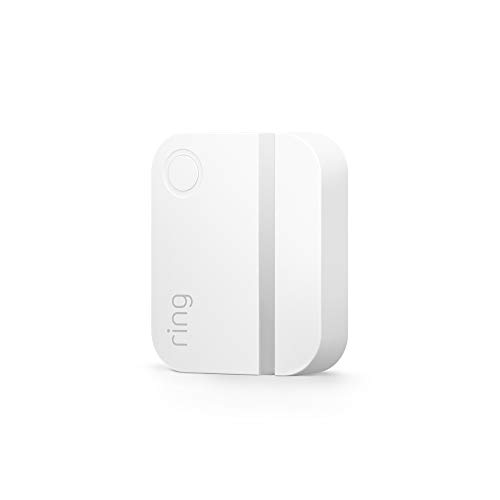
Ring’s second-generation door contact sensor is designed for slim framing and quick placement. It sends instant alerts to your phone when doors or windows open, helping you monitor entry points in real time. The smaller form factor enables more flexible placement options, including tighter frames where bulk sensors won’t fit. Installation is straightforward and tool-free, making it suitable for renters or DIY enthusiasts who want a fast security upgrade without walls and drilling.
SanJie Wireless Door Chime Sensor Kit

This SanJie kit combines door sensors with a receiver to create audible door chimes across a business or home. With a 500-foot range and 26 chimes, it’s useful for monitoring multiple doors or entrances and is particularly helpful for care facilities, small shops, or homes with multiple family members who benefit from audible cues. The system ships paired, and the receiver simply plugs into a standard outlet, offering quick setup without complicated configuration.
Satisure Wireless Door Open Alarm Chime

Satisure offers a door chime and sensor pair designed for broad coverage in homes or small stores. The kit features 58 chimes and a 600-foot range, with an easy pairing and a plug-in receiver. Its long-range capability makes it suitable for larger homes or spaces with multiple entrances, and the audible alert can assist caregivers or security staff in busy environments where visual alerts aren’t always visible.
TECKNET Door Alarms For Kids Safety (3 Pack)

TECKNET’s 3-pack door alarms provide 3-level volume control and a quick alert system for doors and windows. The compact sensors pair easily with chimes or receivers and are suitable for homes, apartments, or hotel rooms where flexible audible notifications are beneficial. The quick install process and adjustable volume help tailor alerts to different environments and needs.
PLOJOP Wireless Alarm Pack (4 Pack)

The PLOJOP four-pack delivers high-volume alarms suitable for doors and windows in homes or small offices. With up to 90dB alerts and simple paste-on installation, this kit is ideal for renters or properties requiring quick, broad coverage without tools. The compact sensors help secure multiple entry points with minimal setup effort.
Buying Guide: Key Purchase Considerations And Comparisons
When choosing a door alarm sensor, consider a few core factors to ensure you pick a device that fits your space, lifestyle, and security needs:
- Alert type and sound level: Decide between audible alarms, mobile alerts, or both. Higher dB alarms are more noticeable but may be disruptive in quiet spaces.
- Connectivity and notifications: Look for systems that sync with smartphones, hubs, or base stations. Consider whether you prefer standalone sensors or those requiring a base station or receiver.
- Installation ease: Tools-free installation is ideal for renters or temporary setups. Check mounting methods (adhesive vs. screws) and frame compatibility.
- Coverage and range: If you have multiple doors, consider kits that provide multi-point coverage (2-pack, 4-pack, etc.). For larger homes, long-range wireless options can be beneficial.
- Battery life and replacement: Long battery life reduces maintenance. Some products advertise years of life, while others require periodic battery replacements.
- Durability and environment: Indoor use is common, but verify whether the device tolerates humidity, temperature changes, or outdoor exposure if needed.
- User interface and customization: Some models offer multiple modes (OFF/CHIME/ALARM) and adjustable volumes, enabling tailored alerts for different rooms or times of day.
- Price and value: Compare per-point coverage and total packages. A higher upfront cost may be justified by broader coverage and simpler installation.
To maximize effectiveness, align your selection with your home layout, number of entry points, and whether you prioritize budget, ease of use, or advanced notification options. For renters or temporary setups, tool-free, adhesive-mounted sensors that pair with a simple receiver offer the quickest protection. For larger homes or small offices, multi-pack systems paired with reliable alert channels (mobile and audible) deliver comprehensive coverage with fewer gaps.