Best Drain Tile Solutions for Gutters That Protect Foundations and Manage Rainwater
If you’re trying to prevent basement flooding and soil erosion, a well-planned drain tile or downspout drainage system is essential. The right setup directs roof runoff away from your foundation and into a safe discharge area. This guide highlights five practical drain tile and downspout extension options that fit common American homes, explains who each is best for, and shows how to choose between them based on your yard and soil conditions.
Summary table of selected products
| Product | Best For | Why It Stands Out |
|---|---|---|
| NAACOO Gutter Downspout Extensions | Durable, long runs; underground routing | Adjustable extension from 2.5 ft to 8 ft; UV resistant; double drain holes for efficiency |
| NDS 430 Pop-Up Drainage Emitter | Low discharge point and property protection | Discharges up to 56 GPM; works with 3 in. & 4 in. pipes; simple release point |
| Flex-Drain 51110 Flexible Drain Pipe | Budget-friendly flexible drainage | Solid 4 in. by 25 ft; easy to use and highly durable |
| Prestantious Low Profile Catch Basin Kit | Underground routing without digging deep | Low profile; extendable pipe to 16.4 ft; separate components for easy assembly |
| K-TEC GUTTER SUPPLY 3x4x4 Adapter | Transitioning downspouts to 4″ drain lines | Universal fit; easy slip-in design; hides end of drain pipe |
NAACOO Gutter Downspout Extensions
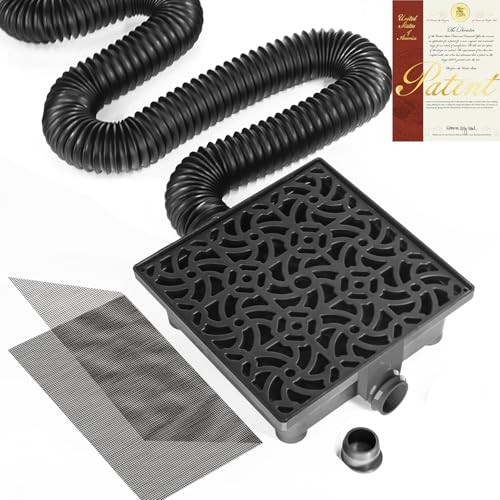
Best for: Homeowners needing a flexible, longer run to redirect rainwater away from foundations without heavy digging. The design allows buried routing and multiple splices for extended lengths.
- Material and construction: Premium PP material for strength, UV resistance, and outdoor durability.
- Adjustable length: Extends from 2.5 ft to 8 ft, with options to splice for even longer runs.
- Drain efficiency: Double drain holes and a slope-optimized catch basin help avoid standing water and dirt buildup.
- Placement flexibility: The system can be cut and assembled to match drainage needs on either side of a structure.
Caution: If you need only a single side drain, cover the unused side to prevent leaks and ensure directed flow. The pipe is designed for underground use but should be installed following local guidelines for burial depth.
NDS 430 Pop-Up Drainage Emitter

Best for: Properties needing a discreet water release point at a low elevation to protect against surface runoff near foundations.
- Function: Creates a controlled release point at the end of a drainage run to prevent upstream pooling.
- Compatibility: Connects to 3 in. and 4 in. single-wall pipes and accepts several pipe types with adapters.
- Discharge: Manages water flow with a capacity up to 56 GPM, reducing the risk of overflow at ground level.
- Limitations: Best used where a clear downward path exists; not as effective for very shallow or highly permeable soils without additional routing.
Flex-Drain 51110 Flexible Drain Pipe

Best for: Quick setup on uneven ground or when a rigid rigid pipe would be difficult to install.
- Material and design: Flexible, solid drain pipe designed for easy handling and long-term use.
- Length and value: 25-foot length provides extended drainage options at a lower cost per foot.
- Ease of use: Very simple to install with basic DIY tools; suited for do-it-yourself drainage projects.
- Limitation: Not ideal for installations requiring rigid structural spacing or precise trench excavation.
3″x4″x4″ Downspout Drainage Adapter

Best for: Homeowners needing a universal transition from a 3×4 downspout to a 4″ round drain pipe.
- Compatibility: Slightly oversized to ease slipping into a 4″ drain; wider collar hides the end for a neater finish.
- Design: Universal fit for multiple 4″ drainage configurations, facilitating flexible connections.
- Limitations: Ensure the adapter matches the outer diameter requirements of your specific drain pipe.
K-TEC GUTTER SUPPLY 3x4x4 Adapter

Best for: Streamlining the transition from a 3×4 downspout to a 4″ round drain pipe with a simple install.
- Feature: Universal design for fitting most 3×4 downspouts into 4″ drain lines.
- Ease: Readily slips into place to produce a clean, finished look at the connection point.
- Limitation: Ensure compatibility with your 4″ drain pipe type and wall thickness.
Plastic Universal Downspout to Drain Tile Adapter

Best for: Projects requiring a versatile adapter that fits multiple pipe types and materials in a single solution.
- Drains compatibility: Claimed to fit 4″ black corrugated pipes and several smooth-wall pipes (PVC SDR, Schedule 40, etc.).
- Patented design: US patents cited for engineered fit and installation.
- Limitations: The range of compatible pipe types may vary; verify fit before purchasing.
Buying Guide: Key Considerations For Drain Tile And Downspout Drainage
- Soil type and grade: Clay soils drain slowly and may require more aggressive drainage paths or additional infiltration planning. Sandy soils drain quickly and can benefit from longer, direct exits away from the foundation.
- Water flow and landscape: Map your roof area and expected runoff, then plan a drain path that avoids walkways and foundations while staying clear of landscaping that could get eroded.
- Discharge point: Choose pop-up emitters or low-profile basins where discharge won’t create pooling near doors or patios. Consider multiple discharge points for large roofs.
- Materials and durability: Prefer UV-resistant, freeze-thaw-resistant plastics for outdoor installation. Ensure the pipe material withstands underground conditions and potential impacts.
- Installation depth: If burying components, verify local codes for burial depth, frost lines, and required covers. Low-profile basins reduce digging but still require stable placement.
- Flexibility and future changes: Systems with adjustable lengths and splice options provide future-proofing if you expand or reroute drainage later.
- Maintenance: Keep intake areas clear of debris. Regular checks prevent clogs that could back up water toward the foundation.
Frequently Asked Questions
- What is a drain tile for gutters? A drain tile system channels roof runoff away from your foundation, often using a catch basin, pipe, and discharge point to avoid water damage.
- Do I need professional installation? Many drain tile and downspout extensions are DIY-friendly, but large installations or complex yards may require professional help.
- Can drain tiles prevent basement flooding? Yes, when correctly sized and placed, they reduce hydrostatic pressure by redirecting water away from the foundation.
- How deep should downspout extensions be buried? Follow local code and frost line guidelines; deeper burial minimizes surface tripping hazards and protects from freezing.
- Are flexible drain pipes reliable? Flexible pipes are easy to install and cost-effective, but rigid solutions may offer longer-term stability in certain soils.
- Should I combine multiple drainage products? Combining catch basins with pop-up emitters and adapters can create a complete, resilient system tailored to your landscape.