Best Dust Collection System for Modern Woodworking Workshops
The following selection highlights strong-performing dust collection systems suitable for hobbyists and professionals. Each option is evaluated for airflow, filtration, portability, and compatibility with common shop tools. This guide helps you compare systems and choose a setup that reduces dust, protects airflow, and keeps your workspace clean.
Chosen Products — Quick Reference
| Product | Brand | Airflow / Capacity | Key Benefit |
|---|---|---|---|
| WEN DC1300 Dust Collector | WEN | 1,300 CFM | High airflow with dual inlets for multiple tools |
| POWERTEC 70306 Dust Collection Fittings Kit | POWERTEC | System fittings for multi-tool nets | Flexible, expandable ductwork and blast gates |
| DEWALT DWXAF101 Air Filtration System | DEWALT | 3-stage filtration with HEPAs | Remote control with time settings and auto modes |
| POWERTEC 1 HP Dust Collector (DC1081) | POWERTEC | 800 CFM | Portable with quick-release bags |
| Dust Right Lathe Dust Collection System | Dust Right | Source-at-the-machine dust capture | At-source efficiency for lathes and small projects |
WEN DC1300 Dust Collector

The WEN DC1300 delivers robust airflow for mid-to-large workshops. It circulates up to 1,300 CFM, supporting multiple tools with dual 4-inch inlets that allow simultaneous connections. A vertical, 50-gallon collection bag minimizes bag changes and simplifies disposal. The unit is designed for mobility with a mobile base, enabling repositioning as work evolves. Filtration efficiency helps reduce airborne dust while maintaining consistent suction. This model suits general woodworking tasks, including sanding, planing, and shaping, where a steady intake is important for productivity.
Key features include practical airflow for larger shops, straightforward bag-based collection, and a design that accommodates two tools at once. Operators should consider duct routing and noise tolerance when planning a full-system setup. The WEN DC1300 pairs well with compatible ducting and blast gates to maximize coverage and keep a shop floor clear of chips and dust.
POWERTEC 70306 Dust Collection Fittings Kit

This comprehensive kit provides a flexible network of ductwork and fittings to tailor a dust collection system. It includes blast gates, pipes, Y fittings, a splice, elbows, and mounting brackets, enabling a shop-wide layout that suits multiple stations. The kit supports rapid customization and future expansion with clear pipes designed for quick, snug connections. It emphasizes versatility so you can route air from several machines to a central collector without excessive fittings inventory.
With the ability to cut pipes to exact lengths and connect 4-inch hoses, the POWERTEC network is ideal for shops needing scalable, modular ducting. It reduces bottlenecks at tool stations and makes clean-up more efficient. While installation requires planning, the result is a more cohesive dust-collection system across a busy shop environment.
DEWALT DWXAF101 Air Filtration System
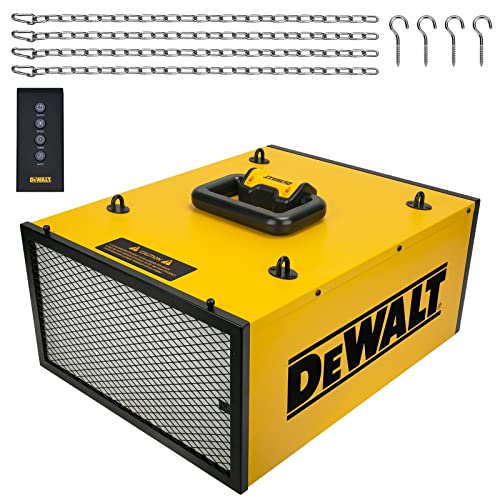
The DEWALT DWXAF101 provides a 3-speed filtration solution with a two-stage approach. A pre-filter captures larger particles, while an H11 HEPA filter traps finer dust, helping improve overall air quality in the shop. The system includes a remote and a built-in timer with 1-hour, 2-hour, 4-hour, and 8-hour settings, allowing you to run cleaning cycles while away. Multiple working modes (High, Mid, Low, Auto) help adapt filtration to air quality and activity level, providing a balance of energy use and purification.
Because this unit offers remote operation and sensor-based auto-mode, it helps maintain cleaner air without constant manual adjustment. It is suitable for garages or woodshops where ambient dust concerns are high and a dedicated filtration layer improves visibility and comfort during long sessions.
POWERTEC 1 HP Dust Collector (DC1081)

The POWERTEC DC1081 offers an 800 CFM airflow level with a 1 HP motor and a portable design. It includes 1-micron filtration bags and quick-release clamps for fast bag changes, minimizing downtime between jobs. The unit comes with a sturdy mobile base, making it feasible to relocate the dust collector around a shop as projects shift. This setup is well-suited for small-to-medium workshops that require dependable dust collection across several benchtop tools, routers, and saws.
The DC1081 emphasizes mobility and practical filtration for ongoing tasks. While not as high-capacity as larger systems, it fills a niche for users prioritizing portability and ease of setup in compact spaces. For users expanding from portable vacuums, this model provides a straightforward upgrade path with compatible ducting and accessories.
Dust Right Lathe Dust Collection System
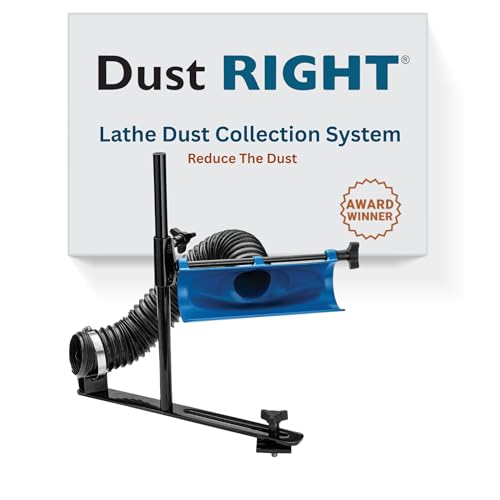
This system tailors to lathe work by capturing dust at the source. The centerpiece is a C-shaped dust scoop that wraps around spindle turning areas to pull dust directly from the workpiece. The adjustable steel boom arm and semi-cylindrical scoop allow precise positioning for various turning projects. A flexible hose connects to your main dust collection network to transfer cleaned air away from the workstation, reducing airborne dust near the operator and floor debris around the lathe.
For hobbyists and professionals focusing on wood turning, Dust Right offers a targeted approach that complements larger shop dust systems. The kit emphasizes source capture, which can significantly reduce cleanup time and improve air quality in the immediate work zone around lathes and small turbines.
Buying Guide: Key Purchase Considerations
- Airflow vs. Shop Size: Larger spaces benefit from higher CFM figures (e.g., 1,000–1,300 CFM), while smaller rooms can perform well with compact units (600–800 CFM). Consider duct length, number of tool connections, and static pressure requirements.
- Filtration Quality: Two-stage or multi-stage filtration (pre-filter plus HEPA) reduces fine dust more effectively. For shops with fine sanding or drywall dust, HEPA-level filtration is advantageous.
- Portability and Setup: Mobile bases and lightweight designs aid in repositioning equipment. If you plan a fixed setup, wall-mounted or centralized collectors with durable ducting may suit better.
- Expansion Potential: A modular system with additional fittings, blast gates, and hose adapters helps scale to more tools without replacing the core unit.
- Noise Levels: Noise can affect comfort during long sessions. Look for models with lower decibel ratings or sound-dampening options, especially in shared spaces.
- Maintenance and Bags/Filters: Consider bag capacity, ease of filter replacement, and availability of replacement parts. Quick-release bags can reduce downtime.
- Compatibility: Check hose diameters (commonly 4 inches) and fittings to ensure smooth integration with existing tools and ducts.
- At-Source vs Centralized: Lathe scoops and at-source dust collectors reduce airborne dust at the job site, while centralized units serve multiple machines from a single location.