Best Concrete Expansion Joint Filler for Driveways and Sidewalks
If you need expansion joint fillers to repair and protect concrete cracks, this guide shows practical options and why each is best for specific projects. The products below use EPDM rubber for flexibility and weather resistance, making them suitable for driveways, sidewalks, and other concrete joints. This selection is ideal for homeowners, property managers, and small contractors looking for durable, easy-to-install solutions.
Summary of selected products:
- Kingdder Concrete Expansion Joint Filler 1″ x 25 ft — Best for long, continuous joints in driveways.
- Kingdder Concrete Expansion Joint Filler 1″ x 15 ft — Better for shorter runs or smaller repair jobs.
- Tavonuxt Flexible EPDM Rubber Strip 25 ft x 1/2″ — Best for mixed-width cracks and sidewalks.
- Kingdder 1/2″ Wide, 25 ft — Choose this if you need a narrower strip for tighter joints.
- Trial Pack Flexible EPDM Rubber Strip (3 sizes) — Best for testing multiple gap sizes before committing.
Kingdder 1” Wide, 25 ft Long Concrete Expansion Joint Filler
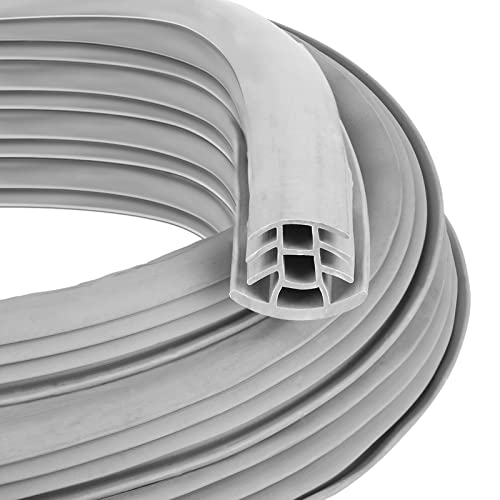
Product overview: EPDM rubber strip; 25 ft length; easy to cut to needed sizes; weather and aging resistant; reusable and removable. Suitable for larger, continuous joints in driveways and concrete expanses. Best for homeowners tackling long crack lines with a single, extendable piece.
Who it’s best for: Homeowners and DIYers who need a long, uninterrupted filler for wide cracks. Why selected: One-piece length reduces seams and improves seal integrity. Caution: Cutting accuracy matters to ensure a snug fill; incomplete cuts can create gaps.
Kingdder 1” Wide, 15 ft Long Concrete Expansion Joint Filler
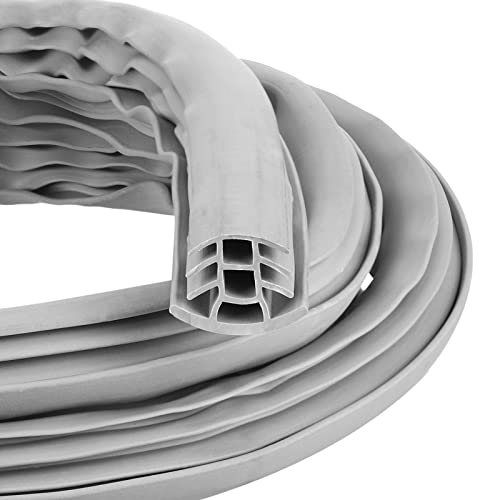
Product overview: EPDM rubber, 15 ft length; flexible, weather resistant, easy to install; removable and replaceable. Best for shorter joint runs or smaller repair projects where a long strip would be wasteful.
Who it’s best for: Renovation projects with limited linear distance; better for tight spaces. Why selected: Provides the same material benefits as the 25 ft version in a shorter, more cost-efficient length. Caution: Fitting very long joints may require splicing or multiple strips for continuity.
Tavonuxt 25 ft Flexible EPDM Rubber Strip, 1/2 inch Wide

Product overview: Top-grade EPDM rubber; weather and aging resistant; 25 ft length; easy insertion and cutting as needed. Designed for cracks and expansion joints in driveways and sidewalks with variable widths.
Who it’s best for: Projects with mixed joint widths or longer sidewalks. Why selected: Flexible width and length make it adaptable to common expansion joint patterns. Caution: As a 1/2″ width, it may not fill very wide gaps without additional material or sealing methods.
Kingdder 1/2 inch Wide, 10 ft Long Expansion Joint Filler

Product overview: EPDM rubber; 10 ft length; flexible and weather resistant; removable and easy to install with hand pressure or a small hammer. Best for smaller projects or narrow joints in concrete paths.
Who it’s best for: Small repair jobs where a 1/2″ strip aligns with existing joints. Why selected: Narrow width helps avoid misfit in tight cracks. Caution: Shorter length means more seams for long runs; plan joint layout accordingly.
RTHIEAI Trial Pack Flexible EPDM Rubber Strip (3 Sizes)

Product overview: Test pack includes 1/2″, 3/4″, and 1″ widths to cover multiple joint sizes; weather and aging resistant; easy installation by hand or hammer; customizable length via cutting. Best for trying different sizes before buying in bulk.
Who it’s best for: Buyers unsure about joint width needs or planning multi-space repairs. Why selected: Provides a risk-free way to evaluate fit and performance. Caution: Being a test pack, it may include smaller quantities per size than full-size rolls.
Buying Guide
What to consider before buying expansion joint filler:
- Width compatibility: Choose 1/2″, 3/4″, or 1″ widths based on your joint gaps. Mixed widths often require multiple strips.
- Length needs: Long runs reduce seam risk; shorter lengths offer flexibility and lower waste. Consider whether you can join strips cleanly if needed.
- Material quality: EPDM rubber offers weather resistance and age resistance; ensure the product is labeled suitable for outdoor concrete exposure.
- Ease of installation: Look for removable, reusable strips and simple pressing or hammering methods for a snug fill.
- Durability and maintenance: Some joints may require periodic inspection and re-sealing, especially in areas with freeze-thaw cycles.
- Budget and project scope: Test packs can help validate needs before committing to larger quantities.
Practical tips for best results
- Clean the crack area before inserting the strip to improve seal integrity.
- Cut strips to fit precise lengths; avoid leaving oversized gaps at joints.
- Apply consistent pressure to seat the strip fully inside the crack.
- Store extra strips in a dry place to maintain flexibility for future repairs.
FAQ
- What size expansion joint filler should I use for typical residential driveways? Answer: Common sizes are 1/2″ and 3/4″ widths for residential joints; 1″ is used for wider gaps or commercial spaces.
- Can EPDM rubber strips be removed later if I need to rework the joint? Answer: Yes, many EPDM strips are designed to be removable and replaceable.
- Is a longer strip always better for a driveway repair? Answer: Longer strips reduce seams but may be less flexible around curves; plan layout to minimize cuts.
- Do I need adhesive or sealant with these fillers? Answer: Most products rely on the friction fit or simple pressing; sealants are optional for extra protection in some installations.
- How do I know which width to choose for my crack? Answer: Measure the gap width; choose a filler width that fits snugly with minimal compression for a secure seal.
- Are these fillers suitable for sidewalks and driveways exposed to freezing temperatures? Answer: Yes, EPDM-based fillers are designed to withstand weather and aging, including freeze-thaw cycles.