Best Basement Window Fans for Fresh, Cool Air All Year
Finding the right fan for a basement window starts with airflow versatility, adjustable speeds, and a secure fit. This guide highlights five window fans that excel at exhausting stale air, drawing in fresh air, or providing balanced ventilation in basement spaces. Ideal buyers include DIY homeowners refurbishing a damp, stuffy basement, apartment dwellers needing cross-ventilation, and workers needing air flow in a basement workshop.
The following table offers a quick snapshot of each recommended model, focusing on fit range, airflow style, and standout feature to help you compare at a glance.
| Product | Best For | Key Feature |
|---|---|---|
| Comfort Zone CZ319WT Twin Window Fan | General basement comfort with reversible airflow | Auto-locking expanders for easy, secure fit |
| MEOZRI 12-Inch Exhaust Fan | High-output ventilation in larger basement areas | High 720 CFM and simple speed control |
| shinic 10″ Tabletop Box Fan | Portable, desk-level cooling and light basement nooks | Two speeds; compact and mobile |
| Bionaire Window Fan | Flexible intake/exhaust with programmable control | Three speeds; programmable thermostat |
| Vornado TRANSOM Window Fan | Whole-room ventilation with remote control | Four speeds; reversible airflow |
Comfort Zone CZ319WT Twin Window Fan

Best for: Basements requiring flexible airflow and a secure fit. The CZ319WT offers dual speeds and a reversible airflow option, enabling intake to refresh the space or exhaust to remove humidity.
Why selected: This unit provides two speeds, allowing for gentle ventilation on lower settings or a brisk breeze when needed. Auto-locking expanders fit a window range of 22-1/4″ to 33″, ensuring a snug seal in most double-hung windows—key for basement installations with irregular openings.
Caution: The airflow is strong but works best when the window is well-sealed; gaps can reduce efficiency and increase outdoor noise entry.
12-Inch Exhaust Vent / MEOZRI Basement Fan

Best for: Larger basements needing powerful exhaust and humidity control. This model delivers up to 720 CFM for rapid air exchange and a robust, durable build suited for garages and workshop basements.
Why selected: A straightforward knob control makes speed selection easy, while the sturdy metal construction and seven aluminum blades provide reliable airflow in tough environments. It’s designed for wall mounting, making it a strong fit where ceiling placement isn’t possible.
Caution: Inward exhaust installation requires careful duct routing to ensure the room receives maximum benefit and to avoid recirculating air.
shinic 10″ Tabletop Box Fan

Best for: Small basements, bedrooms, or workspaces where portable cooling is preferred. Its compact 9-10 inch footprint makes it easy to move between rooms or place on a shelf near a window.
Why selected: The two-speed control provides flexible cooling without overpowering a confined space. Its energy-efficient design is suitable for prolonged use in basements where electrical outlets may be limited.
Caution: The smaller airflow is best for localized cooling rather than whole-space ventilation; consider pairing with a larger exhaust fan for full circulation.
Bionaire Window Fan

Best for: Basements needing versatile airflow with programmable temperature control. The Bionaire model supports flexible intake or exhaust along with a thermostat-based automatic on/off feature.
Why selected: Three speeds plus a programmable thermostat allow the unit to maintain a comfortable basement climate without manual adjustments. The LED display aids in quick setup and monitoring of temperature settings.
Caution: The electronics and display can take extra space in tight windows; ensure your window opening accommodates the control panel without obstruction.
Vornado TRANSOM Window Fan
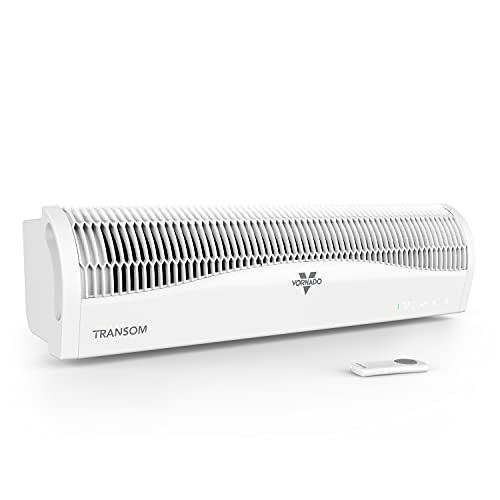
Best for: Whole-room basement ventilation with remote control. The TRANSOM model provides a quiet, consistent airflow across larger windows and multiple speeds for flexible use.
Why selected: It features four speeds and a reversible airflow option, enabling both intake and exhaust modes from a distance. The low-profile design and soft-fit foam help seal windows effectively, reducing drafts while maximizing airflow.
Caution: It requires windows that can accommodate its width (fits 26”–40” openings). Ensure your window dimensions align before purchase.
Buying Guide: How To Choose The Right Fan For Your Basement Window
What size and airflow do you need? Measure your basement window opening and estimate the room’s volume. Look for a model with enough CFM (cubic feet per minute) to exchange stale air efficiently without creating excessive noise.
What installation style works best? Auto-locking expanders simplify fit in standard double-hung windows, while wall-mounted exhaust fans free up window space. Consider whether you need reversible airflow for intake and exhaust or a unidirectional exhaust focus.
How important is noise level? For basements adjacent to living spaces, choose models marketed as whisper-quiet or with lower decibel ratings. Tabletop and compact fans tend to be quieter but may not ventilate larger spaces as quickly.
Is energy efficiency a priority? Look for two- or three-speed options, remotes, and programmable thermostats that allow HVAC-like control without higher electricity consumption. Plan for long runtimes in damp basements and choose durable materials that resist moisture exposure.
What about maintenance and accessories? Removable grilles, bug screens, and dust covers help keep the basement comfortable year-round. Easy-to-clean designs reduce ongoing upkeep and prolong fan life.
FAQ
- What is the best fan for large basement spaces?
- Can I use a standard window fan year-round in a basement?
- Do basement windows need special sealants for fans?
- Is a remote control worth it for a basement fan?
- Should I choose a dedicated exhaust fan over a reversible fan?
Fans with high CFM, such as the 720 CFM model, are better for large spaces that require rapid air exchange.
Yes, but consider a model with dust screens and reversible airflow to suit seasonal humidity changes.
Yes. Use auto-locking expanders or foam sealing to minimize drafts and improve efficiency.
Remote control enhances convenience in rooms where reaching the unit is difficult or when the fan is mounted high on a window.
If humidity and odors are persistent, a dedicated exhaust can provide more consistent air removal, but reversible fans offer flexible airflow for varied conditions.