Best Fish Tape for Conduit: Top Picks for 2025 Electrical Cabling
The right fish tape makes conduit runs faster, safer, and more reliable. This guide highlights five top-rated options that balance strength, flexibility, and ease of use for American electricians and DIY enthusiasts. Each choice covers different materials and lengths to handle a range of jobs—from tight 90-degree bends to long residential installations. Read on to compare features, durability, and handling to pick the best fish tape for your next pull.
Summary of chosen products:
| Product | Brand | Length | Material | |
|---|---|---|---|---|
| Klein Tools 56331 50-Foot | KLEIN TOOLS | 50 ft | Steel wire | Double loop tip; optimized housing; slip-resistant grip |
| RamPro 50 ft Fish Tape | RamPro | 50 ft | Steel wire | Double loop tip; built-in grip and thumb lock |
| islewire 240 ft Fish Tape | islewire | 240 ft | Steel wire | Formed hook; ergonomic handle; durable housing |
| Ninja Fish Tape 100 ft | Ninja Fish Tape | 100 ft | Polyester | Changeable leader tip; flexible and rust‑free |
| Jameson 200 ft Fiberglass | Jameson | 200 ft | Fiberglass | Non-conductive; spiral steel leader; long reach |
Klein Tools 50-Foot Electrical Fish Tape

The Klein Tools 56331 offers a durable 1/8-inch wide steel fish tape designed for pulling large wires through multiple conduit runs. Its optimized housing reduces payout effort, while the slip-resistant geometry improves winding power under load. The multi-position handle provides a firm, steady grip as you pull tape from the case, supporting smoother pulls in tight spaces. This configuration suits commercial and residential projects where reliability during long pulls matters most.
Key features include a robust steel core for rigidity and flexibility, a case design that minimizes snags, and a tip optimized for smooth entry into conduits. The tape’s width helps it bite through resistance without kinking, while the grip facilitates precise control during retraction. For electricians requiring a dependable tool for 1/8-inch wire pulls, this Klein model balances strength and maneuverability.
Performance notes: its 50-foot length keeps it manageable for median runs, though longer projects may require a separate longer tape. The combination of a sturdy handle and an efficient payout mechanism reduces operator fatigue on day-long installations. Overall, this is a solid all-around option for professional use and DIY tasks that demand consistent performance.
RamPro 50ft Fish Tape With Double Loop Tip
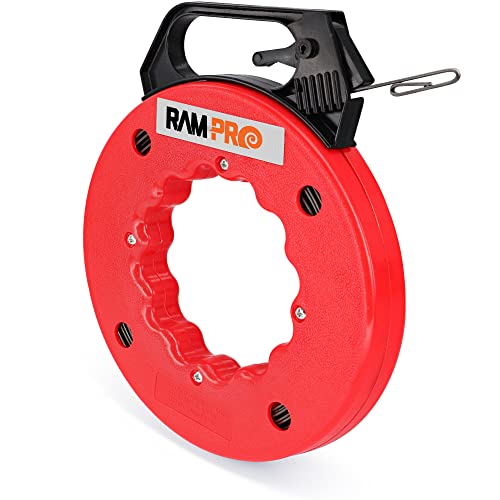
The RamPro 50-foot fish tape uses a 1/8-inch steel wire and features a double loop tip for enhanced wire capture and pull guidance. The construction emphasizes a balance between stiffness for longer pulls and flexibility to navigate corners and bends. An improved comfort grip handle and built-in thumb lock contribute to easier operation, especially when managing tight runs through walls and conduit networks. This tape is aimed at homeowners and professionals needing dependable performance without excessive bulk.
Highlights include a durable housing that protects the wire during heavy use, a grip that reduces fatigue, and a thumb lock that helps secure the wire during feeding. The 50-foot length makes it a versatile choice for typical indoor conduit installations and shorter runs, while the 1/8-inch wire size helps in pulling mid-sized cables efficiently. For tasks requiring consistent control and a comfortable pull, this RamPro model provides practical value.
Considerations: the tool is designed for durability in daily use and can withstand repeated pulling and stowing. It is best used for standard residential or light commercial projects where a straightforward, reliable pull is needed rather than extreme long-distance fishing.
islewire 125 ft Electrical Fish Tape

The islewire 125-foot fish tape is built around a 3/16-inch PET fiber that provides a non-conductive, flexible design with robust performance. Its optimized housing and ergonomic handle support comfortable, extended use for navigating through walls and conduit runs. The non-conductive makeup adds a safety margin when working near energized lines, which is a meaningful benefit in electrical installations where voltage status may be uncertain. The design aims for smooth navigation and controlled pulling with a responsive thumb lock.
Key strengths include the non-conductive material that reduces shock risk, a handle designed for one-handed operation, and a robust housing to withstand demanding job-site conditions. The PET fiber offers resistance to rust and fatigue compared to metal tapes, making it a practical option for multi-day projects or environments where moisture is present. It is especially suitable for longer runs in residential or light commercial settings where insulation and handling comfort are priorities.
Limitations: for very long runs or heavy-duty industrial pulls, some users may prefer steel tapes for higher tensile strength. However, the non-conductive nature and flexibility make this islewire model an appealing choice for electricians seeking safety-first solutions with good length coverage.
islewire 240 ft Electrical Fish Tape

The islewire 240-foot option uses a 1/8-inch steel wire with a dual-loop head for easy pull and management through longer conduit runs. The formed hook on the tape end aids in capturing pull lines, while the ergonomic handle and durable housing protect the equipment during demanding use. This model targets heavy residential or light commercial projects requiring extended reach without multiple tool changes.
Advantages include long reach for large installations, a secure double-loop pulling head for versatile wire handling, and a sturdy build that withstands daily use. The 1/8-inch width provides a reliable balance between flexibility and tensile strength, making it suitable for pulling medium-diameter cables. For technicians faced with longer conduit runs, this tape offers an effective combination of reach and control.
Note: As with all longer tapes, proper storage and careful retraction help maintain coil integrity and reduce tangling when retracting through complex conduit networks. This model is a practical pick when length and reliability are the priority in the field.
Ninja Fish Tape 100 ft Polyester

The Ninja Fish Tape uses polyester and offers a 50/75/100 feet length option with a 6mm diameter. Its rust-free design, lightweight construction, and high flexibility allow it to glide through conduit bends, including 90-degree turns. The tape includes a changeable leader tip, expanding utility by accommodating different pulling scenarios. For users needing a fast, reliable pull with minimal maintenance, this model emphasizes ease of use and resilience against corrosion.
Highlights include strong bending capability, easy handling, and a practical leader system that improves adaptability to various wire sizes and conduit configurations. The polyester composition offers reduced stiffness compared to metal tapes, which can be advantageous when navigating tight corners. This option is well-suited for electrical, telecom, and low-voltage installations where maneuverability is prized.
Limitations: polyester tapes may have lower tensile strength than steel in extremely heavy-duty pulls; however, the added flexibility helps prevent kinking in tight, complex conduit runs. Users seeking a lightweight, versatile tool may find this Ninja tape especially appealing.
Jameson 200-Foot Fiberglass Fish Tape

The Jameson fiberglass fish tape provides a long 200-foot length with non-conductive properties, making it a staple for electrical conduit and long-distance wire pulling. The spiral steel leader adds flexibility and ease of navigation through conduit, while the high-visibility design helps locate the tip during use. Fiberglass construction reduces the risk of electric shock in energized environments, aligning with safety-focused job-site practices.
Strengths include long reach, non-conductive material, and the combination of a robust leader system for guidance in extended runs. The fiberglass core balances rigidity and flexibility for predictable performance over long distances, making it suitable for large residential or commercial projects where a single tool can span extensive conduit networks. It’s a practical option for professionals who need reach without compromising safety.
Considerations: fiberglass tapes can be bulkier than steel at similar lengths, and some users may prefer steel for higher pull tension. For routes spanning multiple rooms or floors, this Jameson tape offers a compelling mix of safety and reach.
Buying Guide: Key Purchase Considerations
- Material choice: Steel tapes are strong and durable for high-tension pulls; fiberglass and polyester tapes offer non-conductive safety and greater flexibility in tight spaces and around bends. Choose based on conduit difficulty, presence of energized lines, and required reach.
- Length and diameter: Longer tapes cover more distance but can be heavier and harder to manage. A 1/8-inch steel tape is a common all-around choice; 3/16-inch tapes provide extra rigidity for difficult pulls. Polyester options give flexibility with added safety in electrical environments.
- Head design and hooks: Double-loop tips, formed hooks, and robust pulling heads improve wire capture and reduce snagging. Look for ergonomic handles and thumb locks that ease pulling and hands-on control.
- Housing and durability: A rugged housing minimizes payout effort and protects the tape when retracted. Non-slip grips reduce fatigue during long pulls and in messy job-site conditions.
- Safety considerations: Non-conductive tapes are preferred near energized systems. Ensure the tape is rated for electrical environments and conforms to industry standards for safety and reliability.
- Maintenance and lifespan: Regular cleaning and proper storage extend tool life. Inspect for frays, kinks, or corrosion after each job, and replace worn tapes to avoid failed pulls.
- Application fit: For long runs in walls and conduit, a fiberglass or long polyester option may offer better maneuverability and safety. For typical indoor residential tasks, steel tapes with robust housings often deliver best value.
- Cost vs. value: Higher-priced tapes often provide better durability, comfort, and longevity. Weigh the cost against project size, frequency of use, and safety requirements.