Best Floor Mats for Gym and Home Workouts
Choosing the right floor mats for your home gym can protect floors, reduce noise, and provide comfortable, stable surfaces for a wide range of workouts. This guide compares popular EVA foam and rubber-top mats, focusing on durability, ease of assembly, and resilience under heavy equipment. Explore five top options and a practical buying guide to help you select the best matting for your space.
| Product | Size / Coverage | Material Type | Highlights |
|---|---|---|---|
| ProsourceFit Puzzle Mat 12 Tiles | 24″ x 24″ x ½” per tile; 48 sq ft | Interlocking EVA foam | Non-skid, lightweight, easy storage |
| ProsourceFit Puzzle Mat 36 Tiles | 24″ x 24″ x ½” per tile; 144 sq ft | Interlocking EVA foam | Water-resistant, noise-reducing, versatile |
| SUPERJARE Rubber Top Mats (12 Tiles) | 24″ x 24″ x 0.56″ per tile; 48 sq ft | EVA foam with EPDM rubber top | Heavy equipment friendly; strong grip; quieter |
| ProsourceFit 24 Sq Ft Mat (6 Tiles) | 24″ x 24″ x ½” per tile; 24 sq ft | Interlocking EVA foam | Durable gym floor mat; versatile uses |
| AIRHOP 48 Sq Ft Mats | 24″ x 24″ x 0.56″ per tile; 48 sq ft | High density EVA foam with rubber top | Dual-layer for grip and shock absorption |
ProsourceFit Puzzle Mat 12 Tiles

The 12-tile set provides 48 square feet of cushioned flooring, designed to protect floors from exercise equipment and provide a soft surface for joints. These interlocking EVA foam tiles connect quickly and disassemble easily for storage. The tiles are water-resistant and offer noise reduction, making them suitable for garages, home fitness rooms, or children’s play areas. The non-skid texture helps stabilize workouts on various surface types.
ProsourceFit Puzzle Mat 36 Tiles
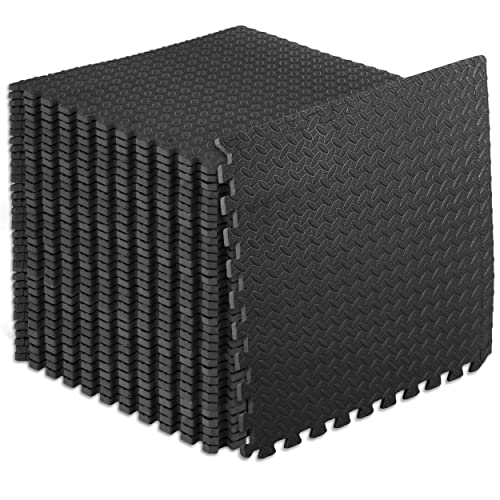
This larger 144-square-foot option uses the same durable, non-skid EVA foam with easy assembly. Its interlocking design keeps tiles securely in place during workouts while maintaining a light footprint for storage. The mat’s water resistance and noise-reducing properties make it a solid choice for multi-use spaces like a home gym, garage, or play area.
SUPERJARE Rubber Top Mats (12 Tiles)

These 12 interlocking tiles pair a high-density EVA foam base with a sturdy EPDM rubber top, delivering strong weight support and reduced slippage during heavy movements. The rubber top adds durability for equipment like treadmills, bikes, and free weights, while the cushioned foam below minimizes impact and noise. The upgraded surface minimizes rubber odor for a more comfortable workout experience.
ProsourceFit 24 Sq Ft Mat (6 Tiles)
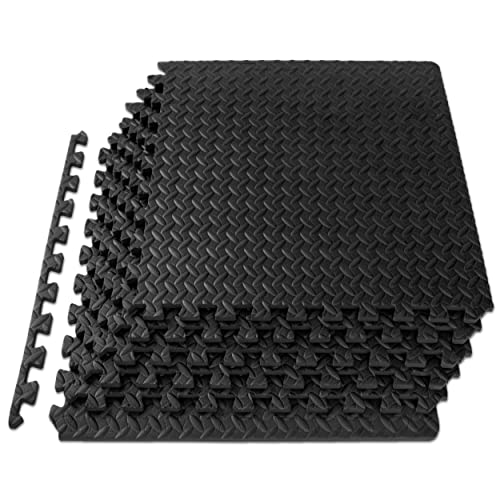
This compact 24-square-foot option uses high-density EVA foam to provide substantial cushioning and support. It is designed to protect floors and carpet while creating a comfortable workout area. The mat is water-resistant and noise-reducing, suitable for indoor use in garages, home fitness rooms, or under gym equipment. It’s noted for compatibility on flat, hard surfaces and offers a practical solution for smaller spaces.
AIRHOP 48 Sq Ft Mats

AIRHOP combines a dual-layer design: a robust rubber top with a high-density EVA foam base, creating a non-slip surface with strong shock absorption. The 12-tile set covers 48 square feet, conveniently fitting typical home gym layouts. Interlocking locks enhance a secure fit, reducing shifting during workouts, while the overall construction supports heavy equipment without tearing or deforming.
Buying Guide
When selecting floor mats for a home gym, consider these key factors to balance protection, comfort, and durability:
- Thickness and density: Thicker mats (0.56″ to 0.56″ with rubber top) absorb more shock and protect joints, especially during high-impact moves. Lower thickness may suffice for light exercises but offers less cushion for heavy lifts.
- Material and top layer: EVA foam is lightweight, affordable, and easy to cut or rearrange; rubber tops add durability and grip for equipment-heavy routines. Rubber-top combinations reduce wear on both mats and weights.
- Interlocking system: Secure connections prevent gaps that can cause tripping or shifting during workouts. Look for robust locking mechanisms and uniform tile sizes for seamless coverage.
- Surface grip and odor: A textured surface improves traction; avoid mats with strong rubber odors if you have sensitive ventilation. Ultra-grip surfaces can enhance stability for compound lifts.
- Noise and vibration: Cushioned mats reduce noise transmission to living spaces, a key consideration in apartments or multi-family homes.
- Maintenance and cleaning: Water-resistant or wipe-clean surfaces simplify upkeep. Check if the mat resists mold and is easy to sanitize after workouts.
- Footprint and layout: Measure your space to decide between individual tiles or larger mats. For rooms with irregular shapes, modular tiles offer flexibility.
- Compatibility with equipment: Ensure the mat’s density supports weights, plates, and machinery without compressing under load.
- Portability and storage: Interlocking tiles allow quick assembly/disassembly. Lightweight foam mats are easier to move for cleaning or storage.
- Durability and wear: Mats designed for high-traffic or home gyms typically feature reinforced edges and thicker cores to withstand frequent use and equipment movement.
In summary, for spaces with heavy equipment and frequent weight-based workouts, mats with a rubber top or a dual-layer design tend to offer the best long-term durability and stability. For smaller spaces or budget-conscious setups, high-density EVA foam tiles provide solid protection and easy customization. Consider your workout style, space, and ventilation when choosing the right matting for your home gym.