Best Flush Cut Saw Guide for Precise Woodworking and Finishing
Choosing the right flush cut saw can dramatically improve finish quality on dowels, tenons, pegs, and trim pieces. This guide compares five top options, highlighting blade design, materials, and handling to help American woodworkers select a tool that delivers clean, precise cuts with minimal effort. Each product features Japanese-style pull-saw action, durable blade steel, and reputable craftsmanship. Use the buying guide to compare factors like blade thickness, tooth configuration, replaceability, and comfort for extended use.
Summary of Selected Products
| Product | Brand | Key Feature | Blade Size |
|---|---|---|---|
| SUIZAN Flush Cut Saw 5″ | SUIZAN | Lightweight pull saw; high-quality Japanese steel; made in Japan | 5″ |
| RUITOOL Japanese Hand Saw 6″ | RUITOOL | SK5 steel; dual-edge for flush and finish cuts | 6″ |
| Temple Tool | Premium wood handle; thin kerf; lightweight | 6″ | |
| SUIZAN Flush Cut Saw 6″ | SUIZAN | Replaceable blade; lightweight; high-quality Japanese steel | 6″ |
| JORGENSEN Japanese Pull Saw | Jorgensen | 17 TPI, single edge; precise cross-section cuts | 7.25″ |
SUIZAN Flush Cut Saw 5″ – Professional Japanese Pull Saw

This 5-inch flush cut pull saw uses a Japanese-style pull stroke, delivering lighter weight and cleaner edges than many push saws. The blade is crafted from high-quality Japanese steel, ensuring razor-sharp cuts. Manufactured in Japan by master craftsmen, it reflects a long tradition of precision woodworking. The compact size makes it ideal for dowels, pegs, and tight spaces where flush cuts are essential.
RUITOOL Japanese Hand Saw 6″ Double Edge

RUITOOL offers a 6-inch double-edge pull saw with SK5 high-carbon steel. Its dual-edge design supports flush and finish cuts, enabling versatile use in fine woodworking. The blade is hardened for sustained sharpness (HRC60-63), and the tool is designed to be durable under repetitive cutting tasks, making it suitable for both hobbyists and professionals.
Temple Tool Co. Japanese Flush Cut Saw – 6 Inch

This 6-inch pull saw emphasizes a thin kerf and light weight, paired with a dark wood handle and brass fittings. The combined design achieves fast, accurate cuts with a smooth finish. The pull-stroke action minimizes binding and produces precise flush cuts on dowels, wedges, and tenons, suitable for both hardwood and softwood workpieces.
SUIZAN Flush Cut Saw 6″ – Professional Japanese Pull Saw

This 6-inch flush-cut model from SUIZAN features a replaceable blade and the trusted Japanese pull-saw action. The blade is designed for light, precise cuts and clean edges, with a focus on longevity and ease of blade replacement. The blade’s quality supports repeated flush cuts in both soft and hardwoods.
SUIZAN Small Hand Saw 5″ Flush Cut Blade

This compact 5-inch tool emphasizes a replaceable blade and slim profile for precise cuts in confined spaces. As a Japanese pull saw, it delivers a lighter tool with less required power and a notably sharp, clean edge. Manufactured in Japan, it blends contemporary technique with traditional craftsmanship for reliable performance.
YUQGAOP Japanese Pull Saw – Double Edges

The three-sided approach of this double-edged pull saw provides versatility for both hard and soft woods, with 11 TPI on one side and 17 TPI on the other. The SK5 steel blade is hardened for long life, and the tool follows traditional Japanese craftsmanship, delivering a capable edge through repeated flush cuts.
JORGENSEN Japanese Pull Saw – 7.25″
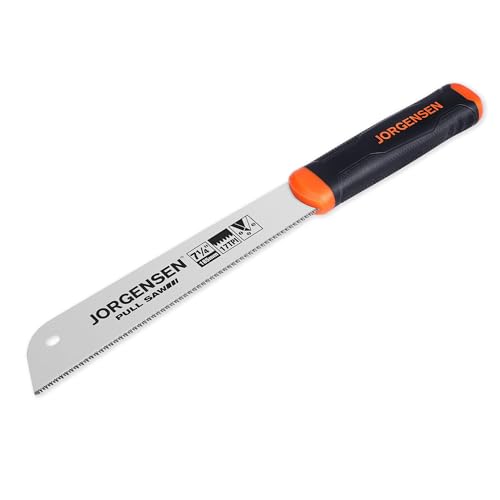
Jorgensen offers a 7.25-inch single-edge pull saw with 17 TPI and SK5 steel. Its mult-angle tooth design supports precise cross-section cuts with a thinner blade for reduced resistance. The soft-grip handle reduces fatigue during longer projects, making it suitable for detailed finish work and flush cuts in mixed hardwoods and softwoods.
Buying Guide: Key Purchase Considerations
- Pull saw action vs. push saw: Pull saws typically cut with less effort and produce finer edges; consider your comfort and typical project type when choosing.
- Blade material and hardness: Japanese steel (often high-quality SK5 variants) offers sharpness and edge retention. Look for blades with HRC values around 60–63 for durability.
- Blade size and kerf: Smaller blades provide tighter control for flush cuts, while larger blades can speed up bigger tasks. Kerf width affects material removal and edge finish.
- Tooth configuration: Double-edged blades cover more applications, while single-edge blades might excel in specific grain directions or finishes.
- Replaceable blades: Some models offer replaceable blades, extending tool life and reducing downtime between sharp cuts.
- Handle comfort and weight: A comfortable grip minimizes fatigue; consider soft-grip handles and balanced weight distribution for extended sessions.
- Made in Japan vs. other manufacturing stories: Brand provenance can reflect craftsmanship quality, after-sales support, and compatibility with traditional techniques.
When selecting a flush cut saw, align the tool’s features with your typical tasks—dowels, pegs, wedges, or small trim pieces—and your preferred cutting rhythm. For precision finish work, prioritize thin kerfs, edge clarity, and blade hardness. If you frequently work in tight spaces, compact 5″ or 6″ models with replaceable blades can offer the best combination of control and longevity. For broader applications, a 7.25″ single-edge option provides a longer cutting surface with strong stability.