Best Flux for Copper Pipe: Top Soldering Fluids for Plumbing
Choosing the right flux for copper pipe installations can improve solder flow, reduce corrosion risks, and simplify maintenance. The following selections are designed for plumbing and HVAC use, offering low residue, non-toxic formulations, and reliable wetting for clean joints. This guide compares five popular flux products, highlighting benefits, typical applications, and key features to aid in selecting the best option for your project.
| Product | Brand | Type | Key Benefit |
|---|---|---|---|
| La-Co 22194 Water Soluble Flux Paste | La-Co | Water-soluble paste | Leaves no residue in water piping, non-acid, lead-free |
| Essmetuin No Clean Flux Paste | Essmetuin | No clean flux paste | No cleaning required after use, excellent wetting |
| Fluxuator Dual Head Flux Applicator | Fluxuator | Flux applicator | Precision control, reduces over-fluxing, refillable |
| SRA Solder 135 Rosin Paste Flux | SRA Soldering Products | Rosin paste flux | No-clean, easy flow, suitable for electronics and copper |
| Copper Mate Flux | CopperMate | Flux (paste) | Popular for lead, zinc, copper and brass joints |
The selections below are organized to help readers evaluate fluxes by residue, ease of use, compatibility with copper pipe, and safety considerations. Each entry provides a concise overview, followed by practical usage notes and typical applications in plumbing, HVAC, or electronics work as appropriate for copper tubing.
La-Co 22194 Water Soluble Flux Paste

La-Co’s 22194 flux is designed as a water-soluble paste that minimizes leftover residue in water piping systems. It is non-acidic and lead-free, reducing corrosion concerns while providing reliable wetting for copper tube joints. The formulation meets ASTM B813 standards and contains no zinc chloride, which can be a safety consideration in some applications. This flux is suitable for plumbing work where post-solder cleaning is either undesirable or impractical, making it a popular choice for residential copper piping and mechanical contractor jobs that require clean, corrosion-resistant bonds without harsh aftercare. Users typically appreciate the paste’s ease of application and steady flow characteristics, especially on tight or small-diameter joints where precise coverage matters.
Essmetuin No Clean Flux Paste

Essmetuin’s No Clean flux is formulated to eliminate post-solder cleaning in many scenarios. It emphasizes excellent wetting and ease of use, with a design that minimizes waste through a pushing-type mechanism that promotes smooth flow. The flux is lead-free and non-corrosive in dry conditions, making it suitable for copper pipe work where residues must not compromise water quality or vented systems. The no-clean property can simplify workflows for professionals and hobbyists alike, particularly when soldering copper tubing in confined spaces or on projects where cleaning solvents may be impractical or undesirable.
Fluxuator Dual Head Flux Applicator for Copper Pipe
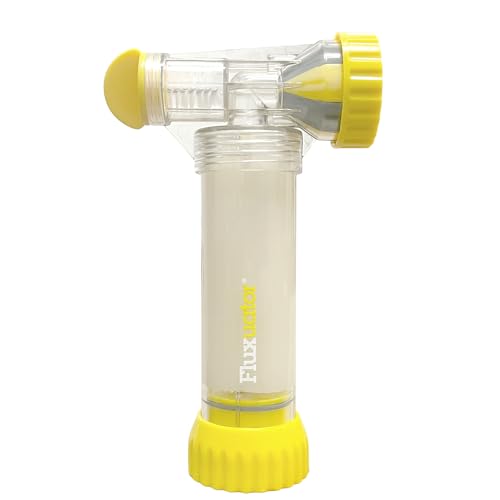
The Fluxuator offers a dual-head design to improve coverage across copper joints with precision. The ability to switch between heads supports both broad and meticulous flux application, reducing the likelihood of dry spots and incomplete solder joints. A refillable canister helps control flux usage and minimizes mess, while a click system supports monitoring of flux amounts to prevent over-application. The product’s ergonomic and robust construction is well-suited for plumbers working in tight spaces or on ladders, where one-handed operation can be advantageous and keeps flux contained during transport and use.
SRA Solder 135 Rosin Paste Flux
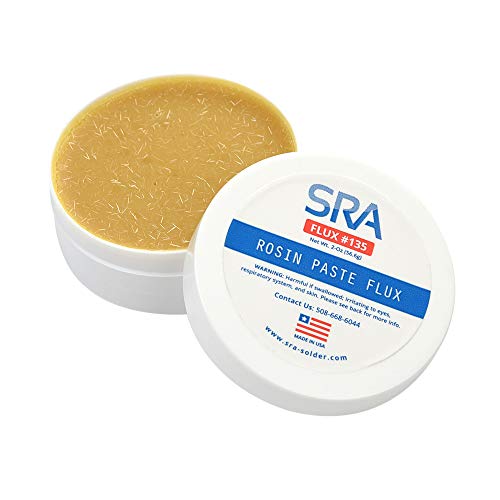
SRA 135 Rosin Paste Flux is designed for electronics and copper electrical wire applications, offering impurity-free rosin flux with strong wetting characteristics. The semi-solid consistency helps control application, avoiding excessive flux while maintaining reliable solder flow. It is marketed as a no-clean option, which can streamline repair work or assembly where residues must be minimal. While commonly used in electronics, its rosin-based chemistry can also be effective on copper piping, especially in settings that require precise flux delivery and clean joints without post-cleaning steps.
ComStar Copper Lock No Heat Solder for Pipes
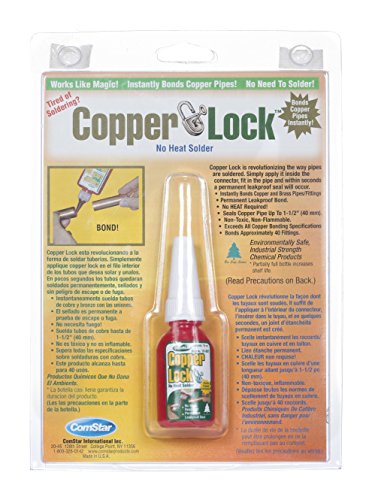
Com-Star’s Copper Lock is a no-heat soldering solution designed for quick leak-proof seals on copper and brass pipes. The product is engineered to withstand high flow pressures (up to 10,000 PSI) and contained pressures up to 500 PSI, making it suitable for emergency repairs, HVAC maintenance, and rapid piping upgrades. It works across a range of refrigerants and liquids, offering universal compatibility for plumbing and A/C systems. This adhesive-like bonding compound enables fast repairs in tight or hard-to-reach areas, reducing downtime on critical systems. The 60-second bonding claim highlights its potential for time-sensitive projects, though users should follow manufacturer directions for optimal results and safety.
Buying Guide
Key factors to consider when choosing flux for copper pipe work include residue type, ease of cleaning, corrosion safety, compatibility with copper alloys, and the flux’s effect on water quality. Here are critical dimensions to compare:
- Residue and post-use cleaning: No-clean formulas save time, but some installations may still require residue removal in sensitive systems.
- Safety and toxicity: Non-acid, lead-free formulations reduce health and environmental risks in household plumbing.
- Wetting and flow: Flux with strong wetting promotes smoother solder flow and fewer cold joints, particularly on small-diameter copper tubes.
- Application method: Paste fluxes and dual-head applicators offer different control levels; choose based on space, with a preference for one-handed operation in tight inspections.
- Temperature and pressure considerations: Some products are designed to tolerate higher pressure or high-temperature environments, which is relevant for HVAC lines and outdoor installations.
- Residue compatibility with refrigerants and water systems: Ensure the flux is compatible with the system’s fluids and does not cause corrosion or contamination.
When selecting a flux, consider the project’s scope—residential plumbing, HVAC repairs, or electronics-related copper work—and weigh the convenience of no-clean options against any industry standards or material safety guidelines. For critical systems, adhering to ASTM standards and manufacturer recommendations helps ensure long-term joint integrity. Combining a precise flux applicator with a compatible flux often yields the most consistent results, especially in professional settings where joint performance and service life matter most.