Best Foot Stool for Guitar: Comfortable, Adjustable Options for Every Player
Looking for a foot stool that improves posture, reduces strain, and fits your playing style? This guide highlights five reliable guitar foot rests designed to support varying heights, playing postures, and environments. Best suits beginners building good habits, stage players needing quick adjustments, and long-session players seeking stable support. Below, compare features, ideal use cases, and any limitations to help you choose with confidence.
| Product | Best For | Height Range | Notes |
|---|---|---|---|
| Tetra-Teknica Essentials Series GFR-01 | General practice and studio sessions | 4.5″–9.5″ | 6-position height; non-slip surface |
| CAHAYA Guitar Foot Rest Stool | Comfortable long-playing sessions | Six levels | Guitar pattern surface; durable metal |
| CC CAIHONG Guitar Foot Stool | Stable practice with varied heights | 3.9″–10.6″ | Rubber end caps; non-slip pad |
| DUMEALAGR Guitar Foot Rest Stool | Sturdy, budget-friendly option | 10 cm–27 cm | Six heights; rubber stability |
| Gator Frameworks GFW-GTR-FOOTREST | Travel and gigs | 5″–9.5″ | Folds flat; non-slip pad |
Tetra-Teknica Essentials Series GFR-01 6-Position Foot Rest
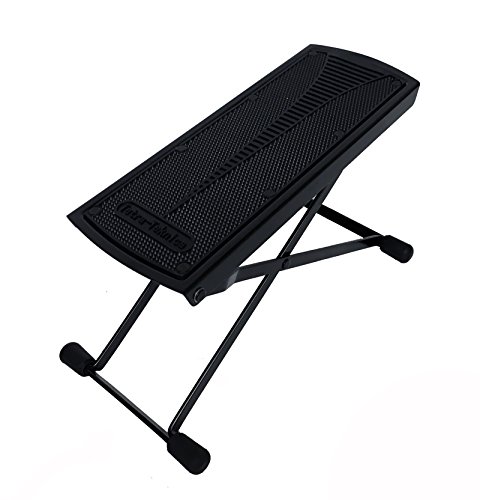
- Non-slip rubber surface with a metal frame for durability.
- Foot rest width 4″; length 10″; six height positions from 4.5″ to 9.5″.
Best for: Players who want a compact, reliable stand with clear height steps and a stable top. Why chosen: Balanced build and multiple heights support varied guitar playing postures.
Limitations: Foot print is modest; larger players may prefer a wider base.
CAHAYA Guitar Foot Rest Stool

- Six-position height adjustment with a guitar-pattern surface and non-slip silicone coating for grip.
- Thick metal construction for durability and stable support over long sessions.
Best for: Musicians who value grip and posture during extended practice. Why chosen: The guitar-pattern top helps keep the foot in place, reducing wrist/arm strain.
Limitations: Heavier metal design may be less portable than foldable models.
CC CAIHONG Guitar Foot Stool

- 6 height positions; maximum 10.6″ and minimum 3.9″.
- Rubber end caps plus non-slip pad for stability and skid resistance.
- Heavy-duty metal construction designed for long sessions.
Best for: Players who need a wider height range and solid stability. Why chosen: High maximum height supports taller players or elevated playing stances.
Limitations: Some users may prefer a lighter, more portable setup.
Guitar Foot Rest Stool by DUMEALAGR
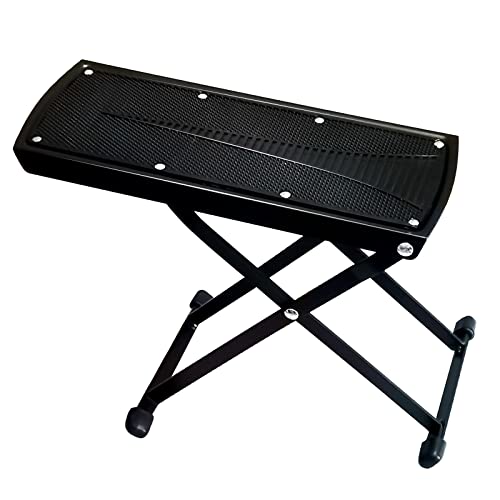
- Six height positions with maximum 27 cm and minimum 10 cm.
- Rubber end caps and a rubber pad for stability during use.
- Sturdy, high-quality metal construction for long-lasting support.
Best for: Players seeking a budget-friendly, sturdy foot rest with multiple heights. Why chosen: Strong build and clear height increments for personalized comfort.
Limitations: May be heavier than ultra-light models; portability varies by weight.
Gator Frameworks Ergonomic Foot Rest

- Five-position height adjustment from 5″ to 9.5″ for customized comfort.
- Folds flat for travel; non-slip rubber pad on top.
- Compact and portable design suitable for gigs.
Best for: Musicians who travel or perform live and need a foldable option. Why chosen: Flat-fold design saves space in gig bags and cases.
Limitations: Lower top surface may be less comfortable for some users during long practice sessions.
Buying Guide: Foot Stool For Guitar
What height should you choose?
Consider your leg length and playing position. If you play seated with a relaxed knee angle, a height around 4–7 inches works for most players. Taller players may prefer 7–10 inches or more. Look for models with multiple height settings to adapt to different guitars and seating arrangements.
What surface and grip matter?
A non-slip surface helps keep the foot in place during strumming or precision work. Rubber pads or silicone coatings reduce slipping on smooth floors. Rubber end caps add stability and prevent floor damage.
Is portability important?
Gigs, practice rooms, and studios require different needs. Foldable designs or light metals improve transport. For studio-only use, a heavier, sturdier base may offer greater long-term comfort.
Material and durability considerations
Most good guitar foot rests use metal frames with rubber surfaces. Thick metal with reinforced joints tends to resist bending and wobble during long sessions. If you expect frequent travel, consider models with a compact footprint or fold-flat design.
Budget vs. features
Higher-priced options often provide more precise height increments and stronger stability. Budget-friendly stools can still deliver solid comfort if they have stable bases and reliable non-slip surfaces. Balance price with build quality and intended use.
FAQ
- Do guitar foot rests help with posture? Yes. They promote proper leg and hip alignment, reducing wrist and shoulder strain during extended playing.
- What height should a guitarist start with? Begin around 4–6 inches and adjust to a comfortable angle that keeps your forearm parallel to the floor.
- Are foldable foot rests durable enough for gigs? Many are; choose models with reinforced frames and secure locking mechanisms to ensure stability on stage.
- Can a foot rest affect tone? No. A foot rest primarily influences posture and comfort, not the guitar’s tone or electronics.
- What maintenance is needed? Wipe surfaces after use, check rubber pads for wear, and tighten any loose joints periodically.