Best Fuel Efficient Generators for Home Backup and Outdoor Use
Choosing a fuel-efficient generator means balancing running time, power output, and eco-friendly operation. The models below span dual-fuel versatility, CO monitoring, and quiet performance for home backup, RV trips, and job sites. Each option prioritizes clean energy delivery to protect electronics while extending runtime on gasoline, propane, or natural gas.
| Product | Fuel Options | Key Benefit |
|---|---|---|
| WEN 2800-Watt DF280ix | Gas / Propane | Compact, quiet inverter with CO shutoff |
| DuroMax XP13000HXT | Gas / Propane / Natural Gas | High power tri-fuel with CO alert |
| Generac GP9500 | Gas / Propane / Natural Gas | Electric start with long runtime |
| Westinghouse 5000 Peak | Gas / Propane | High peak power, CO sensor, RV ready |
| Westinghouse 4000 Peak | Gas / Propane | Compact, quiet, parallel capable |
The following sections highlight five top picks for users seeking efficient fuel use, strong protection features, and dependable performance in various settings. Each product section provides a concise overview, design highlights, and practical suitability notes for different use cases.
WEN 2800-Watt Dual Fuel Inverter Generator

The DF280iX employs a dual-fuel design that runs on gasoline or propane, delivering 2800 surge watts and 2250 rated watts on gasoline, with 2800 surge and 2000 rated watts on propane. This inverter generator provides clean power ideal for sensitive electronics such as smartphones and laptops, reducing risk of damage from voltage fluctuations. It includes the WEN Watchdog CO Shutdown Sensor to automatically shut off the unit if dangerous carbon monoxide levels are detected, enhancing family safety during use.
Best use scenarios include short-term home backup, camping, or small RV setups where quiet operation and portability matter. The unit’s compact footprint and light weight support easy transport, while dual-fuel flexibility offers peace of mind during fuel shortages. For users prioritizing safety and electronics protection, this model is a solid entry point in the portfolio.
DuroMax XP13000HXT Tri Fuel Generator

Powered by a robust 500cc OHV engine, the XP13000HXT can operate on gasoline, propane, or natural gas, allowing you to choose the most cost-effective or readily available fuel. Its tri-fuel capability is especially useful during extended outages. The CO alert feature enhances safety by monitoring ambient carbon monoxide levels and alerting users before exposure becomes dangerous. This model is designed for full-home backup or remote work sites needing substantial continuous power.
Consider this option when a large power draw is anticipated, such as heating, refrigeration, and essential appliances during storms. The tri-fuel flexibility offers strategic fuel resilience, while the built-in CO protection helps meet safety expectations in occupied spaces.
Generac 12,500/9,500-Watt Tri-Fuel Portable Generator

The GP9500 is designed for serious backup and worksite reliability, offering gas, propane, and natural gas options. It features durable protection with covered outlets suited to harsh environments, and an electric start that reduces manual effort during outages. The extended runtime is supported by a robust OHV engine and a large-capacity fuel system, with up to 9.5 hours of runtime at 50% load on gasoline. Its multi-fuel capability makes it a flexible choice for property owners needing dependable electricity across scenarios.
Westinghouse 5000 Peak Watt Dual Fuel Portable Inverter EFI Generator

This model blends dual-fuel operation with electronic fuel injection (EFI) for higher fuel efficiency, delivering 5000 peak watts and 3900 running watts on gas, or 3900 running watts on propane. It’s RV-ready with the TT-30R outlet and includes a CO sensor for safety. The generator also supports parallel operation for additional combined power when needed, making it versatile for outdoor activities or home backup. A digital display provides real-time insights into load, fuel, and runtime, aiding efficient use.
Westinghouse 4000 Peak Watt Dual Fuel Portable Generator

The 4000 Peak Watt model provides 3300 running watts with gas or propane, plus convenient features like a recoil start, RV-ready outlets, and a CO sensor. Its compact size and lighter weight support easy transport to camping trips or remote work sites. The parallel capability and multiple outlets expand its flexibility for powering essential devices, making it a practical option for light-duty backup scenarios where mobility matters.
WEN DF451i 4500-Watt Inverter Generator
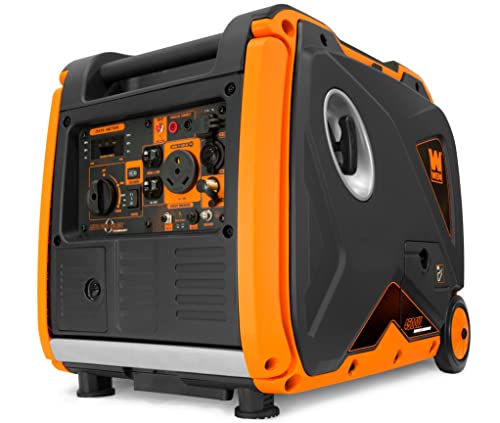
The DF451i offers dual-fuel capability with a higher power profile, delivering 4500 surge watts and 3500 running watts on gasoline, and 4500 surge / 3150 running watts on propane. It features Auto Fuel Selection technology that automatically switches between propane and gasoline for longer run times, and it adheres to EPA III and CARB standards. This model is well-suited for RVs, campsites, and home backup where quiet operation is valued and fuel flexibility is advantageous.
Buying Guide: Key Purchase Considerations And Comparisons
When evaluating fuel-efficient generators, consider the following factors to align with your needs:
- Fuel type and availability: Dual- or tri-fuel options increase resilience during fuel shortages. Propane and natural gas often offer steadier pricing and longer storage life compared with gasoline.
- Power output: Match peak and running watts to your essential loads. For home backups, aim for a unit with at least 4,000 running watts; for RVs or light use, 2,000–3,500 running watts may suffice.
- Efficiency features: Inverter technology, electronic fuel injection, and auto fuel selection optimize fuel use and fuel economy. CO sensors add critical safety benefits for occupied spaces.
- Runtime and tank size: Look for larger fuel tanks for extended outages, and consider runtime at typical loads to estimate how often you’ll refuel.
- Portability vs. capacity: Portable units are easier to move for camping and tailgating, while higher-capacity models are suited for whole-home backup or job sites.
- Safety features: Emergency shutoffs, low-oil and overheat protections, and CO monitoring help prevent accidents and equipment damage.
- Sound levels: Inverter generators typically run quieter than traditional open-frame models, an important consideration for residential neighborhoods and campsites.
- Parallel capability: If you anticipate higher demand, consider models that can be paired with another unit for additional power.
- Compliance and warranties: Check CARB and EPA compliance for your region and review warranty terms for long-term reliability.
Across the selected models, users gain a range of efficiency features—from dual- and tri-fuel versatility to CO sensors and quiet operation. The best choice depends on your typical load, preferred fuels, portability needs, and safety expectations for occupied spaces. For broad home backup and serious outdoor use, tri-fuel units and high-running wattage with CO protection are standout options. For lightweight travel and compact emergencies, smaller dual-fuel inverters with quiet performance provide dependable, efficient energy when needed most.