Best Fuel Resistant Sealants for Automotive and Industrial Use
Finding a reliable fuel resistant sealant is essential for preventing leaks in tanks, fuel lines, and engine components. This guide highlights top-rated options that endure gasoline, diesel, and other automotive fluids while maintaining flexibility and durability under temperature swings. The products below are selected for metal-to-metal or composite applications, ease of use, and trustworthy performance in demanding environments.
| Product | Brand | Best For |
|---|---|---|
| Permatex 85420 Permashield | Permatex | Gasket dressing and sealant for fuel systems |
| Permatex 29132 MotoSeal 1 | Permatex | Frequent disassembly engines and gaskets |
| J-B Weld 8217 TankWeld | J-B Weld | Gas tanks, radiators, metal repairs |
| Loctite 1252795 Oil & Gas Sealant | Loctite | Multi-purpose oil and gas resistant sealant |
| POR-15 Fuel Tank Sealer | POR-15 | Stops rust and seals metal tanks |
Permatex 85420 Permashield Fuel Resistant Gasket Dressing & Sealant

Permatex 85420 Permashield is engineered to be gasoline and fluid resistant, while staying flexible under high temperatures and rapid thermal cycling. It’s suitable for metal-to-metal gasket joints and allows for easy disassembly and reassembly in automotive assemblies. The product can help seal gasket surfaces without becoming brittle, which makes it a good option for components exposed to fluctuating temperatures and harsh fuels. Use on surfaces where a durable, flexible seal is needed and where repeated take-apart is required.
Key features include resistance to gasoline and other automotive fluids, continued flexibility at high temperatures, and capacity to endure rapid temperature changes. Its ability to tolerate repeated disassembly makes it a practical choice for serviceable engines and fuel systems that require maintenance over time.
Permatex 29132 MotoSeal 1 Ultimate Gasket Maker Grey

Permatex MotoSeal 1 is designed for automotive gaskets and frequently disassembled engines. It seals effectively on irregular and uneven joint surfaces and forms a tough, flexible bond that remains effective across engine cycles. The product cures rapidly—forming a seal within about 20 minutes—and can tolerate exposure to fuel and automotive fluids. This makes it suitable for gaskets and grommets in engines and other components that require reliable sealing during both assembly and service intervals.
With its grey formulation, the sealant provides a robust, adherent bond on metal and certain composites, while accommodating disassembly without sacrificing sealing performance. It is particularly favorable for engines where gasket surfaces are not perfectly flat and require a forgiving adhesive.
J-B Weld 8217 TankWeld Gas Tank Repair

J-B Weld TankWeld is a hand-mixable, steel-reinforced epoxy putty designed for quick repairs on metal surfaces. It’s highly suitable for gas tanks, radiators, and other metal components subject to fuel exposure. It sets in about 5 minutes and cures to a dark grey with substantial tensile strength, making it a practical solution for emergency or field repairs where a durable, fuel-resistant patch is needed. It is versatile for metal repair tasks beyond tanks, including water and other metal vessels.
The epoxy formulation provides a strong, durable repair that resists fuel exposure and mechanical stress. Users should follow proper curing times and surface preparation to maximize bond strength and service life.
Loctite 1252795 Oil & Gas Resistant Adhesive Sealant

Loctite 1252795 delivers reliable sealing with a neoprene-based adhesive and sealant formulation. It resists oil and gas exposure and is designed for multi-purpose applications, bonding metal, rubber, plastic, weather-stripping, and carpeting. The sealant remains flexible, helping prevent leaks that can occur from vibration, thermal cycling, or exposure to diesel fuels. This makes it a practical choice for engine compartments, fuel lines, hoses, and related components that require a robust, long-lasting sealant with broad substrate compatibility.
Expect a dependable seal under diverse conditions, including fluctuating temperatures and fluid exposure. Its versatility across materials can simplify inventory for automotive shops or DIY enthusiasts working on fuel-related projects.
POR-15 Fuel Tank Sealer
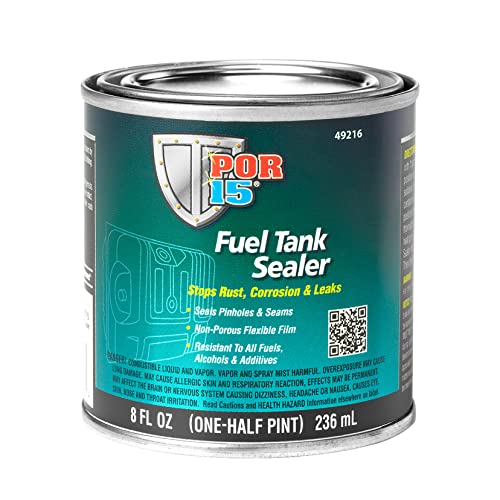
POR-15 Fuel Tank Sealer is a non-porous sealant designed to stop rust and prevent leaks in metal fuel tanks. It’s formulated to resist all fuels, including alcohol blends and additives, and provides a protective barrier against corrosion. The product is widely used for refurbishing fuel tanks and other metal fuel containment systems where rust prevention is critical. Application requires proper surface prep and curing to achieve the best long-term results.
The sealer’s focus on rust prevention and fuel resistance makes it a strong option for restoring old tanks or constructing new, durable fuel containment solutions in the presence of aggressive fuels and environmental exposure.
Buying Guide: Key Purchase Considerations For Fuel Resistant Sealants
- Chemical compatibility: Check fuel types (gasoline, diesel, ethanol blends) and environmental exposure to ensure the sealant won’t degrade or lose elasticity.
- Temperature tolerance: Look for formulations that resist high heat and rapid temperature changes common in engine bays and exhaust areas.
- Seal integrity vs. disassembly: Identify whether you need a reusable sealant (allows disassembly) or a permanent patch for single-use repairs.
- Substrate compatibility: Confirm whether the sealant bonds well with metal, rubber, plastic, or composite surfaces used in your project.
- Setting and cure times: Consider how quickly the product cures and whether you need a fast cure for on-site repairs or longer working time for complex joints.
- Mechanical strength: For patch repairs, assess tensile or shear strength to ensure the sealant endures pressure and vibration.
- Application method: Some products are ready-to-use pastes, while others require mixing or surface prep; select accordingly for your skill level and tools.
- Durability and service life: Review long-term performance data, resistance to vibration, moisture, and solvents to estimate replacement intervals.
- Environmental and safety considerations: Pay attention to VOC content and required PPE during application and curing.
- Repair scope: Decide whether a gasket dressing, epoxy putty, a high-temperature sealant, or a fuel tank sealer best fits your specific fuel system issue.
When evaluating options, compare each product’s fuel compatibility, temperature range, cure time, and substrate adhesion. For critical fuel containment, choosing a proven, fuel-resistant sealant with the right balance of flexibility and strength is essential to prevent leaks and corrosion over time.