Best Garage Gas Heaters for Home Garages and Shops
When selecting a garage gas heater, reliability, venting options, and heat output matter most. This guide highlights five top-performing models that suit various garage sizes—from small workshops to larger, well-ventilated spaces. Each product is evaluated on BTU output, efficiency, venting flexibility, and ease of installation. The following picks are aimed at American garages and provide options for natural gas and propane setups, as well as vent-free alternatives for simplicity and quick warmth.
Summary table of selected products
| Product | ||||
|---|---|---|---|---|
| Mr. Heater F260550 Big Maxx MHU50NG | 50,000 BTU / Natural Gas | Up to 1,250 sq. ft. | Vertical or horizontal venting | External thermostat access |
| Mr. Heater F260560 Big Maxx MHU80NG | 80,000 BTU / Natural Gas | Up to 2,000 sq. ft. | Vertical or horizontal venting | Includes brackets; gas connection outside |
| Modine HD45AS0111 Natural Gas Hot Dawg | 45,000 BTU | Residential/Light Commercial | Ventless or limited venting options | Low profile, quiet operation |
| ProCom MN300TBA-B | 30,000 BTU / Natural Gas | Up to 1,400 sq. ft. | Ventless with thermostat control | Compact wall/floor options |
| InoKraft Maxheat MH125 | 125,000 BTU / Propane | Up to 3,200 sq. ft. | Ventless with adjustable heat angle | Auto On/OFF with wide range comfort |
Mr. Heater F260550 Big Maxx MHU50NG
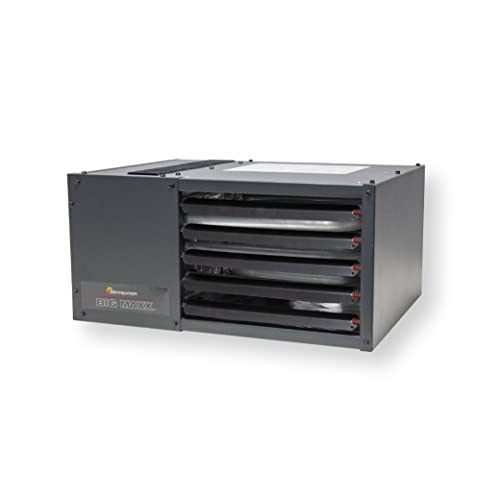
BTU capacity reaches 50,000 BTU per hour, heating up to about 1,250 square feet. This natural gas unit allows vertical or horizontal venting to fit various garage layouts. An external access panel provides easy thermostat and gas connection access, simplifying service and adjustments. The design emphasizes durability and straightforward operation for American garages seeking steady warmth during colder seasons.
Mr. Heater F260560 Big Maxx MHU80NG
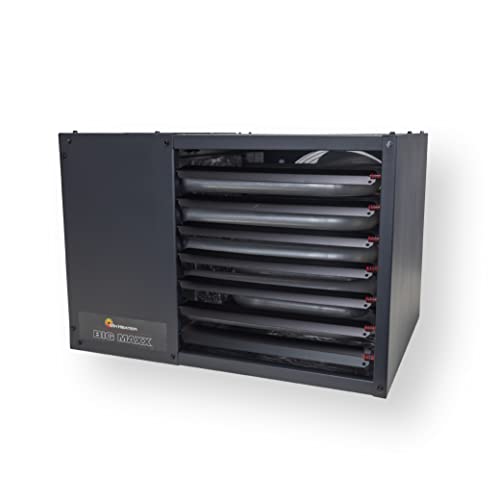
This larger unit delivers up to 80,000 BTU and can cover up to 2,000 square feet, making it suited for bigger garages or open shop floors. It’s designed for natural gas with robust venting options—vertical or horizontal—while including brackets and a gas conversion-ready feature (thermostat, hose & regulator may be needed separately). It’s built for tougher environments where frequent, sustained heat is required.
Modine HD45AS0111 Natural Gas Hot Dawg
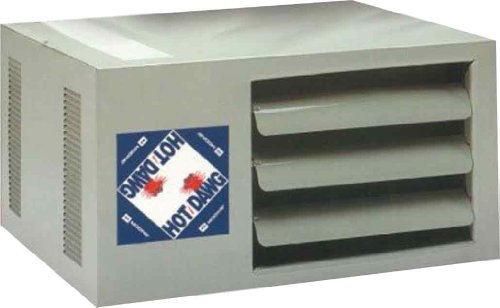
With 45,000 BTU and a focus on quiet operation, the Hot Dawg line is engineered for residential and small commercial spaces. Its low-profile design blends into most garage interiors, and the unit is certified for multiple use cases. The model emphasizes neutral aesthetics and efficient heat distribution for steady comfort without intruding on workspace area.
Mr. Heater F272800 MH40NG

This 40,000 BTU natural gas garage heater uses infrared heat for efficient warmth. It’s designed for spaces with ceilings in the 12–15 ft range and requires careful clearance planning around the top and sides. The unit focuses on economical heat delivery, making it a practical option for medium-sized garages that need reliable, cost-conscious performance.
ProCom MN300TBA-B Ventless Natural Gas

Compact and ventless, this 30,000 BTU unit heats up to 1,400 square feet. It offers thermostat control with High/Medium/Low settings, providing flexible comfort for small offices or living spaces adjacent to a garage. The heater presents a slim profile that blends with room decor while delivering strong warmth without external venting hardware.
InoKraft Maxheat MH125 125,000 BTU

High-capacity propane heater delivering 125,000 BTU for spaces up to about 3,200 square feet. It features auto 25–95°F on/off control and an adjustable heat angle, making it suitable for large garages or job sites. CSA certified and engineered for quick warm-up, this model is positioned for serious heating needs where large areas require rapid heat deployment.
Buying Guide: Key Considerations for Choosing a Garage Gas Heater
- Space size and ceiling height: Match BTU output to the garage area. Larger spaces often benefit from higher BTU units or multiple devices for even heat distribution.
- Ventilation and venting type: Venting requirements vary by model—vertical, horizontal, ventless, or dual options. Ensure proper clearance and compliance with local codes.
- Fuel type and availability: Natural gas units are common in homes with gas lines, while propane may be preferred where gas access is limited. Consider propane tank availability and refilling logistics.
- Installation ease and accessibility: Look for external thermostat access, easy gas connections, and user-friendly maintenance features to minimize service downtime.
- Safety features: Overheat protection, oxygen-depletion sensors, and shut-off mechanisms are essential for safe indoor use in garages and workshops.
- Noise and comfort: Some models emphasize quiet operation; others prioritize rapid heat delivery. Consider the expected use and tolerance for noise in your workspace.
- Vent-free vs. vented options: Vent-free heaters offer simple setup but require space planning for safe operation and adequate ventilation; vented units require proper ducting but can be better for larger areas.
- Durability and warranty: Look for corrosion-resistant components, sturdy housings, and manufacturer warranties that cover common wear and tear in garage environments.