Best Gas Garage Heaters for Efficient Warmth in Any Garage
Gas garage heaters deliver reliable warmth for workshops, tool bays, and cold-weather projects. This guide highlights five top picks that balance heat output, venting options, and ease of installation. Each product is evaluated on BTU capacity, fuel type, venting requirements, and practical features to help you choose the right unit for your space. Use the quick-reference table below to compare core specs at a glance.
| Product | BTU | Fuel | Vent Type | |
|---|---|---|---|---|
| Mr. Heater F260560 Big Maxx MHU80NG | 80,000 | Natural Gas | Vertical/Horizontal venting | Up to 2,000 sq ft |
| Mr. Heater F260550 Big Maxx MHU50NG | 50,000 | Natural Gas | Vertical/Horizontal venting | Up to 1,250 sq ft |
| Modine HD45AS0111 Hot Dawg | 45,000 | Natural Gas | Ceiling/Vertical/Horizontal options | Residential/Light commercial |
| ProCom MN300TBA-B | 30,000 | Natural Gas | Wall or floor mount options | Small to medium spaces |
| InoKraft Maxheat MH125 | 125,000 | Propane | Forced air, portable | Up to 3,200 sq ft |
Note: This article focuses on natural gas and propane garage heaters suitable for American garages. Each product’s installation may require professional service, venting assessment, and adherence to local codes. Specifications provided are from the manufacturers and product listings.
Mr. Heater F260560 Big Maxx MHU80NG – 80,000 BTU
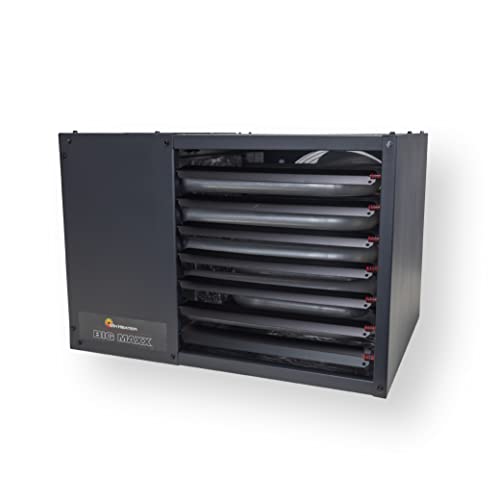
The Big Maxx MHU80NG is designed for larger garage spaces, delivering up to 80,000 BTU of natural gas heat. This unit supports category 1 vertical and category 3 horizontal venting, offering flexible installation near or away from exterior walls. It requires proper clearances and connections, but provides robust warmth for spaces up to approximately 2,000 sq ft. The heater ships with the main unit and mounting brackets; thermostat, hose, and regulator are not included, so consider compatible controls for precise temperature management.
Key features include a compact footprint for a high-output unit and compatibility with natural gas supply. Its 120 V electrical requirement and a modest 2.3-amp draw contribute to straightforward electrical integration in many garages. Proper installation ensures safe venting and operation, especially in spaces with lower ceilings or tight configurations. Always follow ventilating guidance to prevent gas buildup and ensure adequate airflow.
Mr. Heater F260550 Big Maxx MHU50NG – 50,000 BTU
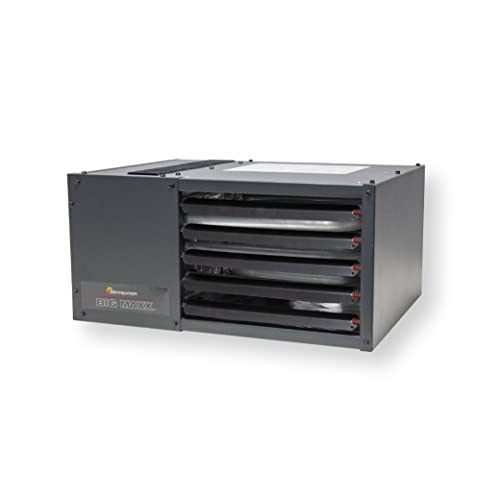
This 50,000 BTU model offers substantial warmth for mid-sized garages. It supports both vertical and horizontal venting configurations, enabling flexible installation relative to existing ductwork or exterior walls. External access to thermostat and A/C terminals is highlighted for ease of service and adjustments. This unit is well-suited for garages up to around 1,250 sq ft when paired with proper venting and clearance guidelines. As with larger units, installer oversight is recommended to ensure venting, gas connections, and clearance distances meet code requirements.
The MHU50NG balances power with installation practicality, providing reliable heat in varying climates. Ensure adequate combustion air and proper venting to minimize moisture buildup and maintain indoor air quality. Pair with a compatible thermostat for consistent comfort in busy shop days or cold mornings.
Modine HD45AS0111 Hot Dawg – 45,000 BTU
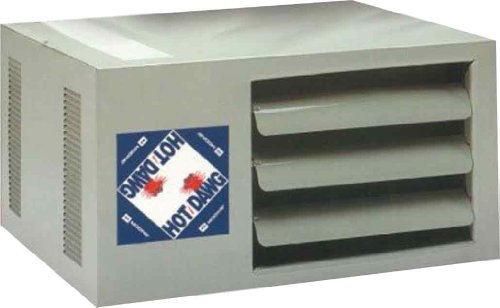
The Hot Dawg HD45AS0111 offers a low-profile design with 45,000 BTU output and is certified for residential, commercial, and industrial use. Quiet operation and a neutral gray aesthetic help it blend into many garage interiors. It supports versatile venting and can be installed in spaces with limited ceiling height or awkward layouts. This model emphasizes efficient heat delivery with a focus on compact form without sacrificing output, making it suitable for various garage sizes, especially where ceiling height or space constraints exist.
Consider this model if you need dependable gas heat with flexible mounting options and a discreet installation footprint. Verify clearance requirements and ensure adequate ventilation near the heater interface to maintain safe and efficient operation. The HD series is known for rugged performance in challenging environments.
ProCom MN300TBA-B Ventless 30,000 BTU

The ProCom MN300TBA-B is a compact ventless natural gas heater that delivers 30,000 BTU, suitable for smaller spaces such as home garages or workshops. It features thermostat control with multiple heat settings (High/Medium/Low) and can be mounted on a wall or placed on the floor with base feet. The appliance is designed to maximize heat output in limited spaces while maintaining a user-friendly interface. It is an attractive option for garages needing a quick, straightforward heat source without extensive venting infrastructure.
Ventless operation simplifies installation, but it increases the importance of adequate ventilation and CO detectors in the space. Proper clearance around the unit and ensuring proper air exchange are essential for safe operation. This model is ideal for garages where installing external venting is impractical or cost-prohibitive, provided ventilation remains sufficient.
InoKraft Maxheat MH125 – 125,000 BTU Forced Air

The InoKraft Maxheat MH125 is a high-output propane heater designed for large garages and job sites, producing up to 125,000 BTU. Its forced-air design rapidly raises temperatures, with a broad coverage up to approximately 3,200 sq ft. The unit offers an Auto On/OFF control range of 25–95°F for convenient operation, plus CSA certification for safety. It is portable and features a 10-foot hose for flexible placement. This makes it ideal for larger spaces where immediate, aggressive heating is required.
Important considerations include fuel supply reliability, power availability, and ventilation for safe combustion. The MH125’s portability benefits temporary or seasonal workspaces, though permanent installation will require appropriate mounting and exhaust considerations if used with heavier ventilation demands. Evaluate your space size and anticipated usage when choosing this model.
Buying Guide: Key Purchase Considerations
BTU and space: Match the heater’s BTU rating to your garage’s square footage and insulation. Overpowered units heat space quickly but may waste fuel; underpowered heaters struggle in cold weather. Consider a model rated for a slightly larger area if you plan to expand your workspace.
Ventilation and venting type: Natural gas heaters require proper venting to exhaust combustion byproducts. Vertical, horizontal, or ceiling-mounted vent options affect installation complexity and required clearances. Ventless units are easier to install but demand strong ventilation and CO monitoring for safety.
Fuel type and availability: Natural gas units are common for fixed installations with a gas line. Propane models offer portability and can be used where natural gas isn’t available, but propane costs and tank management matter.
Clearances and installation: Check manufacturer-specified clearance from floors, walls, and ceilings. Some units require ceiling or wall mounting, while others are free-standing or portable. Professional installation is often advised to ensure safe gas connections and proper venting.
Controls and efficiency: Thermostat compatibility and control precision influence energy use and comfort. Look for models with adjustable heat settings and reliable thermostats. Efficiency ratings impact ongoing fuel costs and environmental footprint.
Noise and comfort: Some units operate quietly, while others generate noticeable hums. Consider your garage’s usage patterns, including work where noise level matters for concentration or client-facing spaces.
Maintenance and warranties: Review warranty terms and routine maintenance requirements. Access to spare parts, ease of service, and reputable support influence long-term reliability.
Installation environment: Evaluate ceiling height, airflow, and clearance paths for venting. Garages with limited vertical space may require compact units or adaptable mounting solutions.
Safety features: Look for built-in safety mechanisms like automatic shutoff, overheat protection, and oxygen depletion sensors where applicable. Always install CO detectors in occupied spaces when using gas heaters.