Best Generator for a 2000 Sq Ft Home: Reliable Backup Power This Year
Choosing a generator for a 2000 sq ft house means balancing power, noise, and portability. This guide highlights five top options that align with the typical needs of a mid-sized home: clean inverter power for electronics, practical run times, and easy transport. Whether you’re preparing for outages or planning outdoor use, these models provide reliable electricity when it matters most.
| Product | Brand | Power (Starting / Running) | Fuel | Notes |
|---|---|---|---|---|
| GENMAX GM2000i | GENMAX | 2000 / 1600 Watts | Gas | Ultra lightweight, quiet inverter with Eco Mode |
| Jackery Solar Generator 2000 v2 | Jackery | 2200W AC / 2042Wh battery | Battery (solar capable) | Portable power station with fast charging |
| DABBSSON 2000L | Dabbsson | 2200W / 3300W (P-Boost) | LiFePO4 battery | Compact, long runtime, multiple outlets |
| A-iPower SC2000i | A-iPower | 2000W / 1600W | Gas | Ultra lightweight inverter with Yamaha-inspired tech |
| A-iPower SUA2000iD | A-iPower | 2000W / 1600W (gas); 1800W / 1500W (propane) | Gas / Propane | Dual fuel flexibility, safe inverter power |
Below are five carefully selected generators that balance power, portability, and efficiency for a typical 2000 sq ft home. Each option includes efficient inverter technology to protect sensitive electronics and a practical design suitable for home backup, camping, or RV use.
GENMAX GM2000i Portable Inverter Generator
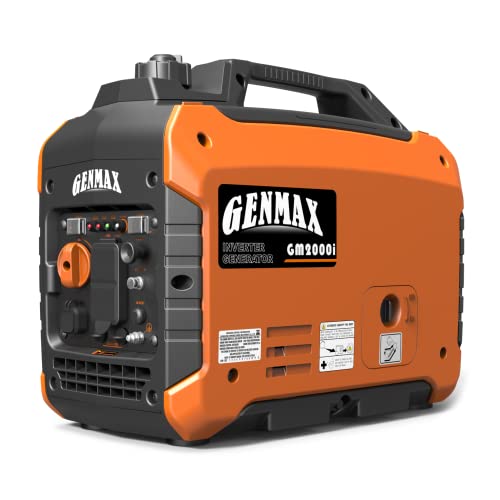
The GENMAX GM2000i uses a 79.7cc 4-stroke OHV engine with inverter technology, delivering 2000 starting watts and 1600 running watts. With less than 3% THD, it provides clean power suitable for TVs, lights, fans, and small tools. Weighing about 34 pounds, it emphasizes portability and features an Eco Mode for improved fuel efficiency, making it well-suited for camping or as a home backup where quiet operation matters. A compact size helps with transport and storage in households with limited space.
Jackery Solar Generator 2000 v2

The Jackery Solar Generator 2000 v2 is a portable power station rather than a traditional gas generator. It offers 2200W AC output and a large 2042Wh LiFePO4 battery, enabling off-grid power for home backup, camping, or RV use. It includes USB-C PD 100W charging and supports rapid AC charging, with solar input compatibility for sustainable recharging. Weighing roughly 39.5 pounds, its CTB technology improves space efficiency and safety, while 66-102 minute full charging times under specific conditions make it a strong option for quiet, sunlight-powered resilience during outages.
DABBSSON 2000L Solar Generator

The DABBSSON 2000L is a semi-solid LiFePO4 power station with 2048Wh capacity and 2200W AC output, plus P-Boost up to 3300W. It emphasizes long runtime—over 1.3x compared to standard packs—thanks to AI-driven BMS and a compact 41 lb frame. It supports charging multiple devices via six outlets and USB-C/USB-A ports, making it suitable for home, job sites, or outdoor use. With UL94-V0 fire-resistant design, it also prioritizes safety for portable power needs.
A-iPower SC2000i Portable Inverter Generator

Powered by a Yamaha-engine-inspired 79cc OHV four-stroke, the SC2000i delivers 2000 starting watts and 1600 running watts with inverter technology to provide clean, stable power for sensitive electronics. It emphasizes quiet operation and reliability, making it appropriate for emergency home use, tailgating, or camping. Its light construction and efficient fuel consumption are designed to appeal to users who need portable power without excessive noise or bulk.
A-iPower SUA2000iD Dual-Fuel Inverter Generator

The SUA2000iD offers 2000 starting watts and 1600 running watts on gasoline, with alternative LPG (propane) operation producing up to 1800 starting watts and 1500 running watts. This dual-fuel flexibility allows users to select the most available fuel source, maintaining clean inverter power for electronics. It includes parallel-capable cables to combine two units for up to 4000 starting watts and 3200 running watts, which can be advantageous for larger loads during outages or outdoor events.
Buying Guide: Key Purchase Considerations
- Power needs and run time: Match starting and running watts to your essential circuits. For a 2000 sq ft home, consider devices like refrigerators, sump pumps, lighting, and electronics. Inverter generators typically provide cleaner power ideal for sensitive devices.
- Fuel type and availability: Gasoline units are common and fast-recharging, but dual-fuel options offer flexibility during fuel shortages. Battery-powered stations (like the Jackery) excel in quiet operation and refueling independence but require charging infrastructure.
- Portability vs. power: Lighter units (like the GENMAX GM2000i) are easier to carry and store, while higher-output models (with P-Boost or dual fuel) handle heavier loads but may be bulkier.
- Noise considerations: For home use, quieter models with 50-60 dBA are preferable to minimize disturbances, especially in neighborhoods or near sleeping areas.
- Outlets and charging options: Consider the number and type of outlets, as well as fast charging or solar integration, to support multiple devices or off-grid scenarios.
- Charging speed and maintenance: Battery-based systems require solar or grid charging; ensure you have reliable charging options during outages. LiFePO4 cells tend to offer longer lifespans and better safety profiles.
- Safety and compliance: Look for EPA-compliant engines and built-in safety protections, including low-oil shutdown, overload protection, and thermal management.
- Parallel capability: If you anticipate heavier loads or longer outages, parallel-ready models (or those with parallel cables) can double output when needed.
These considerations help balance reliability, safety, and practicality for a typical 2000 sq ft home. The five highlighted models provide various approaches—from compact gas inverters to flexible dual-fuel units and robust battery-powered stations—so buyers can choose based on priorities like noise, portability, or long-term energy resilience.