Best Glue for Kitchen Cabinets: Strong, Durable Bonding Solutions for Cabinetry Projects
When selecting the best glue for kitchen cabinets, durability and hiding power matter most. This guide compares top wood and construction glues to help you choose the right product for cabinet assembly, repair, and refinishing. It highlights options for indoor use, outdoor projects, and moisture-prone spaces. The top picks below cover wood-to-wood bonds, melamine and particleboard substrates, and heavy-duty cabinet repairs. This guide is ideal for DIYers, woodworkers, and cabinet installers seeking reliable, low-muss adhesion and clear or natural finishes. A compact buying table at the top of this article summarizes the five recommended products for quick reference.
| Product | Brand | Best For |
|---|---|---|
| Gorilla Wood Glue, 8 oz | GORILLA | Indoor/outdoor wood bonds on hardwoods and softwoods |
| Gorilla Ultimate Waterproof Wood Glue, 8 oz | GORILLA | Moisture-prone areas; outdoor cabinets or damp kitchens |
| Titebond 5003 II Premium Wood Glue, 8 oz | Titebond | Wood, melamine, particleboard applications |
| Gorilla Kitchen & Bath Construction Adhesive, 9 fl oz | GORILLA | Heavy-duty cabinet installations in kitchens and baths |
| Titebond Melamine Glue, 16 oz | Titebond | Melamine-coated surfaces and cabinet interiors |
Gorilla Wood Glue, 8 oz — Strong Wood Bond
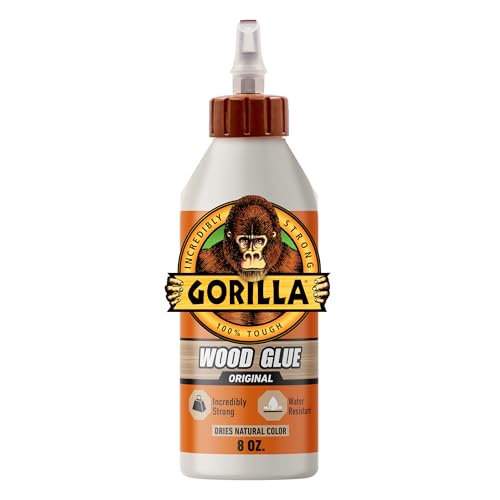
Best for: Basic cabinet assembly and repairs on hardwoods and softwoods. This water-resistant PVA wood glue forms a fast, strong bond and accepts paint and sanding once cured. Its 20-30 minute clamp time accelerates project timelines, making it suitable for DIY cabinet builds or repairs where quick handling is beneficial.
Why selected: It balances ease of use with durability in interior cabinet work. ANSI/HPVA Type II water resistance gives it moisture resistance suitable for kitchens and damp environments when used indoors or outdoors.
Limitations: The glue cures fully in 24 hours; plan for overnight clamping and curing when working on multiple cabinet joints. Best results come from clamping to fit rather than relying on surface-only pressure.
Gorilla Ultimate Waterproof Wood Glue, 8 oz — Weather-Resistant Bond

Best for: Cabinets in spaces with high humidity or potential exposure to moisture, such as under-sink areas or kitchens with inadequate ventilation. This glue passes ANSI/HPVA Type I waterproof standards and offers an extended working time before bonding, reducing squeeze-out and misalignment during assembly.
Why selected: Its water resistance and longer open time make it a solid choice for more demanding cabinet installations where moisture exposure is a concern. Cures to a natural tan color, blending well with many wood types used in cabinetry.
Limitations: It is slightly more expensive than basic wood glue and may require careful surface preparation to maximize moisture resistance in humid environments.
Titebond 1412 Titebond-3 Glue, 4-Ounce — Tan

Best for: Cabinet repairs and projects requiring a tan adhesive that blends with natural wood tones. Ideal for interior applications where a flexible, durable bond is needed, including small assembly tasks, trim, and lightweight cabinet components.
Why selected: Titebond is a trusted name for wood glues. The tan color helps conceal glue lines on wood cabinets without finishing tweaks. Suitable for a range of wood substrates, supporting reliable performance in cabinetry work.
Limitations: The product is a smaller 4-ounce size, which may require more frequent purchases for larger cabinet jobs. It is primarily intended for interior use and smaller joints.
Gorilla Max Strength Construction Adhesive, 2.5 oz — Clear and Strong

Best for: Heavy-duty cabinet installations, gap filling, and projects where a waterproof bond is needed even under water. This clear adhesive helps maintain a discreet finish on visible cabinet joints and trim.
Why selected: Its stronger formula and clear finish suit cabinet frames, edge joints, and backing pieces that require a robust, moisture-resistant seal. It’s a good option when traditional white or tan wood glues aren’t suitable due to visibility concerns.
Limitations: As a max-strength construction adhesive, it can be more challenging to reposition parts after initial tack; allow for precise alignment before clamps set in place.
Titebond 5003 II Premium Wood Glue, 8 Oz

Best for: General cabinet assembly and repairs where a reliable wood-to-wood bond is required on diverse substrate types, including hardwoods, softwoods, and composites.
Why selected: Titebond’s 5003 II Premium is designed for a broad range of wood materials, with a strong initial tack and long open time for careful alignment. It’s a dependable choice for interior cabinetry projects and repairs.
Limitations: The product description notes its origin in China, which may be a consideration for some buyers seeking U.S.-made items. For sensitive assemblies, follow clamping times precisely to maximize bond strength.
Wood Glue — Strongest Glue for Woodworking (Meuvcol)

Best for: Cabinet fronts, frames, and interior woodworking where a waterproof, heavy-duty bond is needed for both indoor and exterior uses. The seal provides durability against the elements and daily kitchen use.
Why selected: This glue is marketed for a weather-resistant and durable bond, suitable for cabinetry that may face moisture or temperature changes. Its user-friendly bottle and precision tip support clean, accurate application on cabinet joints.
Limitations: For intricate cabinet work, avoid too thick a layer to prevent squeeze-out. As with all exterior-use glues, ensure proper surface prep and clamping for best results.
Buying Guide
What substrate are you bonding?
Cabinets use a mix of wood, plywood, particleboard, MDF, and melamine. Choose a glue that specifies compatibility with your substrate—melamine and particleboard often respond best to specialized melamine or wood-to-composite adhesives.
Indoor vs. outdoor or moisture-prone spaces
For kitchens, a moisture-resistant wood glue (ANSI/HPVA Type II) provides reliable performance. For damp or high-moisture areas, a true waterproof formulation (Type I) offers better long-term resilience.
Open time and clamping needs
Open time affects alignment flexibility. If you need precise positioning on cabinet joints, select a glue with longer open time. Clamping duration varies; plan for 20-30 minutes of clamp time for many wood glues and longer cures before full handling.
Finish and appearance
Some glues cure to a tan or clear finish. If joints will be visible or near finish lines, consider color and potential glue lines. Clear or matching-tone glues help minimize visual impact on cabinetry.
Application and clean-up
Look for a bottle with a precision tip for accurate lines along joints. Drip-resistant or thick formulas reduce mess in tight cabinet corners. Quick-clean-up options save time during busy cabinet installs.
Cost and availability
Popular brands like Gorilla and Titebond balance price, availability, and performance. For large cabinet projects, consider a bulk purchase or a combination of wood glue for framing and melamine glue for interior panels.
Safety and cure considerations
Always follow manufacturer instructions for ventilation, drying times, and surface preparation. Wear gloves when applying glues, and wipe away squeeze-out promptly to avoid finish problems on wood surfaces.
FAQ
What glue is best for kitchen cabinet frames?
For frames, a strong wood glue such as Gorilla Wood Glue or Titebond 5003 II Premium Wood Glue is typically recommended for durable, wood-to-wood bonds.
Can I use construction adhesive for cabinets?
Yes, for heavy-duty frame bonding or gap filling, a construction adhesive like Gorilla Kitchen & Bath Construction Adhesive can be effective, especially in kitchens and baths with moisture considerations.
Is waterproof glue necessary for kitchen cabinets?
Waterproof or Type I adhesives are beneficial in moisture-prone environments, particularly in kitchens with high humidity or potential splash zones.
Should I use melamine glue for cabinet interiors?
Melamine-compatible glues, such as Titebond Melamine, are well-suited for melamine-coated surfaces, particleboard, or MDF interiors where a clean, strong bond is needed without visibility of glue lines.
How should I clamp wood cabinet joints?
Clamp tightly enough to hold joints without warping the panels. Most cabinet joints benefit from 20-30 minutes of clamp time with even pressure, followed by full cure per the product guidelines.