Best Glue Line Rip Blades for Smooth, Glue-Ready Edges and Precision Ripping
When precision matters in woodworking, a high-performance glue-line ripping blade can make the difference between a clean, square edge and a laborious sanding ritual. This guide highlights top glue-line ripping blades designed to deliver true cuts, minimal chipping, and reliable edge quality for glue-ready surfaces. We compare blades across TiCo carbide blends, grind types, kerf thickness, and thicknesses to help you choose the best option for cabinetmaking, trim work, and fine carpentry.
| Blade | Diameter | Teeth | Kerf | Notable Strength | Brand |
|---|---|---|---|---|---|
| Freud LM74R010 | 10″ | 30 | .118″ | Heavy-Duty, Premium TiCo, True-cut edges | Freud |
| Freud LM75R010 | 10″ | 30 | .118″ | Ultra-smooth surfaces, glue-ready edges | Freud |
| CMT 203.630.10 | 10″ | 30 | TCG | High-quality steel, laser-cut and tensioned | CMT ORANGE TOOLS |
| Freud LU87R010 | 10″ | 24 | .071″ | Low-power saw optimization, thin kerf | Freud |
| Freud LM74M010 | 10″ | 30 | .118″ | Robust, precise glue-line ripping | Freud |
Note: Each blade offers distinct advantages—whether you need ultra-smooth glue-line finishes, compatibility with underpowered saws, or robust construction for heavy-duty ripping. The selections below focus on blades that provide glue-line quality with consistent performance across common cabinetmaking and joinery tasks.
Freud LM74R010 Glue Line Ripping Blade
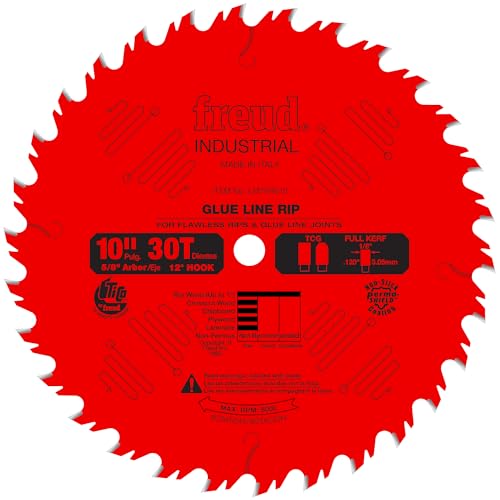
The Freud LM74R010 combines a heavy-duty construction with a premium TiCo carbide blend designed to maximize cutting performance, edge retention, and durability. Its 10″ diameter, 30 teeth, and 0.118″ kerf create stable, flat cuts that are ideal for glue-ready edges in thick or dense woods. The triple-chip tooth design delivers smooth, true cuts, reducing or eliminating the need for sanding or jointing when preparing edges for gluing. This blade is well-suited for demanding ripping tasks in cabinetry and heavy stock work.
Freud LM75R010 Glue Line Ripping Blade
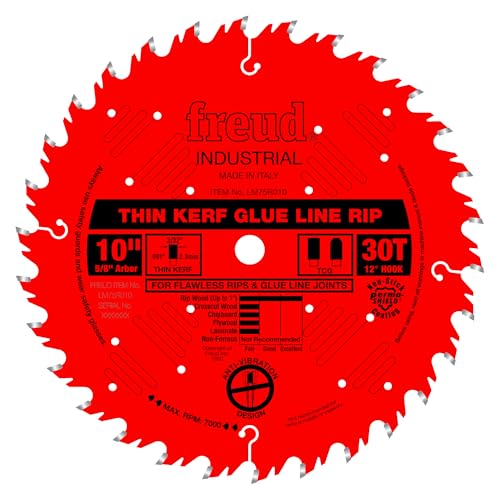
The LM75R010 extends the same TiCo carbide advantages with a triple chip grind, delivering ultra-smooth, true surfaces perfect for glue-ready joints. Its 10″ diameter and 30 teeth provide robust performance across a variety of hardwoods. The blade excels in precision rip cuts from 1/8″ to 1″ thick materials, making it a solid choice for fine cabinetry, trim work, and glue-line applications where finish quality matters as much as cutting speed.
CMT 203.630.10 Glue Line Ripping Blade

The CMT Orange Tools blade uses a robust laser-cut, tensioned steel plate paired with a 10″ diameter and 30 teeth. Its TCG grind configuration is designed to deliver true, glue-ready edges with consistent performance. The blade’s geometry supports precise rutting and clean faces, making it a versatile option for rips requiring high edge quality and dependable flatness in solid woods.
Freud LM74M010 Glue Line Ripping Blade

Freud’s LM74M010 offers a 10″ diameter, 30 teeth, and a TiCo hi-density carbide ripping blend. The heavy-duty thick kerf and plate contribute to blade stability and flatness during long, high-volume ripping sessions. With a TCG grind and a 12° hook angle, this blade emphasizes efficient waste removal and durable edge performance, making it a strong option for production cabinetry or woodworking that emphasizes glue-line quality.
Freud LM74R012 Glue Line Ripping Blade

The 12″ version adds versatility for larger stock ripping with a 40-tooth configuration, paired with TiCo hi-density carbide. The heavy-duty kerf and plate maintain stability through deep cuts, while the 1″ arbor ensures compatibility with most table saws. The combination of a 12″ diameter and 40 teeth supports smoother glue-line edges across thicker boards and higher-volume workflows where glue-ready finishes matter most.
Buying Guide: Key Considerations For Glue Line Rip Blades
- Tooth configuration: Glue-line blades typically use a TC(G) or TiCo grind for clean, true cuts; triple-chip designs help minimize tear-out along edge faces.
- Kerf and plate thickness: Thicker kerfs offer stiffness and stability for demanding ripping tasks; thinner kerfs reduce horsepower needs on underpowered saws but may wear quicker.
- Carbide blend and durability: TiCo hi-density carbide blends provide longer edge retention and consistent performance when cutting through hardwoods or dense joinery stock.
- Diameter and arbor compatibility: Match blade diameter and arbor size to your equipment to ensure safe operation and optimal cut quality.
- Edge quality vs. speed: A balance between aggressive material removal and glue-line edge smoothness is essential—especially for finish-ready joints.
Other considerations include blade height compatibility with stock thickness, the type of saw (table or hybrid), and the finish requirements of the project. For production runs or cabinetmaking, selecting blades with consistent repeatability and minimal glue-line tear-out helps maintain workflow efficiency and reduces post-cut sanding.