Best Green Line Laser for Precise Alignment and Layout
Green line lasers provide clearer visibility and faster layout for interior finishing, tiling, cabinetry, and construction tasks. This guide highlights five well-regarded options that balance brightness, accuracy, durability, and value. Each product section includes key specs and practical considerations to help buyers compare performance in common work environments.
| Product | Brand | Key Benefit | Typical Use |
|---|---|---|---|
| DEWALT DW089LG | DEWALT | Bright green cross-line beams; cordless convenience | General construction, indoor framing, wall lines |
| DEWALT DW088CG | DEWALT | Durable with magnetic bracket; cost-effective | Hanging pictures, level lines, basic layout |
| Takamine GM160 Pro | Takamine | Four 360° planes; strong versatility | Full room layout, multiple angle alignment |
| Motovera LL-T2 | Motovera | Rotary plus cross-line; IP54 durability | Indoor/outdoor, long-range layout |
| 520nm Green Line Module (OxLasers) | oxlasers | Compact module with long duty cycle | Line alignment for cutting, engraving, and positioning |
Motovera LL-T2 Green Cross Line Rotary Laser

The Motovera LL-T2 projects a 110° self-leveling green line with cross-line capability and rotary mode. It includes four brightness levels to adapt to ambient lighting, improving visibility in daylight or bright interiors. The device is designed for indoor and outdoor use with a robust IP54 rating, protecting against dust and splashes. Its 360° magnetic bracket and multiple mounting threads facilitate flexible placement, while the overall construction emphasizes durability in professional job sites.
DEWALT DW088CG Green Cross Line Laser

The DEWALT DW088CG Green Cross Line Laser emphasizes durability with an over-molded housing and a 1-meter drop rating. The green beam improves visibility for tasks like picture hanging, tile work, and general alignment in varying light conditions. Its magnetic bracket enables quick mounting on metal surfaces, and its green laser line offers enhanced brightness for precise line placement across rooms and hallways. This model is sized for practical handling on busy job sites.
DEWALT 12V MAX Laser Level, Green Line Laser (DW089LG)
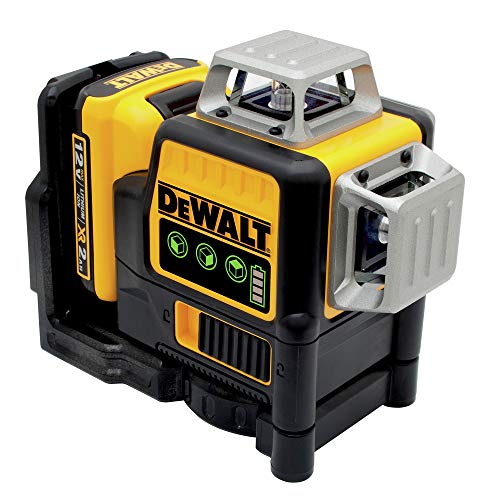
The DEWALT DW089LG uses a 12V MAX battery platform, delivering a cordless solution with green beam visibility across long distances. The device is designed for cross-line and level-line tasks with high accuracy and an included magnetic bracket for fast mounting. The green laser is particularly effective in bright environments, and the tool’s housing emphasizes ruggedness for daily construction use. Its autonomous power profile suits work sites with limited power access.
520nm Focusable High Power Green Line Module (OxLasers)

This green line module focuses 520 nm light for precise line generation. It is a compact, high-power option designed for cutting, engraving, and positioning tasks. The package includes a 5V power adapter and mounting components to facilitate a quick setup. While suitable for indoor use and controlled environments, it is best utilized in rooms or dark workspaces where the green line remains clearly visible. The long-duty cycle supports extended operation in shop settings.
532nm Green Diode Laser Module (Laserlands)

This 532 nm module is intended for decorative or projection uses, often in Halloween or themed scenes. It offers a focusable line, with output under 5 mW and a 12V operating voltage. It is not intended for precise alignment or long-range leveling, but rather for visual effects and display applications. Users should avoid using it as a primary line alignment tool in professional settings due to potential brightness variability and safety considerations.
Qianfabeam Green Laser Module GM532-30

The Qianfabeam GM532-30 is a dual-pack green diode laser module designed for DIY projects. It operates at 532 nm and offers straightforward integration for custom line generation. In colder environments, the module may require brief preheating to ensure stable output. This option is best for hobbyist setups or experimental builds where the user controls the environment and power supply.
Buying Guide: Key Considerations For Green Line Lasers
- Brightness and visibility: Green lasers typically appear brighter to the human eye than red or blue. Look for models with multiple brightness settings or high-lumen output for use in well-lit environments.
- Line type and range: Decide between cross-line, line-only, or multi-plane (360°) configurations. For large rooms or uneven surfaces, multi-plane or rotary capabilities can save time.
- Accuracy and leveling: Check specifications such as ±1/8 inch at 33 feet or similar. Self-leveling features reduce manual adjustments, improving efficiency on long layouts.
- Durability and build quality: IP ratings (like IP54) protect against dust and water. Over-molded housings and rugged brackets support tough job-site conditions.
- Mounting options: A versatile tool should offer 1/4″-20 and 5/8″-11 threads, magnetic brackets, and tripod compatibility for flexible positioning.
- Power source and runtime: Cordless options with rechargeable batteries are convenient on sites without power. For corded or USB-powered modules, ensure reliable power access and cooling for extended use.
- Safety considerations: Always follow laser safety guidelines, avoid direct eye exposure, and use appropriate protective measures when projecting in occupied spaces or outdoor environments.
- Intended use case: For interior finishing and tiling, pausing at line placement is common; for outdoor construction, long-range visibility and rugged build become more critical.
- Maintenance and service: Look for availability of replacement parts, easy access to power adapters, and documented warranty terms to support long-term usage.
When selecting a green line laser, consider whether you prioritize portability, battery life, or the ability to project multiple intersecting lines. For professional contractors performing frequent room layouts, a model with 360° planes and robust mounting options often delivers the best return on investment. For DIY enthusiasts, a compact module with a straightforward setup may meet needs without added complexity. The five options summarized here cover a range of use cases, balancing visibility, durability, and practicality for American job sites and workshops.