Best Heating Pad for Tank Terrariums: Top Reptile Mats for 2026
Answering the need for safe, efficient tank heating, these reptile heating mats are designed to warm under-tank setups without overheating. Best for hobbyists stocking 10–40 gallon terrariums, amphibian enclosures, or plant terrariums. The top picks below balance energy efficiency, ease of use, and durability for glass terrariums and similar setups. This guide compares five reliable options, highlighting who each product suits best and practical limits to consider.
| Product | Size / Wattage | Best For | Why Pick |
|---|---|---|---|
| BN-LINK Reptile Heat Pad 6″x8″ 8W | 6″ x 8″, 8W | Smaller tanks or tight layouts | Compact, energy-efficient, easy setup |
| 8″ x 6″, 8W | Medium tanks (10–20 gal) | Steady heat, flexible mounting | |
| BN-LINK Reptile Heat Pad 8″x12″ 16W | 8″ x 12″, 16W | Mid-size terrariums (30–40 gal) | Higher heat output with simple adhesive setup |
| 8″ x 12″, 16W | Controlled heating for larger tanks | Digital thermostat with temp range | |
| 8–10″ range, 8W | 10–20 or 30–40 gal setups | Manual temperature adjustment, efficient |
BN-LINK Reptile Heat Pad 6″ x 8″ 8W

Best for compact tanks and budget-conscious setups. Features a compact 8W heating element with quick warm-up and waterproof construction. The included adhesive grip allows easy placement on glass terrariums.
Who it’s best for: hobbyists with small 10–20 gallon tanks or amphibian enclosures seeking a simple, space-saving heat source. Why selected: combines energy efficiency with straightforward installation, reducing risk of scorching due to controlled heat delivery.
Caution: Avoid use on plastic or acrylic tanks where surface integrity may be compromised; ensure proper air flow to prevent overheating in small spaces.
Aiicioo Reptile Heating Pad 8″ x 6″ 8W

Best for medium-sized enclosures and flexible mounting. This pad outputs steady heat in a narrow footprint, suitable for 10–20 gallon tanks when used as a primary or secondary heat source.
- Best for: reptile species requiring consistent warmth without hotspots.
- Better for: setups where bottom or side mounting is preferred.
Limitation: Not recommended for use on plastic or water tanks in some setups; read installation notes before use.
BN-LINK Reptile Heat Pad 8″ x 12″ 16W
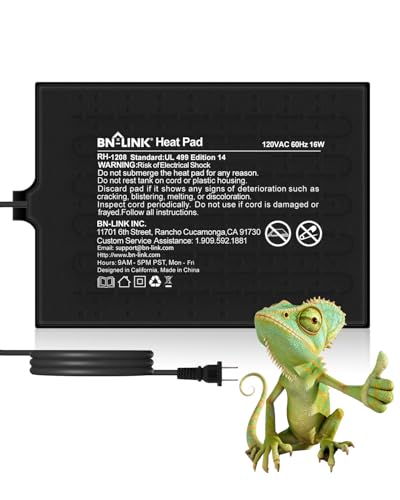
Best for mid-size terrariums, delivering higher warmth with a straightforward setup. It’s designed for easy placement on glass tanks and includes a strong adhesive back for reliable positioning.
Who it’s best for: keepers with 30–40 gallon tanks needing more heat without increasing footprint. Why selected: higher wattage provides robust heating while maintaining simple operation.
Caution: Do not rely on this pad as a sole heat source in very cold environments; pair with ambient heating when needed.
Aiicioo Under Tank Heater Thermostat 8″x12″ 16W

Best for precise temperature control in larger tanks. The digital thermostat monitors and maintains a safe range, helping prevent overheating and providing a stable habitat for reptiles.
- Best for: terrariums where exact heat levels matter for species with strict temperature needs.
- Better for: users who want thermostat-controlled warmth rather than a passive mat.
Limitation: The product note recommends avoiding use on plastic, acrylic, and water tanks in some configurations; confirm compatibility with your tank material.
Tikaton Reptile Heat Pad 8–10″ 8W

Best for flexible setups across 10–40 gallon tanks. Manual temperature adjustment lets keepers tailor warmth, while low energy use keeps running costs down.
- Best for: users who want direct control over heat levels without a thermostat.
- Better for: quick adjustments in response to daily activity or seasonal changes.
Limitation: Manual control may require more attention to prevent accidental overheating; pairing with a thermostat is optional but recommended for sensitive species.
Buying Guide
Key considerations when choosing a heating pad for a tank include tank size, heat required, installation method, and whether you prefer passive heat or thermostat-controlled warmth.
- Size vs. space: Match pad dimensions to your tank bottom area for even heat distribution; larger tanks may need bigger or multiple pads.
- Heat output: Wattage correlates with heat delivery. Higher wattage suits bigger tanks but requires monitoring to avoid hotspots.
- Mounting and surface: Glass terrariums accept adhesive-backed mats; avoid plastic if advised by the product; consider bottom vs side mounting based on enclosure layout.
- Temperature control: If your species requires precise temperatures, prefer a digital thermostat or a mat with built-in temperature control.
- Durability and safety: Waterproof designs and robust cords help with long-term use; look for features like indicator lights and protective housings.
- Maintenance: Easy cleaning surfaces help in terrarium hygiene; ensure pads remain evenly attached during upkeep.
Frequently Asked Questions
- What size heating pad should I use for a 20-gallon tank?
- Is a thermostat necessary with a reptile heating pad?
- Can reptile heating pads be used on wood or plastic tanks?
- Do I need more than one heat source?
- How do I prevent overheating?
- Are these pads safe for hermit crabs and amphibians?
For a 20-gallon tank, an 8″x6″ or 8″x12″ pad (roughly 8W to 16W) is common, depending on the species and ambient room temperature. Aim for even warmth with no hotspots.
Not always, but a thermostat is recommended for species with strict temperature needs or in rooms with variable temperatures to prevent overheating.
Always follow manufacturer guidance. Some pads are best used only on glass terrariums; others specify mounting methods to avoid damage.
In large or multi-species setups, a secondary heat source or ambient room heating can help maintain stable temperatures and avoid reliance on a single pad.
Place pads under the tank bottom, monitor with a thermometer, and use a thermostat when possible. Avoid stacking pads or covering the enclosure tightly around the heat source.
Yes, many pads work with amphibians and small terrestrial invertebrates, but always confirm suitability for your specific species and tank material.