Best Hog Skinning Knife for Hunters: Top 5 Picks
The following selection highlights five highly capable hog skinning knives commonly used by professional butchers and home cooks. Each option emphasizes precision skinning, durability, and practical handling. The list compares blade steel, grip comfort, and overall value to help you choose a knife that fits your hunting or meat-prep routine.
| Product | Brand | Key Benefit |
|---|---|---|
| Bolexino 6″ Skinning Knife | BOLEXINO | German steel, precise skin separation |
| Zip Blade 4.0″ Fixed Blade | OUTDOOR EDGE | Under-skin cuts, durable fixed blade |
| Sani-Safe SB12-6 Skinning Knife | Dexter-Russell | Sanitary build, US origin |
| Mercer BPX 5.9-Inch Skinning Knife | Mercer Culinary | High-carbon steel, ergonomic handle |
| Maxam 5-Inch Gut Hook Knife | Maxam | Gut hook design, corrosion-resistant |
Bolexino 6-Inch Skinning Knife

BOLEXINO’s 6″ skinning knife is designed to facilitate clean skin separation from meat. The blade’s shape and sharp edge support precise cuts, making it suitable for commercial use as well as home processing. The blade is crafted to minimize damage to the skin while handling fatty layers efficiently.
Key features include a high-carbon German steel composition (X50CrMoV15) that improves rust resistance and edge life. The knife is designed for commercial-grade performance, with a focus on durability and reliable edge retention during repeated use in busy environments.
Outdoor Edge Zip Blade 4.0″ Fixed
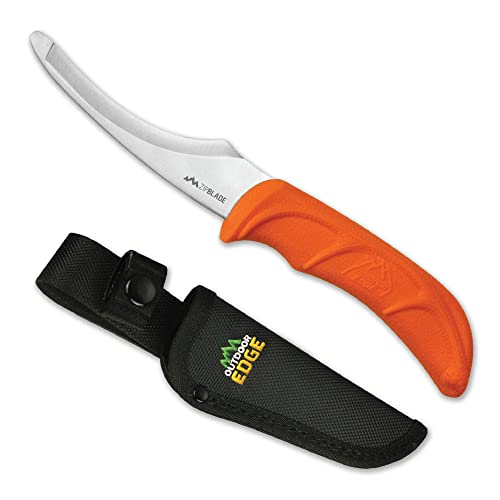
This knife is a popular choice among professional hunters for gutting and skinning big game. The 4″ blade is heat-treated and finished for sharpness, with a total length of 8.8″ to balance leverage and control. The rubberized blaze orange TPR handle provides a secure, non-slip grip even in wet conditions.
Its design aims to guide the blade under the skin while avoiding hair and internal organs, promoting clean skin removal. The fixed blade construction contributes to sturdiness during field use and rough handling.
Dexter-Russell SB12-6 Skinning Knife

The Dexter-Russell Sani-Safe SB12-6 offers a sanitary, U.S.-made option suitable for professional kitchens and hunting prep. The knife features a 6″ blade with a white poly handle, delivering a clean, hygienic profile that’s easy to wipe down between tasks.
The design emphasizes safe handling and precise skin removal, supporting consistent cuts across various game sizes. The knife’s construction reflects Dexter-Russell’s focus on reliability and food-safety standards.
Mercer Culinary BPX 5.9-Inch Skinning Knife
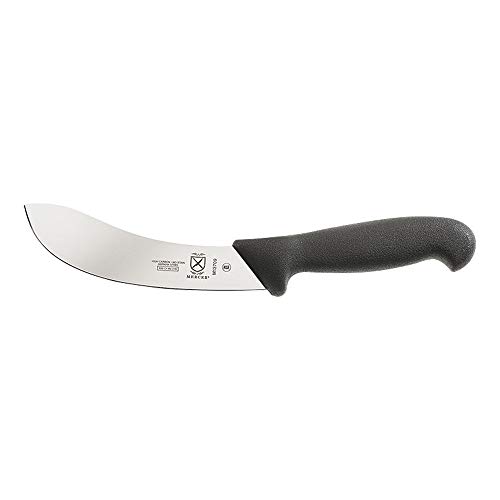
The Mercer Culinary BPX knife is forged from high-carbon German steel and ice-hardened for blade strength. Its mirror-finished blade reduces friction during cutting, and the textured glass-reinforced nylon handle provides a comfortable, non-slip grip. Designed for skinning large game, the knife supports long, smooth strokes with reduced resistance.
Maxam Gut Hook & Sheath Skinning Knife
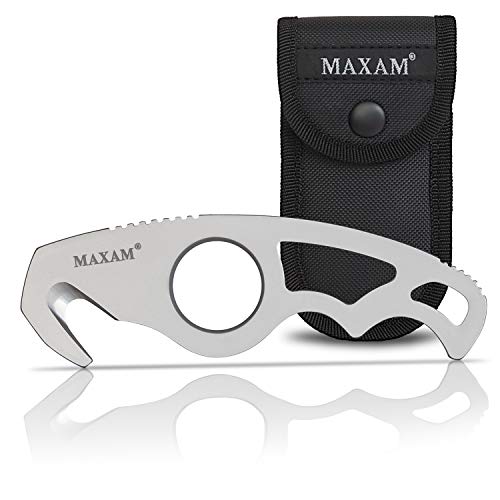
This 5-inch gut hook knife is designed to efficiently skin deer, elk, and hog hides. It includes a weatherproof nylon sheath for secure storage and belt attachment. Made from corrosion-resistant stainless steel (8CR18MOV), the blade is easy to sharpen and built for durability in field use. The ergonomic handle and gut hook enhance control and precision during processing.
Buying Guide: Key Purchase Considerations
- Blade design and length: For hog skinning, look for a blade length around 5-6 inches that allows controlled skin removal without excessive force.
- Steel quality and edge retention: High-carbon stainless steels (such as X50CrMoV15 or 8CR18MOV) provide good durability and corrosion resistance in wet environments.
- Handle comfort and grip: Non-slip, ergonomic grips reduce fatigue during long skinning sessions. Textured materials or rubberized scales are beneficial.
- Blade geometry: A curved or filleted edge supports precise skin separation, while a gut hook can speed field processing when appropriate.
- Maintenance: Sanitary designs and easy cleaning matter for meat processing. Dishwashing compatibility or simple wipe-down care can influence choice.
- Durability vs. weight: Heavier blades offer durability; lighter options reduce fatigue. Field conditions determine the best balance.
- Safety features: Finger guards, bolster design, and secure sheaths help prevent accidents during rapid work.
- Value and warranty: Consider whether a knife’s price reflects blade life, ergonomics, and any included accessories (e.g., sheaths, sharpeners).