Best Horizontal Band Saw for Shop Precision and Durability
Finding the right horizontal band saw can dramatically speed up metal fabrication tasks while maintaining accurate, clean cuts. This guide highlights five solid options that balance power, versatility, and value for American workshops. From versatile infeed tables and hydraulic feeds to dual-voltage motors and 4-speed blade systems, these models cover common needs in metalworking, pipe cutting, and fabrication projects. Read on to compare features, build quality, and how each model handles different materials. The table below summarizes the selected products for quick reference.
| Product | Brand | Key Feature |
|---|---|---|
| JET 7″ x 12″ Deluxe Horizontal/Vertical Bandsaw | Jet | 9″ x 12″ infeed table; 15/30/45 degree preset vises |
| KAKA INDUSTRIAL BS-712N | KAKA INDUSTRIAL | 1.5HP; dual voltage; hydraulic feed; 0°–45° cuts |
| WEN BA4664 Metal Band Saw | WEN | Automatic shut-off; vertical/horizontal operation; adjustable speeds |
| KAKA INDUSTRIAL BS-712R | KAKA INDUSTRIAL | 7″ round/7×8.25″ rectangular cuts; 45°–90° bow |
| KAKA BS-108G Horizontal Metal Band Saw | KAKA INDUSTRIAL | 60° miter; 2x blade life features; dual-coolant system |
JET 7″ x 12″ Deluxe Horizontal/Vertical Bandsaw

The JET HVBS-712D combines horizontal and vertical cutting modes to support diverse fabrication tasks. A large 9″ x 12″ infeed table increases workpiece support, enabling longer, stable cuts in either orientation. The toolless quick-lock vise provides preset mitering at 15°, 30°, and 45°, reducing setup time. Durable blade wheels crafted from flanged cast iron contribute to long-lasting performance and consistent feed pressure for precise cuts. This model is suitable for metalworkers who need versatility in a single machine.
KAKA INDUSTRIAL BS-712N Horizontal Metal Cutting Bandsaw

The BS-712N offers a robust 1.5HP motor with dual voltage (115V/230V), ensuring flexible operation in workshops or industrial settings. Its four-speed blade system (adjustable speeds) optimizes cuts across metals from soft aluminum to hard stainless. Hydraulic feed maintains steady blade pressure for uniform results, while the swivel base supports angled cuts from 0° to 45°, expanding fabrication capabilities for pipes and beams. This model targets users requiring heavy-duty performance with precise, repeatable cuts.
WEN Metal Band Saw With Stand BA4664
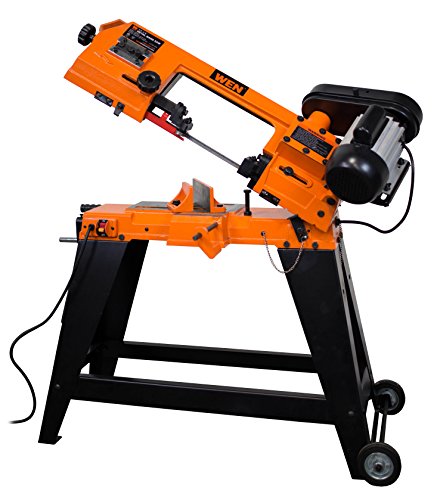
The WEN BA4664 features automatic shut-off that stops the saw after completing a cut, improving safety and energy efficiency in busy shops. It supports both vertical and horizontal operation and allows blade speed adjustments to 80, 120, or 200 feet per minute to suit different metals. This model provides a balanced blend of value and convenience for workshops that require straightforward, reliable metal cutting with basic automation features.
KAKA INDUSTRIAL BS-712R Metal Horizontal Band Saw
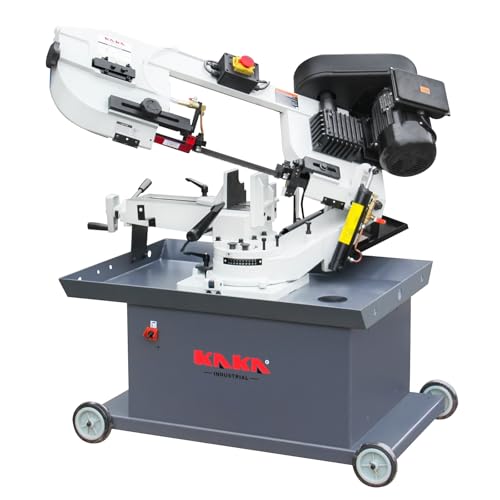
The BS-712R is engineered for precise 7″ round and 7×8.25″ rectangular cuts with a 45°–90° bow that expands bevel-cut capabilities for structural fabrication. A dual-voltage motor and 4-speed V-belt drive optimize performance across a range of materials, from stainless steel to aluminum. The auto-shutoff with coolant system helps maintain blade life during extended runs, making it a strong option for semi-industrial environments that require consistent, burr-free results.
KAKA INDUSTRIAL BS-108G Horizontal Band Saw

The BS-108G model emphasizes a 60° miter capability and a sturdy 2x blade life-enhancing features. It includes a dual-coolant system to manage blade temperatures and prolong life, plus a robust motor suitable for steel and aluminum cutting. The design focuses on heavy-duty fabrication needs, offering greater bevel range and reliable performance for pipe and beam work in metal fabrication shops.
Buying Guide
Key purchase considerations when selecting a horizontal band saw:
- Cutting capacity and orientation: Ensure the machine can handle your typical stock size (round and rectangular) and whether horizontal, vertical, or both orientations are needed.
- Motor power and voltage: Higher horsepower and dual-voltage options support tougher metals and flexible workshop setup. Consider your available electrical supply and peak workloads.
- Speed range and blade compatibility: Multi-speed belts or hydraulic feeds improve cuts across different materials. Check blade types and availability of replacement blades.
- Table and clamping: A larger infeed table and adjustable vises reduce setup time and improve accuracy for long or complex cuts.
- Coolant and chip management: Integrated coolant systems extend blade life and reduce burrs; auto-shutoff features save energy and improve safety.
- Reliability and support: Look for machines with robust cast iron components and reputable brands that offer spare parts and service in the U.S.
- Cost of ownership: Consider initial price, blade life, maintenance requirements, and potential downtime associated with high-demand fabrication tasks.
Operational depth varies by model. For lightweight, general-purpose projects, models with automatic shut-off and adjustable speeds deliver convenience and safety. For heavy-duty fabrication, units with hydraulic feeds, dual-voltage motors, and extended cutting capacities provide greater throughput and longer service life. When choosing, match the saw’s features to your typical materials, batch sizes, and space constraints to maximize productivity and minimize downtime.