Best Hot Water Heaters for Trailers: Complete Guide for RV Owners
Finding the right hot water heater for a trailer means balancing space, fuel source, and water demand. This guide highlights five reliable options that fit most RV lifestyles. The top picks cover electric and propane tankless systems, plus a compact electric under-sink heater for quick repairs or limited spaces. This overview helps campers decide who benefits most from each type—families with steady hot water needs, solo travelers seeking efficiency, or frequent campers needing robust performance at altitude.
Summary table of chosen products:
- VEVOR Electric Water Heater (18-Gallon Tank, 1.6kW) — Best for larger RVs with steady electric power availability.
- Poukaran 65,000 BTU RV Tankless — Best for high-demand households needing rapid, continuous hot water.
- APUS RV Tankless Water Heater (68,000 BTU, 12V) — Best for RVs requiring reliable performance at altitude.
- ORBEK 60,000 BTU RV Tankless — Best for travel trailers needing strong, on-demand hot water with remote control.
- Tankless Electric Under-Sink (3000W, 110V) — Best for compact spaces and point-of-use hot water.
VEVOR 18-Gallon Electric Water Heater
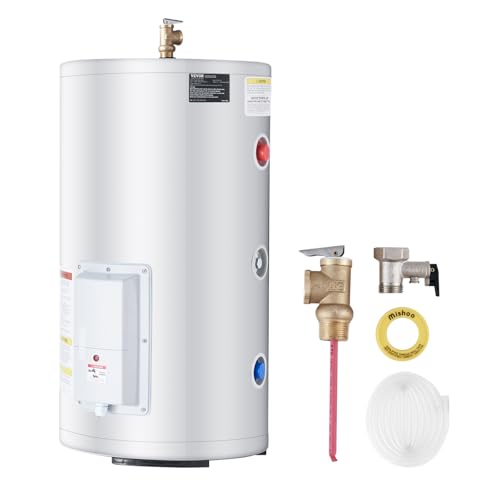
The VEVOR unit offers an 18-gallon (70L) storage tank with a 1600W heater for faster hot-water recovery. It uses an immersion heating element and features a rotary temperature control from 30℃ to 75℃, with an LED display to monitor status. An enamel coating adds safety against leaks and burns. This model is best for longer trips where electric power is reliable and enough hot water is needed for dishes, showers, and laundry without frequent re-heating waits.
Who it’s best for: families or couples who stay in one RV for several days and have consistent access to shore power. Why selected: high capacity plus continuous heating capability helps reduce waiting time for hot water at the tap. Caution: when running on limited shore power, it may compete with other appliances for electricity.
Poukaran 65,000 BTU RV Tankless Water Heater

This propane-powered RV tankless heater delivers 65,000 BTU, designed for high-altitude use with an oxygen-free copper heat exchanger and a brushless DC fan. It provides on-demand hot water with rapid response, suitable for multi-activities such as showers and kitchen cleanup. Upgraded features include dual water outlets for convenience, one at the front and one internal/external, which can be helpful for pets or outdoor washing. Best for: campers needing reliable hot water on demand during long trips. Limitation: propane availability and venting requirements must be considered for installation.
APUS RV Tankless Water Heater (68,000 BTU)

This propane-on-demand heater outputs 68,000 BTU and includes a 12V operation with a remote. It’s designed for RVs with high-altitude performance, featuring a compact footprint and a built-in safety system. The compact design fits many RV installations and supports a steady hot-water supply for showers, dishes, and other needs. Best for: RVers who want strong performance at elevation and convenient remote operation. Caution: ensure proper venting and clearance for propane heaters in mobile setups.
ORBEK 60,000 BTU RV Tankless Water Heater
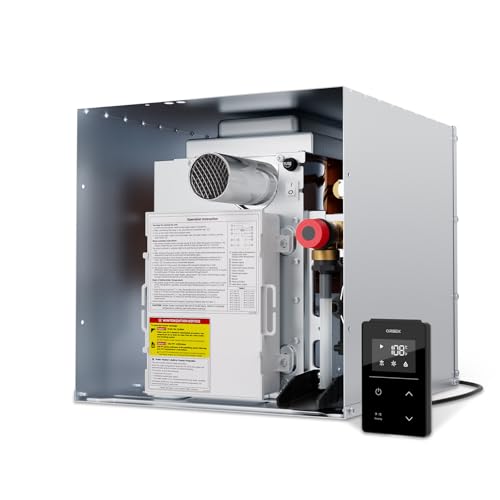
ORBEK’s heater uses 60,000 BTU with a DC 12V system and a remote controller. It is built for RV travel and high-altitude use, offering stable flow around 3.5–3.9 GPM and programmable temperature control. The system emphasizes safety with a smart remote for temperature adjustment and error code displays. Best for: campers who want a dependable propane-on-demand option with convenient remote control. Limitation: larger installations require adequate space and venting considerations.
Tankless Electric Under-Sink Water Heater (Generic, 3000W)

This 110V under-sink unit provides instant hot water at the point of use with 3000W, raising water temperatures quickly for small tasks. It supports temperatures in Fahrenheit or Celsius and offers IPX4 waterproofing, dry-burning protection, and overheating protection. Best for: RVs needing a compact, install-at-the-faucet solution or repairs where space is limited. Caution: not suitable for shower usage due to flow rate limitations; ensure electrical load capacity and wiring gauge meet the installation requirements.
Buying Guide: How To Choose The Right RV Water Heater
- Power source: Choose electric for shore-power-heavy setups, propane for off-grid or high-altitude use, or a mixed system for flexibility.
- Tank vs. tankless: Tank heaters store hot water for quick access, while tankless systems heat on demand, saving space and potentially fuel. Tankless is often better for small trailers with variable water use, but may require more careful mounting and venting for propane units.
- Capacity and flow rate: If you frequently shower and run multiple fixtures, prioritize higher flow and BTU ratings. For singles or couples with modest hot water needs, smaller units can suffice.
- Altitude performance: High-altitude models are designed to maintain efficiency and avoid freezing or overheating in mountains or high-latitude travels.
- Installation space and venting: Propane heaters require venting and clearance; electric units need access to power and proper wiring. Check dimensions and mounting options before purchase.
- Safety features: Look for automatic shutoffs, overheat protection, waterproofing (IP ratings), and rust protection (anode rods or corrosion protection) to extend life in RV environments.
- Maintenance: Regular inspection of fuel connections, venting, and anode rods (for propane systems) helps prevent leaks and corrosion over time.
Frequently Asked Questions
- Do RV water heaters require a special venting system?
- Can I install a tankless water heater in any RV?
- What station should I choose for high-altitude travel?
- Is a 60,000 BTU heater enough for a family shower?
- What maintenance is required for RV water heaters?
- Can I run multiple hot water tasks at once?
Propane-powered RV heaters usually require venting; electric units do not, but installation must comply with space and electrical codes.
Most tankless models fit RV spaces, but installation depends on space, electrical capacity, and gas venting compatibility. Some models are designed specifically for RV configurations.
Choose a high-altitude-rated unit with a reliable heating system and oxygen-free copper heat exchangers to maintain performance above sea level.
Yes, for many RVs, 60,000 BTU with proper heat exchange and flow management provides sufficient hot water. Consider mounting location and venting to avoid performance loss.
Regular checks for leaks, corrosion protection (anode rods where applicable), venting integrity, and electrical connections help extend the heater’s life.
Tank heaters supply water based on their capacity, while tankless units heat on demand; running multiple tasks may affect flow depending on unit capacity and water pressure.