Best Humidity Solutions for Gun Safes to Prevent Rust and Corrosion
Maintaining optimal humidity in gun safes is essential to prevent rust, corrosion, and moisture-related damage to firearms and gear. This guide reviews five top humidity-control products and explains how they work, their suitability for different spaces, and how to choose the right solution for your storage needs. Below is a quick summary of the featured items to help you compare at a glance.
| Product | |||
|---|---|---|---|
| Zarpax Gun Safe Dehumidifier Camouflage | Rechargeable Desiccant Bags | Reusable; general purpose moisture absorption | Microwave reactivation for quick reuse |
| MAXSafes Gun Safe Dehumidifier Rod | Electrical Dehumidifier Rod | Plug-in, 12-inch rod for enclosed spaces | Always-on operation; no recharging needed |
| TOAAOT 200g Silica Gel Canister | Silica gel canisters | Protects about 15 cubic feet per canister | Low-profile, non-liquid moisture control |
| Hornady Wireless Hygrometer 95907 | Wireless hygrometer | Remote sensor and display outside safe | Real-time temperature and humidity monitoring |
| SafeNDry XL Gun Safe Dehumidifier | 450g silica gel desiccant canister | Protects up to 60 cubic feet | Color-indicating reactivation cue |
In the following sections, each product is explored in detail to help you decide which solution best matches your safe’s size, usage patterns, and maintenance preferences. All details reflect the features provided by the manufacturers and current product descriptions.
Zarpax Reusable Dehumidifier Bags For Gear

The Zarpax dehumidifier bags are designed for reuse and portability. After absorbing moisture and humidity, the bags can be reactivated by microwaving for six minutes, or by reheating on a radiator or in direct sunlight until the indicator changes back to blue. The design emphasizes durability for outdoor gear, guns, and ammunition, delivering a simple, repeatable moisture-control cycle. Beyond firearms storage, these bags can assist in cars, refrigerators, laundry rooms, and closets, offering flexible humidity relief for multiple environments.
Key usage notes: reactivation is straightforward, enabling ongoing moisture control without ongoing cost for consumables. The bags’ rugged construction aims to protect belongings from dampness and musty odors, aligning with the needs of hunters and shooters who store equipment for extended periods. Because the product is reusable, it can be a cost-effective option for moderate humidity challenges in gun safes and other enclosed spaces.
MAXSafes 12-Inch Dehumidifier Rod
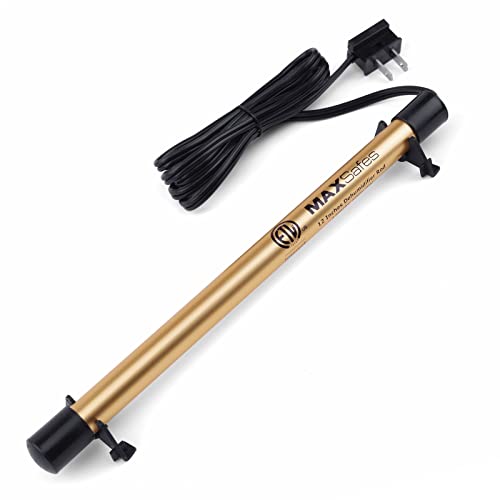
The MAXSafes dehumidifier rod is a plug-in solution designed for gun safes, cabinets, and other compact spaces. It uses a maintenance-free heating element to slightly raise the internal temperature, encouraging moisture to evaporate and escape. The unit is mounted with brackets and can be oriented vertically or horizontally, with a design that facilitates cord routing through small openings. As a permanently plugged device, it provides continuous humidity control without periodic recharging, making it well-suited for long-term safe storage where consistent climate management is desired.
Important considerations: ensure the rod’s coverage area (up to surrounding volume) matches your safe size. The device should not be touched after plugging in, and proper mounting is essential to avoid heat exposure to stored items. This option appeals to users who prefer a set-it-and-forget-it approach with ongoing humidity control rather than consumable replacements.
TOAAOT 200g Silica Gel Canisters

TOAAOT offers 200-gram canisters designed for gun cases, tool boxes, and other enclosed spaces. Each canister safeguards roughly 15 cubic feet per unit, and the black exterior minimizes visible wear while the orange desiccant provides a visual indicator of moisture-absorbing status. The orange silica gel does not contain cobalt II chloride, addressing safety concerns for environments where inhabitants may handle stored gear. These canisters are lightweight, compact, and well-suited for modular arrangement within a safe or cabinet.
Key points: non-liquid moisture control eliminates risk of spills, and the color-changing indicator helps users gauge when reactivation or replacement is needed. Providers emphasize that multiple units can be used together to scale protection across larger safes or storage rooms, supporting a layered approach to humidity management.
Hornady Wireless Hygrometer 95907

The Hornady Wireless Hygrometer provides remote monitoring of temperature and humidity within gun safes and cabinets. The system includes a remote base outside the safe and a wireless sensor inside, allowing real-time condition tracking without opening the safe. The large, easy-to-read touchscreen display outside the safe consolidates readings and can log high and low values in both Fahrenheit and Celsius. Mounting options include magnets, brackets, and screws, offering flexible placement to suit different safe configurations.
Practical benefits: users gain visibility into ambient and stored conditions, enabling proactive responses to rising humidity. The wireless design reduces the need for opening the safe to check readings, which helps limit moisture exposure. This option is ideal for enthusiasts who want continuous, non-intrusive monitoring and quick alerts to moisture trends that could threaten gear integrity.
SafeNDry XL Reusable Silica Gel Dehumidifier

The SafeNDry XL dehumidifier uses a 450-gram silica gel desiccant canister designed to protect up to 60 cubic feet of space. The unit is reusable and features color-indicating beads that change color as humidity is absorbed, signaling when reactivation is needed. Reactivation involves heating the beads at a specified temperature to reset their absorbing capacity. This canister is described as spill-proof and suitable for gun safes, ammo storage, and other enclosed environments prone to moisture buildup.
Considerations for choosing SafeNDry include the balance between capacity and frequency of reactivation. The indicating beads provide a clear maintenance cue, reducing guesswork about when to recharge. For larger safes or spaces with persistent moisture, multiple units or higher-capacity options may be warranted to maintain consistently low humidity levels.
Buying Guide: Key Purchase Considerations And Comparisons
- Space and capacity: Measure your safe’s internal volume and match it to the coverage of the dehumidifier or the number of canisters needed. Smaller safes may benefit from 200–450 g silica gel units, while larger spaces may require rod-style or higher-capacity canisters.
- Active vs. passive systems: Passive desiccants (silica gel) require periodic reactivation, while active systems (plug-in rods) provide continuous operation. Consider your maintenance preferences and power access inside the storage area.
- Maintenance and reactivation: If you prefer low-effort solutions, plug-in rods or ready-made reusable bags with quick reactivation are attractive. If you don’t mind periodic heating tasks, color-indicating silica gels can be cost-effective and reusable multiple times.
- Monitoring capabilities: A hygrometer or wireless monitoring system helps you track humidity levels over time. Real-time alerts can prevent moisture buildup before rust forms on firearms and gear.
- Safety considerations: Ensure heat-producing devices are installed with clearance from stored items. For metal and wood components, mild heating from a dehumidifier rod may be sufficient; avoid accessories that could pose a fire risk near flammable materials.
- Durability and portability: For outdoor or frequently moved gear, reusable bags offer flexibility. For permanent safes, built-in or mounted devices provide consistent protection with less manual intervention.
- Maintenance costs: Reusable desiccants reduce ongoing costs but require reactivation steps. Plug-in devices incur electricity use but eliminate recharging consumables, which may be preferable for long-term storage.
- Safety disclosures: Look for products that avoid hazardous desiccants (such as cobalt-based indicators) and favor safer alternatives that align with household use and storage rules.