Best HVAC Duct Insulation Options for Efficient Temperature Control
Choosing the right duct insulation can improve energy efficiency, reduce condensation, and minimize noise across heating and cooling systems. This article reviews five top HVAC duct insulation products, highlighting their R-values, moisture resistance, and installation features to help you compare options quickly.
Summary of Selected Products
| Product | Brand | Approx. R-Value | Key Benefit |
|---|---|---|---|
| SmartSHIELD -5mm Reflective Insulation Roll | INSULATION MARKETPLACE | Up to 21.10 (two layers) | Radiant barrier and vapor protection |
| Duct Insulation, 1-1/2In x 48In x 25Ft | JOHNS MANVILLE INTL | R 4.2 | Foil facing for moisture resistance |
| F&L Johns Manville Duct Insulation Panel | F and L Aluminum Parts | R 6.5 | Rigid panel with foil scrim kraft facing |
| Cuchiilo 4 Inch Insulated Flexible Duct | Cuchiilo | R 4.2 | Glass wool insulation; noise reduction |
| 48″ x 25ft Reflective FOIL FRK Fiberglass Duct Wrap | Trade Winds | R 12 (approx.) | Flexible, vapor-retardant facing |
SmartSHIELD -5mm Reflective Duct Insulation

The SmartSHIELD roll is designed as a radiant barrier for HVAC ducts, reflecting a high percentage of radiant energy to reduce heat transfer. It provides a potentially high overall R-value when layered and acts as a vapor barrier to minimize condensation in humid conditions. The product also doubles as a sound barrier, contributing to quieter duct operation. Installation benefits stem from its roll format and compatibility with standard ductwork, though guidance on layering is essential to achieve optimal R-values.
Duct Insulation, 1-1/2In x 48In x 25Ft
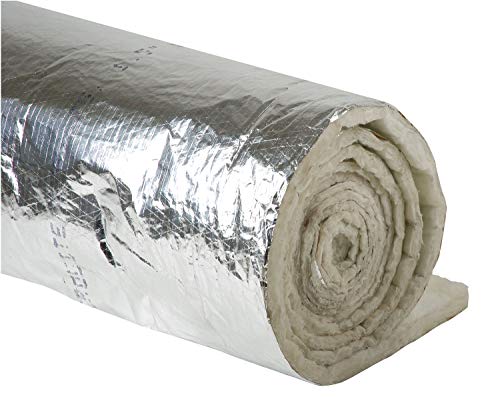
This Johns Manville insulation features a foil Scrim Kraft jacket, with a practical 1-1/2-inch thickness and 25-foot length. The product emphasizes moisture resistance, detailed compliance with multiple standards, and a reasonable R-value of approximately 4.2. Its wide 48-inch width simplifies coverage for larger duct sections, though installation may require cutting and securing to fit irregular duct shapes.
F&L Johns Manville Duct Insulation Panel
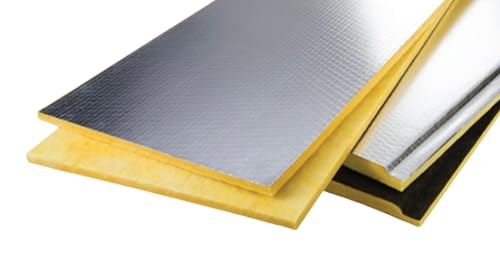
The F&L insulation panel uses rigid fiberglass with an R-value around 6.5, designed to reduce heat loss on rigid duct sections. Its 1.5-inch thickness offers solid thermal resistance, while the foil Scrim Kraft facing improves moisture resistance and durability. This panel is well-suited for sheet metal ducts where rigid insulation provides a clean, stable layer with strong code-compliance potential for commercial or residential projects.
Cuchiilo 4 Inch Insulated Flexible Duct

This flexible duct combines thick aluminum foil insulation with a glass fiber core, delivering an R-4.2 rating and high temperature resistance. The design emphasizes sound absorption and reduced noise in ductwork, making it suitable for residential installations where noise and temperature stability are priorities. The outer jacket and internal insulation aim to balance flexibility with durability under typical HVAC conditions.
Trade Winds 48″ x 25ft Reflective duct Wrap

Trade Winds’ reflective duct wrap uses glass fiber insulation laminated to a reflective FRK vapor retarder facing. It meets or supports compliance with relevant energy codes and NFPA standards, and its flexible wrap design makes it easy to install around curved or irregular ductwork. The vapor retardant facing helps prevent condensation, contributing to more reliable indoor humidity control and reduced energy losses.
Buying Guide: Key Purchase Considerations
When selecting duct insulation, consider the following factors to match your project needs:
- R-value and overall performance: Higher R-values reduce heat transfer, but achieve optimal performance by ensuring proper sizing and installation. For flexible ducts, look for insulation with robust adhesion and a tight outer jacket to prevent gaps.
- Moisture management: Ducts in humid or outdoor environments benefit from vapor retarders and moisture-resistant facings to prevent condensation and mold growth.
- Damage resistance and durability: Rigid panels resist crushing and maintain performance in mechanical environments, while flexible wraps offer easier installation in complex duct layouts.
- Fire safety and codes: Verify compatibility with local codes (NFPA 90A/B, UL standards) and ensure materials meet required fire resistance and safety requirements for ducts.
- Installation considerations: Some products require professional installation, particularly rigid panels or high-R-value systems. Flexible ducts with easy-to-handle facings simplify DIY projects.
- Longevity and warranty: Durable materials with good edge-seal and moisture resistance typically offer longer service life, reducing maintenance costs over time.
The five products reviewed provide a range of options for various duct configurations, climate conditions, and installation preferences. For homes with moisture concerns, reflective or vapor-retardant facings are advantageous. For tighter budget or space constraints, thinner or wrap-style insulation paired with careful sealing can deliver solid performance. Rigid panels suit long, straight runs, while flexible ducts help in irregular layouts or retrofit projects. Always ensure proper sealing and insulation coverage to maximize energy efficiency.