Best HVAC Leak Detectors for Accurate Refrigerant Tracing
Finding refrigerant leaks quickly is essential for efficiency, safety, and compliance in any HVAC operation. The following HVAC leak detectors are among the most trusted tools for detecting micro leaks across CFCs, HCFCs, HFCs, HFOs, and blends. This guide highlights five top options, covering heated diode and infrared sensors, rechargeable operation, and long sensor life. Each product includes key features to help you compare performance, durability, and ease of use for professional or DIY applications.
style=”font-weight:bold;”>Summary of Selected Products
| Product | Sensor Type | Best For | Approx. Sensor Life |
|---|---|---|---|
| Fieldpiece DR58 Heated Diode Leak Detector | Heated Diode | Ultra-sensitive micro leaks | 300 hours |
| SENSYX SFD201 Refrigerant Detector | Rechargeable Sensor | Wireless-ready, cordless use | Not specified |
| Elitech ILD-200 Infrared Leak Detector | Infrared | High interference resistance, broad gas range | Adjustable up to 0.14 oz/yr |
| Fieldpiece DR82 Infrared Leak Detector | Infrared | Ultra-sensitive, all refrigerants | Long-life sensor |
| Inficon 705-202-G1 | Heated Diode | Proven reliability, A2L capable | 0.25 oz/yr |
Note: All prices and availability may change. This article provides objective product overviews based on listed features and typical usage scenarios for American HVAC professionals and informed homeowners.
Fieldpiece DR58 Heated Diode Leak Detector

The Fieldpiece DR58 uses a micro-heated diode sensor to detect small refrigerant leaks with high sensitivity. It is designed to identify leaks faster than traditional bubble tests, opening the door to quicker coolant recovery and system performance verification. The device supports all common refrigerants, including HFCs, HCFCs, CFCs, HFOs, and tracer gases. Its IP54-rated body enhances durability in oily or moist environments, and the sensor life is rated for about 300 hours, supporting long-term field use.
Key features include a large backlit LCD for easy readability in variable lighting, a compact form factor for tight spaces, and durable build quality suitable for service vans and shop environments. This detector is especially useful for technicians who need fast, reliable leak indication across a wide range of refrigerants without swapping sensors or accessories.
SENSYX SFD201 Refrigerant & Combustible Gas Detector

The SENSYX SFD201 offers a rechargeable design paired with a highly sensitive detector. Its USB-C charging supports cordless operation, which is advantageous for technicians who require mobility and long runtimes away from power outlets. The sensor uses a Japan-made heat dioxide semiconductor, known for reliability in leak detection, and provides adjustable sensitivity with high and low levels to suit different testing scenarios. This detector is well-suited for automotive and HVAC applications where rapid detection is critical, and battery-powered flexibility matters.
Operational notes include the convenience of wireless use and a straightforward interface. While not all models disclose exact sensor lifespan, the emphasis is on consistent sensitivity and portability. The ability to switch between sensitivity settings helps technicians prioritize speed or precision depending on the environment and severity of suspected leaks.
Elitech ILD-200 Infrared Leak Detector
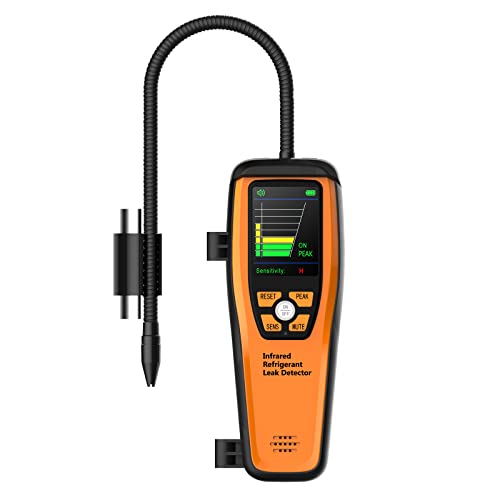
The Elitech ILD-200 uses an infrared technology with a focus on anti-interference and fast response. The infrared sensor offers broader compatibility with halogenated refrigerants, delivering sensitive readings with a maximum sensitivity up to 0.14 oz/yr. It supports detection of all halogenated gases, including CFCs, HCFCs, HFCs, and HFOs, as well as common blends. This detector is designed for environments with potential electrical or ambient interference, where infrared sensors can maintain accuracy and stability.
Users benefit from adjustable sensitivity levels (High/Medium/Low) and a durable sensor. The device is well-suited for service work in commercial settings where rapid confirmation of leaks across various refrigerants is essential, and where robust performance justifies higher initial investment.
Fieldpiece DR82 Infrared Refrigerant Leak Detector

The Fieldpiece DR82 Infrared Leak Detector builds on the brand’s reputation for durable, precise HVAC tools. It features an ultra-sensitive infrared sensor capable of detecting leaks as small as 0.03 oz/yr, offering about 20x more sensitivity than a basic bubble test. The DR82 is compatible with all refrigerants—CFCs, HCFCs, HFCs, HFOs—and blends, making it suitable for diverse systems encountered in service calls. Its IP54 rating safeguards against moisture and oil exposure, and Fieldpiece emphasizes a long-lasting sensor—up to ten years—ensuring reliability for busy technicians.
In practice, the DR82’s large backlit display and quick-response readings help technicians locate leaks efficiently. The device’s ergonomic design supports comfortable use during extended field sessions, and its continued compatibility with newer refrigerants helps future-proof investment in a leak-detection tool.
Inficon 705-202-G1 Refrigerant Leak Detector
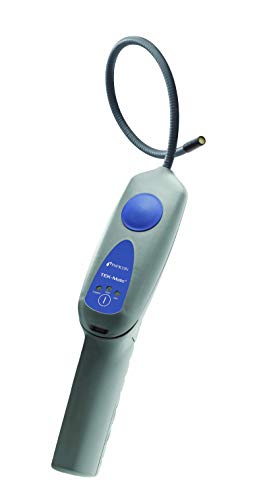
Inficon’s 705-202-G1 offers a proven heated diode sensor with a sensitivity of about 0.25 oz/yr (7 g/yr). It detects all CFCs, HCFCs, HFCs, and HFOs, and is A2L certified—meaning it supports newer low-GWP refrigerants as needed in modern systems. The heated diode approach provides fast response and reliable performance in fluctuating ambient conditions. For technicians who require a trusted, widely used detector with clear sensor behavior and robust field support, Inficon remains a standard reference.
The device is designed for practical field use, with straightforward readings and a reputation for dependable operation. It can be a staple in service vans where familiar, proven performance helps technicians diagnose leaks quickly and confidently across a broad refrigerant spectrum.
Buying Guide: Key Purchase Considerations
- Sensor Type and Sensitivity: Heated diode sensors offer strong sensitivity to many halogenated refrigerants. Infrared detectors can excel in high-interference environments and give fast responses. Consider the range of refrigerants you service when choosing a detector with adjustable sensitivity.
- Gas Range: Ensure the detector covers CFCs, HCFCs, HFCs, HFOs, and common blends used in your locale. Some models include AZ-50 or HP62 blends explicitly; others list broad halogen compatibility.
- Battery and Power: Rechargeable designs with USB-C charging provide mobility for cordless operation. If you work in places without ready power, a long-running battery is valuable.
- Durability: Look for IP rating (dust/moisture resistance) and sensor life (years or hours). Field environments benefit from rugged housings and long sensor life ratings to minimize downtime.
- Display and Usability: A large backlit or TFT display helps readouts in dim spaces. Quick-mute alarms, adjustable sensitivity, and clear indicators support efficient operation.
- Maintenance and Calibration: Some models require periodic calibration or sensor replacement. Consider total cost of ownership, including replacement sensors and service intervals.
- Compatibility and Accessories: Check compatibility with your typical refrigerants and whether the device supports legacy and newer blends. Accessories like extendable goosenecks or extendable probes can improve access to tight spaces.
- Warranty and Support: A solid manufacturer warranty and readily available customer support reduce risk in field use. Popular brands (Fieldpiece, Elitech, Inficon) often have extensive service networks.
Usage Scenarios Across Roles
- HVAC Technicians: Frequent leak checks on residential or commercial systems demand fast, reliable readings and a wide refrigerant range.
- Service Managers: Durability and sensor life matter for fleets. Long sensor life minimizes replacement costs, while broad gas coverage reduces the need for multiple devices.
- DIY Homeowners: For non-professional use, rechargeable, compact detectors with straightforward interfaces may offer a balance of cost and usability, provided they meet safety standards.
- Industrial Compliance: Environments with tracer gases or blended refrigerants benefit from detectors capable of handling low leak rates and mixed gases with high sensitivity.
In selecting a best-fit leak detector, weigh the balance between sensitivity, durability, and the range of refrigerants you encounter most often. A detector that performs well with all standard refrigerants but struggles with trace leaks may not meet your long-term needs, whereas a model built for harsh field conditions can reduce downtime and maintenance costs over time.