Best HVAC Recovery Machines for Efficient Refrigerant Recovery
Choosing the right HVAC refrigerant recovery machine can speed up service calls, improve safety, and help you stay compliant with environmental rules. This guide highlights five top options, covering brushless DC efficiency, oil-free designs, dual-cylinder power, and user-friendly interfaces. Each profile includes key features to compare at a glance, helping you pick the best fit for residential or commercial work.
| Product | Brand | Key Strength | Fuel Type / Compatibility |
|---|---|---|---|
| Fieldpiece MR45 Lightweight Digital Refrigerant Recovery Machine | Fieldpiece | Wide operating voltage; easy access ports | A2L-compatible refrigerants |
| NAVAC NR7 Recovery Unit | NAVAC | Fast, efficient recovery with oil-free compressor | A2L-compatible; multi-refrigerant |
| NAVAC Recovery Unit – Twin Cylinder (Master Series) | NAVAC | Large backlit digital interface; powerful twin cylinder | A2L-compatible; refrigerant recovery |
| Robinair RG3 Portable Refrigerant Recovery Machine | Robinair | Ultra-portable and compact | Liquid and vapor recovery |
| VIVOHOME 3/4 HP Portable Refrigerant Recovery Machine | VIVOHOME | High-efficiency, broad refrigerant compatibility | R12, R134a, R22, R410A, etc. |
Fieldpiece MR45 Lightweight Refrigerant Recovery Machine

Fieldpiece MR45 is designed for contractors who need a balance of portability and performance. It features a micro-channel condenser and a twin-cylinder, oil-less compressor unit. The machine is engineered to handle higher RPMs and improvements in horsepower, aiming to speed up recovery while resisting environmental stress. Its wide operating voltage and robust construction suit on-the-go field service, while the ceramic cylinder reduces friction and wear for longer life.
Key considerations: portability and a rugged build for outdoor or rooftop work, compatibility with A2L refrigerants, and the ability to manage larger volumes quickly. This model emphasizes high RPMs and durable components to minimize downtime on busy days.
Robinair RG3 Portable Refrigerant Recovery Machine

Robinair’s RG3 is a compact, lightweight option that emphasizes portability without sacrificing basic recovery capabilities. At roughly 18 pounds, it is easy to carry between service calls and suitable for techs who need a small footprint in tight spaces. It supports both liquid and vapor recovery, and it uses a single-cylinder oil-free compressor compatible with common CFC, HFC, and HCFC refrigerants, including R-410A. This model is ideal for technicians prioritizing mobility and straightforward operation.
Key considerations: size, weight, and ease of transport; compatibility with standard refrigerants; suitable for service fleets needing quick, on-site recovery without bulky equipment.
Hilmor 1950536 Brushless DC Refrigerant Recovery Machine

This Hilmor model uses brushless DC motor technology to strike a balance between portability and power. The digital LCD screen provides clear, precise information to the technician, aiding accurate monitoring and control. Built-in hoist points allow hands-free carrying, which can enhance workflow in busy shops or on ladder-work sites. The combination of digital clarity and portability makes it a strong choice for professional use where reliability and ease of transport matter.
Key considerations: motor technology for efficiency, digital readability for accuracy, and integrated carrying features to support on-site mobility. This unit targets pros who value consistent performance alongside practical transport capability.
NAVAC NR7 Recovery Unit
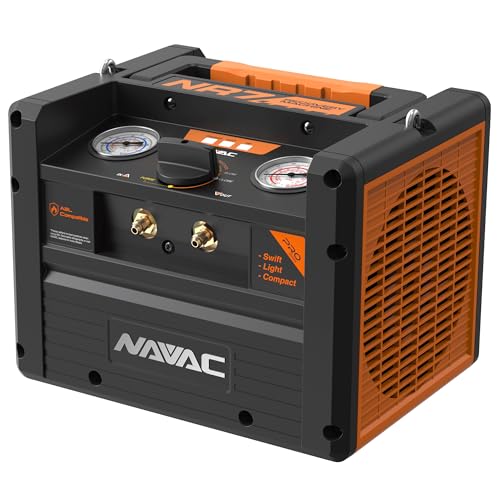
The NAVAC NR7 Recovery Unit concentrates on rapid refrigerant recovery with a dual-cylinder setup and a brushless DC motor. It is designed to be oil-free and A2L-compatible, which broadens its refrigerant compatibility across common HVAC systems. A purge function helps remove residual refrigerant after recovery, promoting smoother operation and less downtime between jobs. A three-row condenser with extra-dense fins supports fast heat dispersion for efficient performance even during high-demand tasks.
Key considerations: recovery speed, oil-free reliability, purge functionality, and condenser performance. This model suits technicians who handle a mix of refrigerants and need quick, repeatable cycles with reduced maintenance tasks.
NAVAC Twin Cylinder Master Series Recovery Unit

The NAVAC Master Series unit emphasizes a large, backlit digital interface for easy readability in varied lighting conditions. It uses a brushless DC motor paired with twin cylinders to deliver strong performance and rapid recovery times. The built-in cooling coils and dual-row microchannel condenser coils optimize heat management, enabling efficient operation during extended recovery sessions. The device is designed for professional environments where dependable performance and clear diagnostics are essential.
Key considerations: digital interface readability, long recovery sessions, cooling efficiency, and overall system durability. Ideal for technicians who require precise control over settings and robust cooling during demanding workloads.
Buying Guide: Key Purchase Considerations
When selecting an HVAC refrigerant recovery machine, consider the following factors to align with your needs:
- Recovery Speed and Capacity: Look for dual-cylinder designs or brushless DC motors that accelerate recovery rates, especially for larger HVAC systems.
- Refrigerant Compatibility: Ensure the machine supports the refrigerants you encounter most, including R410A, R22, R134a, and A2L-compatible options.
- Portability vs. Power: Balance weight, size, and portability with available power and recovery performance for your typical job sites.
- Oil-Free vs. Oil-Integrated: Oil-free compressors reduce maintenance and are common in modern units; consider your maintenance tolerance and compatibility needs.
- Digital Interface and Monitoring: A backlit or LCD display helps with field visibility; features like purge functions simplify post-recovery procedures.
- Cooling and Heat Management: Efficient condensers and cooling coils prevent overheating on long jobs and extend equipment life.
- Durability and Build Quality: Look for rugged housings, weather resistance, and reliable components for challenging environments.
- Warranty and Support: Consider brands offering solid warranty coverage and accessible customer support for professional use.
Choosing the right model depends on how you balance portability, recovery speed, and refrigerant versatility. For fleets covering varied job sites, a dual-cylinder, brushless DC unit with a clear digital interface offers strong overall performance. For mobile technicians, a compact option with sufficient recovery power and ease of transport may be preferable. Finally, models with advanced cooling and purge features can reduce downtime and maintenance frequency on demanding schedules.