Best Insulation for Concrete Slab: Top Options for Efficiency
Answering the most common buyer question: which insulation works best under a concrete slab? This guide reviews five effective options, highlighting who each product is best for, and why. Ideal for homeowners, builders, and DIY enthusiasts, these picks address radiant heating, moisture resistance, and ease of installation. Use the quick reference table to compare core features at a glance.
| Product | Best For | Key Benefit |
|---|---|---|
| US Energy Products Double Bubble White/Foil | Radiant floors, basements, crawl spaces | Two reflective layers with bubble core to minimize heat loss |
| EcoFoil rFoil Heated Floor Insulation | Under-slab heated floors | Reduces heat loss by up to 57% and provides vapor barrier |
| White / FOIL Double Bubble 48″ x 100ft | Large slab projects | High reflectivity with 1/4 inch nominal thickness |
| Trade Winds Insulation 134 1/4″ R8 Roll | Standard concrete slab installations | Made in USA, double bubble design, fire rated |
| White Single Bubble 48″ x 10ft | Smaller slab sections or consumable use | Compact size, fire code compliant |
US Energy Products Double Bubble White/Foil Reflective Insulation
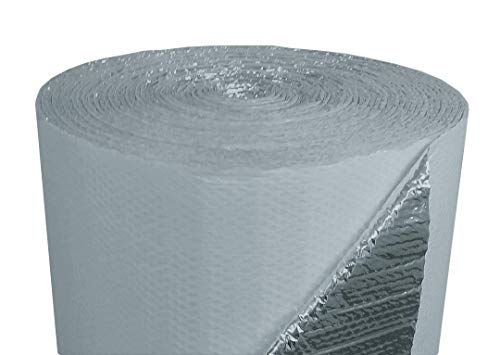
This product uses two 99.97% reflective metalized film layers bonded to internal polyethylene bubble layers, totaling 1/4 inch thick. It is designed for under-slab installations, walls, basements, crawl spaces, and radiant heating systems. It resists moisture and humidity and helps minimize condensation. Best for: concrete slabs with radiant heat or moisture concerns, DIY basement projects. Limitation: the 1/4 inch thickness may require careful fitting in tight forms or unusual slab edges.
EcoFoil rFoil Heated Floor Insulation

Designed for under concrete slabs and radiant flooring systems, this reflective foil insulation redirects heat upward and reduces heat loss into the soil. It’s lightweight and easy to handle, with a vapor and radon barrier. Best for: improving efficiency of heated slabs. Limitation: effectiveness depends on proper sealing and coverage under the slab to avoid heat bypass.
White / FOIL Double Bubble Reflective 48″ x 100ft Concrete Slab Insulation R8

This white double bubble insulation features two reflective film layers with a dense bubble core, measuring 4 feet by 100 feet with a nominal thickness of 1/4 inch. It is made to meet international and USA fire codes and provides strong radiant reflectivity for slab applications. Best for: large slab projects where reflectivity and fire code compliance are priorities. Limitation: bulkier sheet size may require more handling on job sites with tight access.
Trade Winds Insulation 134 1/4″ R8 Concrete Slab Roll
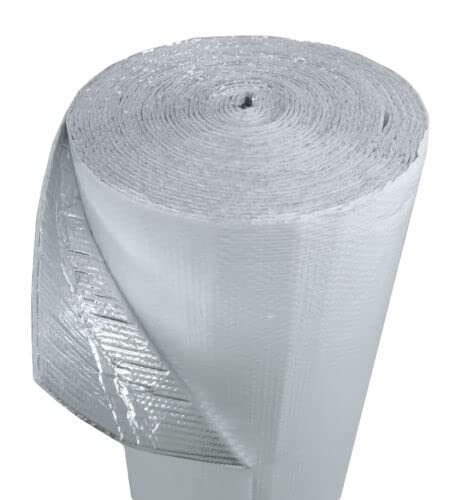
Made in the USA, this 1/4 inch thick double bubble insulation has an R8 rating and comes in a 400 square foot roll (4 ft x 25 ft x 4 rolls). It’s designed for practical installation inside slabs with 16″ or 24″ centers. Best for: standard slab insulation projects where consistent R-value is important. Limitation: may require multiple rolls for larger jobs, increasing seams that must be sealed effectively.
White Single Bubble Concrete Slab Reflective 40 SF

This product covers 40 square feet, measuring 4 feet by 10 feet with a nominal thickness of 1/4 inch. It provides a straightforward solution for smaller slab areas or for patching segments where insulation is needed. Best for: constrained or retrofit projects. Limitation: smaller size means more joints on larger slabs, which require meticulous sealing.
White / FOIL Double Bubble Reflective 48″ x 10ft Concrete Slab Insulation R8
This 48 by 10 feet sheet provides double bubble reflective insulation with a nominal 1/4 inch thickness and a fire code compliant build. Best for: delivering consistent coverage for mid-size slab sections. Limitation: not ideal where very high heat retention is required compared to larger area sheets with greater surface coverage.
Buying Guide: Key Considerations For Concrete Slab Insulation
- R-value and reflectivity: Look for double bubble designs with high reflectivity to reduce radiant heat loss. Under-slab insulation should balance R-value with ease of installation.
- Moisture and vapor barriers: Slab environments require moisture control. Choose products offering vapor barriers to reduce radon migration and moisture migration.
- Installation compatibility: Consider slab thickness, edge work, and the need for staples or edges. Some products have edges that simplify installation on larger slabs.
- Fire codes and safety: Ensure the product meets local fire codes. This is especially important for structures like basements and garages.
- Size and handling: For large slabs, larger sheet sizes reduce seams but demand more handling equipment. Smaller pieces are easier to manage in tight spaces.
- Durability and weather resistance: Insulation in crawl spaces or foundations must resist moisture, dampness, and temperature swings over time.
Frequently Asked Questions
- What is the main purpose of under-slab insulation? To minimize heat loss into the soil and improve energy efficiency of radiant floor systems.
- Is under-slab insulation required by code? Codes vary by region; many areas require moisture barriers and fire safety compliance for slab installations.
- Which thickness is best for concrete slabs? 1/4 inch is common for double bubble insulation, but some projects may benefit from thicker or multi-layer configurations.
- Can these insulation products be used in crawl spaces? Yes, many are designed for walls, crawl spaces, basements, and metal buildings as well as slabs.
- Do reflective insulations stop radiant heat effectively? Reflective layers are designed to reflect radiant heat back toward its source, reducing heat loss and improving efficiency.
- What is the best pick for large slabs? Large sheet insulation with higher coverage minimizes seams and is generally preferred for bigger slabs.