Best Insulation for Garage Doors to Cut Heat and Save Energy
Choosing the right insulation for a garage door can dramatically reduce heat gain in summer and heat loss in winter. The options below focus on reflective foil panels, bubble core designs, and foam-based systems that install quickly and require minimal tools. This guide compares five well-regarded products to help homeowners select an effective, durable solution for American garages.
| Product | Brand | Key Benefit |
|---|---|---|
| Reach Barrier 3009 Garage Door Insulation Kit | Reach Barrier | High radiant heat blocking; easy pre-cut installation |
| NASA TECH White Reflective Foam Core 2 Car Kit | US Energy Products | Double-sided reflective foam core with US-made materials |
| SmartGARAGE Reflective Insulation Kit | INSULATION MARKETPLACE | High reflectivity; R-8 style with closed-cell foam |
| 24P Garage Door Insulation Panels Kit | MYFAMIREA | Premium aluminum foil with 6 mm bubble core |
| 16P Garage Door Insulation Panels Kit | MYFAMIREA | Similar 6 mm foam/foil design for faster coverage |
Reach Barrier 3009 Garage Door Insulation Kit

Reach Barrier integrates reflective foil with bubble barrier technology, blocking up to 95 percent of radiant heat. The panels feature two layers of 5/32-inch barrier bubble laminated between reflective polyethylene, delivering consistent R-values across application areas. The kit is designed for straightforward installation with pre-cut panels that do not require protective clothing or special tools.
Owens Corning Garage Door Insulation Kit

Owens Corning offers a kit designed to significantly improve thermal performance for insulated doors. Reported benefits include noticeable reductions in perceived noise and easier installation for doors up to 9 feet tall. The kit is compatible with common household tools, simplifying the upgrade for DIY projects.
NASA TECH White Reflective Foam Core 2 Car Garage Door Insulation Kit

This US-made kit includes four rolls of 2×18-foot foam core insulation with heavy-duty double-sided tape and squeegee tools. It meets fire codes in many jurisdictions and emphasizes a secure, long-lasting seal with detailed installation instructions. The combination of rigid foam with reflective foil aims to maximize both R-values and reflective performance.
SmartGARAGE Reflective Garage Door Insulation Kit
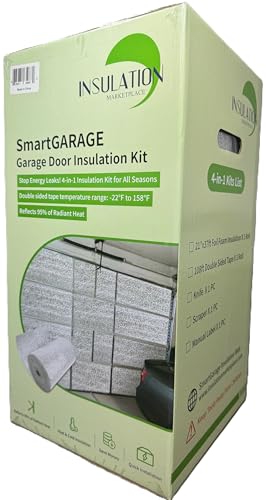
This kit targets single-car doors with a design that reflects up to 95 percent of radiant heat and claims an R-value around 8. Constructed from 5mm closed-cell polyethylene foam sandwiched between highly reflective foil, it emphasizes high durability and easy, quick installation for tight spaces.
24P Garage Door Insulation Panels Kit

24P panels combine aluminum foil with a 6 mm bubble core to provide enhanced heat reflection and sealing. The 24″ x 48″ panels are pre-cut for easier installation, with emphasis on energy savings and long-term durability. The kit is suitable for both winter and summer climate management in garages.
16P Garage Door Insulation Panels Kit

Similar in design to the 24P kit, the 16P panels use a 6 mm bubble core sandwiched between aluminum foil, offering a lighter option with quick coverage for single-car garages. The kit is described as high quality with straightforward installation and durable materials designed to hold up under garage conditions.
Buying Guide: Key Purchase Considerations
- Garage door size and configuration: Single vs. two-car doors affect the number of kits needed. Some products specify coverage by door type; plan for extra panels if you have irregular sections or large doors.
- Material and construction: Reflective foil with bubble cores provides strong radiant heat blocking, while foam-core options emphasize rigidity and sealing. Consider climate, sun exposure, and door material when choosing.
- R-value and thermal performance: Look for stated R-values or performance metrics (e.g., high radiant heat block percentages). Real-world results vary by door type and installation quality.
- Installation ease: Pre-cut panels, adhesive backing, and included tools influence DIY feasibility. Some kits require razor blades and squeegees; others use simple mounting solutions.
- Fire codes and certifications: Some kits advertise compliance with fire codes and US-made components. Verify local requirements for garage applications in your area.
- Durability and maintenance: Reusable or easily replaceable panels can be advantageous in garages with seasonal use or humidity. Check for UV resistance and edge sealing.
- Cost and coverage: Compare per-square-foot cost and total door coverage. Panels designed for larger doors may deliver better long-term value despite a higher upfront price.
- Compatibility with climate control: If you have an attached garage with heating or cooling, measure potential energy savings and whether the kit complements existing insulation or HVAC solutions.