Best Knife Sharpening Jig: Top Picks for Accurate Bevels and Easy Sharpening
Sharpening knives and planer blades accurately can be challenging without the right jig. The right knife sharpening jig stabilizes blades, maintains consistent angles, and speeds up the honing process. This guide highlights five reliable options that suit common belt sanders and sharpening setups, helping you choose a jig that fits your tools and blade sizes. The selections emphasize durability, adjustable angles, and user-friendly clamping to deliver repeatable bevels across a range of blades.
| Product | Type | Best For | Key Feature |
|---|---|---|---|
| BLSGBUIDING Jointer Planer Blade Sharpener | Planer Blade Sharpening Jig | Woodworking blades | Two-blade simultaneous honing |
| Feekoon Assorted Knife Sharpening Angle Guide | Angle guide for 1×30 belt sanders | Accuracy across angles | Adjustable 10–45° with multiple belts |
| Singring Belt Sander Knife Jig (Long) | Sharpening jig | Belt grinder use | 6061 aluminum, adjustable angle |
| JCFANTS Belt Grinder Knife Jig | Fixed/adjustable angle jig | Belt sander sharpening | Two clamps, center adjustment |
| ONECHOI Belt Grinder Knife Jig | Adjustable angle locator | Long blades, precise angle | 44 mounting holes, dual plates |
BLSGBUIDING Jointer Planer Blade Sharpener

This 12″ aluminum sharpening jig is designed to sharpen jointer and planer blades. It accommodates two blades simultaneously by positioning them in opposite 45-degree slots, ensuring both blades are level during honing. A simple screw fastens blades securely, enabling consistent, parallel edges. The jig aims to save time and reduce blade waste by keeping two blades aligned while sharpening from coarse to fine media.
Key considerations: its size fits longer blades, and the dual-blade approach helps maintain uniform cutting edges. The aluminum construction offers durability and lightweight handling. For users who re-sharpen multiple planer blades, this jig can streamline workflow and promote uniform bevels across blades.
Feekoon Assorted Knife Sharpening Angle Guide

This package combines a universal knife angle guide with an assortment of 12 sharpening belts. It is compatible with most 1″x30″ belt sanders and converts a standard sander into a precise knife sharpener. The angle guide covers 10 to 45 degrees, enabling accurate bevels for a variety of tools and blades. The included belts span a range from coarse to fine grits, facilitating a smooth transition from initial honing to finishing passes.
Considerations: the system emphasizes repeatability and eliminates guesswork when setting the angle. The belt selection supports different sharpening tasks, but effectiveness depends on a compatible belt sander and proper belt alignment during use.
Singring Belt Sander Knife Jig (Long)

Crafted from 6061 aluminum, this long sharpening jig is a professional-grade machining aid for belt grinders. It is sized for blades up to about 250 mm and features two methods to fix the blade—groove or screw hole—with an adjustable angle knob. The design emphasizes stable alignment, straightforward height control, and a robust build for heavy-duty sharpening tasks. A hex key and screws are included for setup convenience.
Considerations: the longer form helps with larger blades, but users should verify blade length compatibility with their specific grinder. The dual fixing options provide flexibility, while the adjustable angle ensures consistent bevels across sharpening sessions.
JCFANTS Belt Grinder Knife Jig
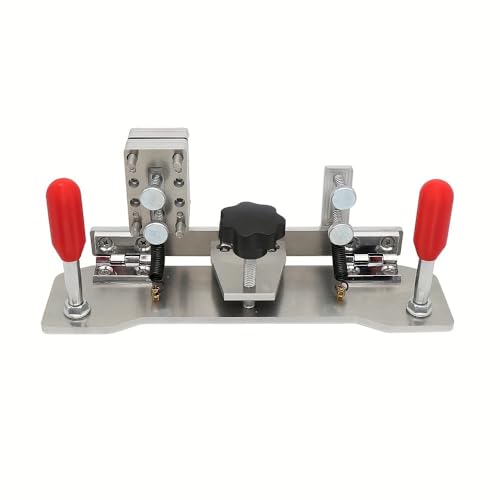
This belt grinder knife jig combines a durable aluminum base with adjustable clamps and precise guides for stable blade angles. The design incorporates two red-handled quick-release clamps that secure knives firmly, along with a center adjustment knob to set the angle. The jig is built to withstand regular sharpening tasks on belt sanders, maintaining blade alignment throughout the process and enabling repeatable bevels for consistent results.
Considerations: the clamp system facilitates fast setup, but blade thickness and width should be matched to the jig’s clamping range. The combination of clamps and a precision knob helps maintain accuracy during repeated sharpening cycles.
ONECHOI Belt Grinder Knife Jig

This adjustable locator jig suits belt grinders with a design featuring 44 tapped mounting holes and six extra bolts to affix knives at varied heights. The dial-based protractor plate ranges from -5° to 25°, enabling precise angle control. A lock knob and a robust turnbuckle ensure minimal movement during sharpening, and dual plates support secure clamping for blades up to 11 mm thick. The combination supports versatile knife sharpening workflows with repeatable bevels.
Considerations: this jig emphasizes high adjustability and secure clamping for thicker blades. Users should confirm blade length compatibility and ensure their belt sander’s table height works with the jig’s dimensions for optimal results.
Buying Guide: Key Purchase Considerations
Blade width and length: Match the jig to the blades you sharpen most often. Some jigs support long blades or thicker stock, while others are optimized for shorter or narrower blades. Consider whether you need two-blade simultaneous sharpening or single-blade focus.
Angle range and accuracy: Look for a jig with a clearly labeled, adjustable angle range and a locking mechanism to prevent drift during honing. A protractor plate or calibrated scale enhances precision for consistent bevels.
Clamp quality and compatibility: Stable clamps reduce blade movement while sharpening. Ensure the jig provides secure clamping for the blade width and thickness you work with and fits your belt sander or planer setup.
Materials and durability: Aluminum jigs are common for light to medium-duty work and offer good durability with low weight. Heavier builds may provide extra rigidity for frequent, long sessions.
Ease of use: Quick-release clamps, clear alignment references, and simple setup steps reduce the learning curve. Consider whether you prefer a long jig for large blades or a compact model for small tools.
Included accessories: Some jigs come with additional belts, screws, hex keys, and angle guides. Evaluate how these extras align with your existing tools and future sharpening tasks.
Maintenance and compatibility: Confirm that the jig remains compatible with your sander, planer, or grinder. Look for corrosion-resistant surfaces and easy-to-clean design to maintain accuracy over time.
Value and redundancy: If you sharpen several blade types, a kit offering multiple guides or belts may provide better long-term value than a single-purpose jig.
These selections emphasize reliable construction, adjustable angles, and secure blade holding to deliver consistent bevels on a range of knives and planer blades. When paired with a suitable belt sander or grinder, they support repeatable results while reducing setup time and blade waste.