Best Ladders for Uneven Ground: Stable Solutions for Every Job
When working on uneven ground, choose ladders and leveling accessories designed to adapt to slopes and stairs. This guide highlights five top options that help maintain stability, reduce slips, and improve safety on stairs, rooftops, and outdoor terrain. Ideal buyers include DIY homeowners, professional contractors tackling stairwells or sloped surfaces, and anyone needing a reliable setup for outdoor projects.
Quick comparison table
| Product | Best For | Notes | ||
|---|---|---|---|---|
| LANBITOU Ladder | Multi-position A-frame ladder | Versatile work at stairs and uneven ground | Includes portable, foldable design | |
| Little Giant Velocity | Folding multi-position ladder | Pro-level versatility for varied jobs | Best for frequent, dynamic tasks | |
| VEVOR Ladder Leveler | Stabilizer/leveling tool | Precise leveling on diverse surfaces | 380-lb capacity, supports multiple surfaces | PP material; robust on slopes |
| TOUGHER Ladder Leveler | Leveler for ladders | All-surface stability, easy use | Solid alloy steel, 500 lb capacity | Removable ladder feet for flexibility |
| Levelok Levelers | Permanent mount ladder levelers | Long-term stabilization on uneven surfaces | Locking system, up to 10″ adjustments | Requires installation on ladders |
LANBITOU Ladder, 14 FT Anti-Slip Multi-Position

Best for: Homeowners and DIYers needing a single ladder that adapts to stairs, rooftops, and uneven ground. This ladder converts quickly into extended A-frame, stair, or tall configurations, saving space and time on projects with limited storage.
Why selected: The reinforced and thickened aluminum (2mm) enhances security without sacrificing portability. Its balance upgrade with two anti-slip bars and a sloped mesh grip improves stability on uneven surfaces, making it a reliable choice for varied indoor and outdoor tasks.
Caution: Heavier than lighter models due to thicker tubing; plan for transport if you frequently move it between jobsites.
Little Giant Ladders Velocity 17-Ft

Best for: Pros and serious DIYers who need maximum versatility in a single ladder. The Velocity line blends A-frame, extension, and stair configurations with quick changes for dynamic job sites.
Why selected: It’s the original multi-position ladder, renowned for adaptability and rugged performance. The ratcheting leg levelers provide over 7 inches of leveling power, which is especially helpful on uneven or outdoor terrain.
Caution: This ladder is designed for heavy-duty use; ensure correct setup on soft or unstable ground to avoid sinking screws or feet into soft surfaces.
VEVOR Ladder Leveler

Best for: Users needing precise slope accommodation on ladders that span roofs, steps, and uneven ground. Its 380-pound capacity supports steady work on most commercial and residential tasks.
Why selected: The leveler handles gentle to moderate slopes and features high-strength PP materials with anti-slip feet, delivering stable performance across surfaces.
Caution: As a leveling tool, it should be paired with a compatible ladder and properly secured to prevent movement while in use.
TOUGHER Ladder Leveler Pair

Best for: Users needing a robust, compatible option that works with most ladders up to 32 feet. The dual-piece set provides reliable stabilization on stairs and uneven ground.
Why selected: Made from alloy steel with full-threaded poles for stronger locking; high friction and a safe weight rating up to 500 lbs per piece, offering durable performance on challenging surfaces.
Caution: The combined weight of both levelers adds bulk; verify ladder fit and height when planning transport and storage.
Levelok Permanent Mount Levelers
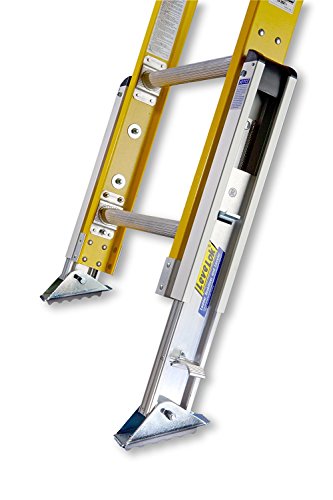
Best for: Users seeking a long-term stabilization solution on ladders that will stay mounted. Ideal for frequent use in fixed work environments like paint projects or building maintenance.
Why selected: These permanent mount levelers offer a locking system and automatic backup safety lock, adjustable up to 10 inches, providing steady support on uneven stairs or surfaces.
Caution: Requires installation on compatible ladders; not a temporary add-on for all ladder types.
Buying Guide: Choices For Uneven Ground
What should you consider when choosing ladder solutions for uneven surfaces?
- Terrain type: Slopes, stairs, and rooftops demand different levelers or multi-position ladders with strong stability features.
- Weight capacity: Look for load ratings that exceed your task load, including any tools you plan to carry.
- Mounting and portability: Permanent levelers offer stability but require installation, while portable levelers add flexibility on the go.
- Materials and durability: Aluminum ladders are light and strong, while steel levelers provide extra durability for demanding jobs.
- Stability features: Anti-slip bars, wide feet, ribbed grips, and locking mechanisms all contribute to safer setups.
- Compatibility: Ensure the product matches your ladder type (A-frame, extension, or combination ladders) and length.
- Storage and transport: Consider the ladder’s footprint when folded and how easily it fits in a garage or truck bed.
Frequently Asked Questions
- What makes a ladder suitable for uneven ground?
Answer: Ladders with leveling mechanisms, anti-slip feet, and adjustable legs provide stability on slopes or stairs. - Are ladder levelers universal for all ladders?
Answer: Some levelers are universal; others are designed for specific ladder types and lengths. Check compatibility before purchase. - Should I use multiple levelers on one ladder?
Answer: For long or uneven setups, multiple levelers can improve stability, but ensure the ladder remains safe and within weight limits. - What is the best option for stairs?
Answer: Stair ladders or ladder levelers with a triangle design and locking features offer better balance on steps. - Can I install permanent levelers myself?
Answer: Yes, Levelok-style products require installation, while others are portable and do not require tools. - How do I store a leveling ladder setup?
Answer: Fold and secure all components, store in a dry area, and avoid exposure to extreme temperatures to preserve hardware.