Best Laser Alignment Tool for Precise Setup and Quick Projects
Finding the right laser alignment tool can streamline tasks from home improvement to professional installations. This guide highlights five top options, comparing beam brightness, self-leveling range, portability, and durability. Each product below is designed to help you achieve accurate lines, plumb points, and square layouts with minimal effort.
| Product | Brand | Key Strength | Notable Benefit |
|---|---|---|---|
| Alignace Upgraded Self-Leveling Red Line Laser Level | Alignace | 360° lines, self-leveling | Clear horizontal and vertical intersection for precise layouts |
| PREXISO 2-in-1 Laser Level | Prexiso | 12 inch ruler and 100 ft alignment point | Magnetic leveling line for quick checks |
| Bosch GPL100-30G Green-Beam Self-Leveling | Bosch | Green-beam visibility, multipoint alignment | Long battery life with VISIMAX technology |
| Huepar 3D Green Beam Self-Leveling Laser Level GF360G | Huepar | 3 x 360° lines, strong battery | Smart pendulum with manual mode and USB charging |
| Klein Tools 93PTL Magnetic Pocket Laser Level | Klein Tools | Pocket, 360° wall attachment | Fine-tuned precision with adjustable knobs |
Alignace Upgraded Self-Leveling Red Line Laser Level

The Alignace laser level features a high-visibility red laser beam with a 360° layout capability, enabling workers to project both horizontal and vertical lines for tiling, carpentry, and hanging tasks. It supports self-leveling and manual modes to adapt to different job-site conditions, ensuring precise alignment even when surfaces are not perfectly level. The tool’s portable design includes a compact body with durable construction and an emphasis on outdoor visibility through pulse mode for brighter beams in challenging lighting.
PREXISO 2-in-1 Laser Level with Spirit Level

The PREXISO 2-in-1 model combines a 12-inch spirit level with a bright laser line, offering a 100-foot alignment point and a 30-foot leveling line. It includes magnets to help align with metal surfaces and a V-shaped groove for pipe measurements. The device prioritizes quick, accurate leveling with a lightweight aluminum frame and multiple bubble vials for horizontal, vertical, and angular applications. This makes it particularly useful for quick on-site checks and picture hanging scenarios where a traditional level alone falls short.
BOSCH GPL100-30G Green-Beam Self-Leveling Laser

Bosch brings green-beam visibility to the forefront, with a three-point projection system that transfers and aligns level, plumb, 90-degree, and grade points. Built-in VISIMAX technology helps optimize battery life, while the green laser offers up to four times the brightness of standard red beams. This model is designed for longer battery life and consistent line visibility in bright environments, making it suitable for both professional trades and DIY projects that demand dependable performance.
Klein Tools 93PTL Magnetic Pocket Laser Level

Klein Tools offers a compact pocket laser level with a powerful red line capable of projecting a line up to 30 feet. The 360-degree wall attachment allows lines to be projected around corners and along multiple axes, improving versatility for hanging, alignment, and layout tasks. Fine-tuned precision comes from horizontal and vertical adjustment knobs, enabling small corrections without repositioning the unit. Its pocket form factor makes it easy to carry on small jobs or in tight spaces.
Huepar 3D Green Beam Self-Leveling Laser Level GF360G
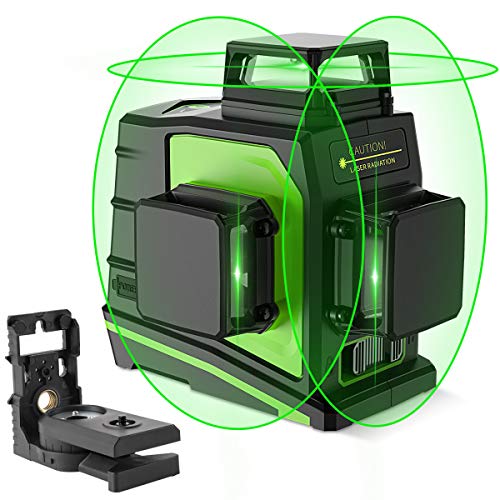
The Huepar GF360G provides three 360-degree laser planes—one horizontal and two vertical—allowing comprehensive layout coverage across floors, walls, and ceilings. The device includes a smart pendulum for automatic self-leveling and a manual mode to lock lines when needed. A USB charging option and a durable battery offer extended run time, supporting longer projects. The product is designed for professionals who require robust, all-around alignment capabilities in diverse environments.
Buying Guide: Key Purchase Considerations For Laser Alignment Tools
- Beam visibility and color: Green beams tend to be more visible in bright conditions than red beams. Consider a model with a 360° reach for full-room layouts or a cross-line system for precise corners.
- Self-leveling range and accuracy: Look for self-leveling within a few degrees (±1–4°) for rapid setup, and check the stated accuracy (in degrees or inches per 100 feet) to ensure it meets project tolerances.
- Line modes and projectors: Decide between 1-line (single axis), 2-line (cross lines), or 3D/360° configurations. For tiling, cabinetry, or hanging, multi-line systems reduce repositioning time.
- Durability and portability: Job-site conditions vary; models with robust housings and rubberized grips are beneficial. Portable units with magnetic bases or pockets increase on-site convenience.
- Power options and battery life: Evaluate battery type, recharging options, and runtime. USB charging and replaceable batteries add flexibility for long jobs.
- Accessories and compatibility: Cases, magnetic mounts, wall brackets, and targets improve usability. Consider whether the tool integrates with common tripods or mounting systems.
- Brightness outdoors: If projects occur outside or in bright interiors, select models with stronger beams or pulse modes to maintain visibility.
- Ease of use: Simple interfaces, clear indicators, and intuitive mode switching help reduce setup time and errors on the job.
In practice, choosing between these options depends on your typical tasks. For layout-heavy projects like tiling, carpentry, or picture hanging, models offering 360° coverage and strong vertical and horizontal alignment lines—such as the Alignace and Huepar options—provide substantial versatility. For specialized alignment on mechanical systems or belts, a high-precision tool like the Johnson Sheave Laser or a compact Klein pocket laser level can be advantageous. Battery efficiency and beam visibility should guide your choice for consistent performance across environments.
Cross-check product manuals and user reviews to understand setup nuances, calibration needs, and long-term reliability. When possible, test a model in a typical work area to verify line clarity, level accuracy, and overall handling before committing to a purchase.