Best Laser Level Tripod of 2025 for Precise, Efficient Measuring
Finding the right laser level tripod can improve accuracy for everything from tile work to cabinetry alignment. The following 5 products are designed for stability, durability, and easy setup in diverse environments. Each option supports standard mounting patterns and offers features like self-leveling, extendable height, and clear visibility in bright conditions. Use this guide to compare capabilities and choose a tripod that fits your professional or DIY needs.
| Product | Brand | Key Feature |
|---|---|---|
| BOSCH BT 150 Compact Tripod | BOSCH | Extendable height from 22″ to 61″ |
| Alloyman 4×360° Self Leveling Laser Level | Alloyman | 360° horizontal and vertical lines with long range |
| CIGMAN 3D Laser Level with Tripod | CIGMAN | Remote control and versatile mounting options |
| Huepar LP36A Laser Pole with Tripod | Huepar | Adjustable telescoping height and 1/4″-20 to 5/8″-11 adapters |
| Motovera Laser Level with Tripod | Motovera | 100 ft range with IP54 protection and multiple brightness modes |
BOSCH BT 150 Compact Tripod
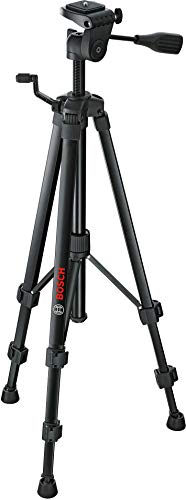
The BOSCH BT 150 offers adjustable height from 22 inches to 61 inches, enabling use with line lasers, point lasers, and laser distance measures across different working heights. Its base is designed to swivel and tighten for steadier measurements, reducing wobble during setup. The tripod is compact and lightweight, with collapsible legs that streamline storage and transport, making it suitable for on-site adjustments and quick deployments.
Alloyman 4×360° Self Leveling Laser Level

This laser level tripod provides a 360°×4-line laser beam configuration with Class II accuracy, delivering vertical and horizontal precision of approximately ±1 mm per 5 meters. It offers an extended operating range up to 150 feet, enabling remote operations. Auto-leveling is complemented by a manual mode for tilted surfaces, and the unit emits a visual/ audible alert if out-of-level, improving workflow reliability in both professional and DIY contexts.
CIGMAN 3D Laser Level with Tripod

This model features a 1×360° horizontal line and 2×360° vertical lines with a height-adjustable tripod that extends up to 47 inches and supports up to 22 lbs. The swivel head provides 360° horizontal rotation and 210° vertical tilt, with a 90° incline for precise alignment. A remote control enables hands-free adjustments, while a standard 1/4-inch thread mount and included L-bracket and rotary base offer flexible mounting for cabinets, ceilings, and tiling projects.
Huepar LP36A Laser Pole with Tripod

The Huepar LP36A provides an adjustable telescoping pole with a maximum reach of 12.14 feet (3.7 m) when fully assembled. It includes four telescopic sections and a 5/8″-11 and 1/4″-20 mounting adapter, enabling compatibility with most line and rotary lasers. A height fine-tuning knob offers precise adjustments within just a few inches, and a built-in bubble level on the head helps ensure accurate placement on varied surfaces.
Motovera Laser Level with Tripod

The Motovera system projects a 100-foot green cross-line with self-leveling and rotary modes. It includes four brightness levels for adaptable visibility and a 4.5V battery configuration that supports all-day use in varying conditions. The device is IP54-rated for dust and water resistance, making it suitable for challenging indoor and outdoor environments. A compact tripod with a quick-release mechanism facilitates rapid setup and teardown.
Buying Guide: Key Considerations For Selecting A Laser Level Tripod
- Tripod height and stability: Choose models with extended height ranges and robust legs to accommodate varied ceiling heights and uneven floors. A wide base and sturdy materials reduce wobble.
- Mounting compatibility: Verify thread standards (1/4″-20 and 5/8″-11) and the availability of adapters or mounting brackets to fit your laser tool type (line lasers, rotary lasers, cross-line lasers).
- Self-leveling vs manual modes: Self-leveling is ideal for frequent projects; manual mode offers flexibility for tilted surfaces or unconventional angles.
- Visibility and range: For larger rooms or outdoor work, prioritize models with high visibility lines and longer operating ranges (e.g., 100–150 feet) plus battery performance considerations.
- Portability and storage: If you need frequent transport, look for lightweight, collapsible tripods with carrying bags and quick-release plates.
- Durability and weather resistance: IP ratings (like IP54) and rugged construction extend tool life in dusty or damp environments.
- Additional features: Bubble levels, swivel heads, rotation capabilities, and included remote controls can streamline workflow and improve precision.
- Value for money: Compare build quality, compatibility, and included accessories to determine which option offers the best long-term return for your project types.