Best Latex Additive for Grout: Top Options for Durable, Stain-Resistant Grout
In search of the best latex additive for grout, you want a product that improves flexibility, adhesion, and stain resistance without complicating your mix. This guide highlights five strong options suitable for different substrates and climates. Each pick is explained for who it’s best for, plus practical considerations to help you decide. The table below summarizes key choices to compare at a glance.
| Product | Best For | Key Benefit |
|---|---|---|
| Miracle Sealants Grout Shield | Pro projects and DIYers wanting sealer-ready grout | Sealer additive for color and consistency, water replacement |
| Tenon Mighty Bond | Concrete, mortar, and grout mixes requiring strength | High-strength adhesion and versatility |
| Acrylic Grout Additive (TEC) | Exterior grout with freeze-thaw resistance | Low-VOC, outdoor durability |
| Grout-Guard Mold & Mildew Defense | Bathrooms and kitchens prone to moisture | Non-toxic defense against mold and mildew |
| STONETECH GroutUp Additive | Quick seal-and-defend in one step | Fluoro-sealer technology for stain protection |
Miracle Sealants Grout Shield Professional Grade Grout Additive

Best for: DIYers and professionals who want a grout that resists staining and offers improved color consistency. This additive mixes with both sanded and non-sanded cement grout and can replace water to enhance sealer protection. It streamlines applications by potentially saving time and money. Cautions: exact usage varies with grout type and amount, so follow product directions carefully.
Tenon Mighty Bond

Best for: Repairs and mixes where extra strength and adhesion are needed. This additive is designed to be mixed into cement, grout, mortar, and patches to boost structural integrity. Cautions: it is intended to be added to mixes rather than used alone, and the reported psi improvement is a guide rather than a guaranteed value.
Acrylic Grout Additive by TEC
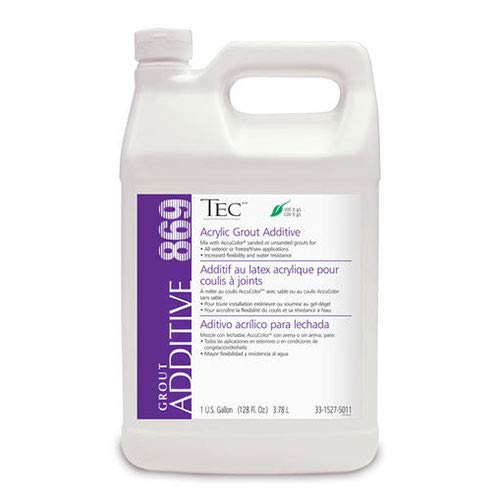
Best for: Exterior grout in freeze-thaw environments. This additive is formulated to improve durability under temperature cycling. Cautions: verify compatibility with your grout type and ensure proper ventilation due to outdoor use considerations. It’s especially suited for areas exposed to the elements.
Grout-Guard Mold & Mildew Defense

Best for: Bathrooms, kitchens, and other moisture-prone rooms. This non-toxic additive helps protect grout during mixing and inhibits mold and mildew growth. Cautions: effectiveness can vary with humidity levels and ventilation; rely on proper cleaning routines alongside the additive for best results.
STONETECH GroutUp Additive 27 oz.

Best for: Quick, all-in-one grout protection with advanced fluorinated sealer technology. This additive is positioned as a time-saving solution to grout, seal, and defend in one step. Cautions: ensure you understand the one-step process and any required curing times for your specific grout and surface.
Buying Guide: Key Purchase Considerations
- Project type: Choose an additive tailored to indoor vs outdoor use. Exterior-grade formulations with freeze-thaw resistance can prevent cracking and color loss.
- Grout type: Some products are best with sanded grout, others with non-sanded. Confirm compatibility with your chosen grout.
- Sealer integration: If you want sealer protection integrated into the grout, look for a product marketed as a grout sealer additive.
- Health and environment: Low-VOC or non-toxic options are preferable for homes with kids or pets.
- Application and curing: Note whether the additive must be mixed with water, mixed into grout, or applied as a separate step after grouting. Follow the manufacturer’s curing times to avoid early washing or staining.
- Maintenance impact: Some products claim to reduce cleaning frequency or improve stain resistance—evaluate whether these claims align with your cleaning routine.
FAQ
- What does a latex grout additive do?
Latex additives improve flexibility, adhesion, and water resistance, helping grout resist cracking and stains in typical indoor and outdoor settings.
- Can I use multiple additives in one job?
Generally, use one additive per grout mix as directed by the manufacturer to avoid conflicting chemistry.
- Are latex additives safe for families and pets?
Many modern formulations are low-VOC or non-toxic, but always check the product label for safety information and ventilation guidelines during application.
- Should I seal grout that already contains an additive?
Some products integrate sealing properties; if not, use a separate grout sealer after the grout cures, following the product’s instructions.
- Is outdoor grout more vulnerable to needing additives?
Yes, outdoor grout faces moisture and temperature cycling; select additives designed for exterior use to extend grout life.
- How do I choose the right additive for my project?
Assess substrate, climate, grout type, indoor vs outdoor, and whether you want sealing properties included in the mixture.