Best Masonry Paint for Basement Walls That Withstands Moisture
The goal is clear: find masonry paint that protects basement walls from moisture while delivering a durable, attractive finish. This guide highlights five top options designed for interior and exterior basement surfaces, including concrete, blocks, stucco, and brick. Each pick suits different basements needs—whether you need fast-drying, alkali resistance, or direct-to-damp-wall application. Use the quick reference table below to compare core traits and suitability at a glance.
| Product | |||
|---|---|---|---|
| KILZ Basement and Masonry Waterproofing Paint | Waterproofing paint | Above/below-grade basement walls needing a water barrier | Do not use on active leaks |
| INSL-X WaterBlock Acrylic Masonry Paint | Waterproofer paint | Vertical concrete walls, basements, foundations | Fast-drying, high alkali resistance |
| KILZ Self-Priming Masonry, Stucco and Brick | Self-priming acrylic latex | Various masonry surfaces with good adhesion | Flat finish; alkali resistant to pH 12 |
| Zinsser Damp Wall Primer | Direct-to-damp wall primer | Damp basements, must-stop leaks at source | Priming step for damp surfaces |
| Zinsser WaterTite LX Ultra | Waterproofing paint | Masonry surfaces prone to dampness and mold | Includes mold/mildew resistance guarantees |
Below are five product deep-dives to help you pick the best fit for your basement project. Each profile notes who it’s best for, why it stands out, and a potential limitation to consider.
KILZ Basement and Masonry Waterproofing Paint
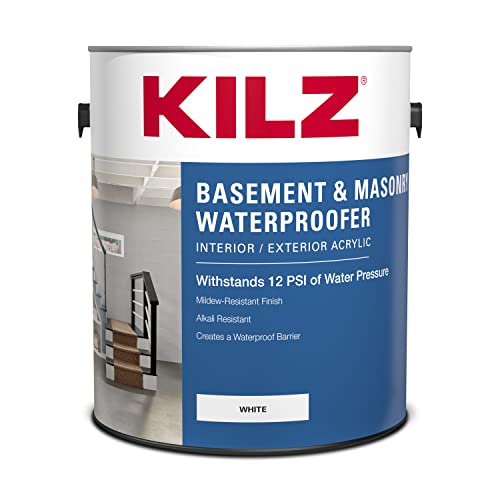
- Best for: Basements needing a water barrier on concrete, masonry, stucco, or brick.
- Why selected: This premium interior/exterior paint uses nanotechnology to form a barrier that helps stop water infiltration and provides an alkali-resistant coating for durability and decoration.
- Application note: Ready for above and below-grade walls; don’t apply on floors or where active leaks exist. Use a 1/2″–3/4″ nap roller or spray with a high PSI setup.
- Limitation: Not suitable for actively leaking surfaces; surface prep is essential for best results.
INSL-X WaterBlock Acrylic Masonry Waterproofer
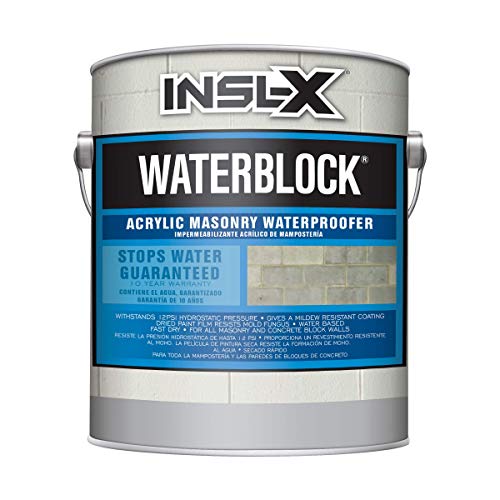
- Best for: Vertical concrete walls needing fast-drying protection, inside or outside.
- Why selected: WaterBlock offers a water-based formula with high alkali resistance (up to pH 13), making it suitable for basements and foundations.
- Application note: Suitable for basement walls, cinder blocks, stucco, brick, and other masonry surfaces.
- Limitation: As a water-based coating, proper curing conditions affect performance; avoid applying in extreme temperatures.
KILZ Self-Priming Masonry, Stucco and Brick Paint (White)

- Best for: Mixed masonry surfaces needing good hiding, adhesion, and water repellency.
- Why selected: This acrylic latex water-base paint is self-priming and works on smooth, rough, or textured masonry, drywall, stucco, and brick; alkali resistant up to pH 12.
- Application note: Roll, brush, or spray; easy cleanup with soap and water.
- Limitation: Flat finish may show surface imperfections more than satin or eggshell finishes; choose accordingly.
KILZ Self-Priming Masonry (Gray) Paint

- Best for: Basements and other masonry surfaces needing quick coverage with a durable finish.
- Why selected: Similar benefits to the white variant with a neutral gray tone; strong adhesion and water repellency.
- Application note: Suitable for rolled, brushed, or sprayed application; easy cleanup with soap and water.
- Limitation: Gray tone might affect final appearance if you seek a bright white finish; color choice matters for final look.
Zinsser Damp Wall Primer

- Best for: Direct-to-damp concrete walls where moisture is present or likely to recur.
- Why selected: This primer bonds to interior or exterior concrete, masonry, and cast-in-place surfaces, helping stop moisture issues at the source.
- Application note: Pairs well with subsequent waterproofing topcoats for enhanced protection.
- Limitation: Priming alone does not replace a dedicated waterproofing paint on highly damp surfaces; prepare to add a topcoat.
Zinsser WaterTite LX Ultra

- Best for: Basements and other masonry prone to dampness and mold; long-term waterproofing.
- Why selected: Provides a dedicated waterproofing paint with mold and mildew resistance backed by guarantees and large coverage potential.
- Application note: Use where hydrostatic pressure or persistent dampness is a concern; ensure surface is compatible with coating.
- Limitation: Higher-viscosity formulation may require precise surface preparation and equipment setup for optimal results.
Buying Guide
Key considerations for choosing the right masonry paint for basement walls include moisture conditions, surface type, and the level of waterproofing required. Below are practical questions and guidance to help decide.
What kind of basement moisture are you addressing?
For active leaks or high hydrostatic pressure, prioritize paints designed for waterproofing or damp-blocking performance, such as waterproofing paints or damp-wall primers. For minor dampness or well-sealed walls, standard masonry paints with alkali resistance may suffice.
Are you painting above-grade, below-grade, or both?
Basement walls often span both zones. Look for products formulated to withstand exterior conditions if walls run outdoors, and interior products designed for indoor environments if walls stay inside the living space.
Do you need direct-to-wall priming?
Self-priming masonry paints simplify application and save time on surface preparation. When dampness is a concern, combine a damp-wall primer with a compatible topcoat for best results.
Finish preference and appearance
Flat finishes hide imperfections but may be less durable in damp conditions. If moisture exposure is a concern, select paints offering water repellency and consider higher-sheen finishes only when compatible with the substrate.
Application methods and long-term maintenance
Check whether the product supports brushing, rolling, or spraying. Some high-coverage options are better for larger basements, while others provide easier cleanup and lower odor.
Installation cautions
Always prep surfaces according to the manufacturer’s directions, ensure proper curing conditions, and avoid applying on surfaces with active leaks unless the product is specifically designed for that condition.
Summary of selected products
Use the table above to compare best-use cases, then match to your basement’s moisture profile, substrate, and finishing preferences. The five featured products provide a spectrum from damp-wall primers to direct waterproofing paints to help you choose with confidence.
FAQ
- What is the difference between waterproofing paint and damp-blocking primer? Water-blocking paints form a barrier to stop water intrusion; damp-blocking primers prepare damp surfaces for topcoats and improve adhesion.
- Can I use these products on concrete floors? No. Most are intended for walls only; use floor-specific products for concrete flooring.
- Do these paints require any special tools? Many are suitable for rollers, brushes, or sprayers; follow the tip size and coverage guidance in the product data.
- Will painting stop mold growth? Some paints claim mold and mildew resistance but do not replace proper moisture control. Address water sources and ventilation for durable results.
- How long does curing take? Curing times vary by product and environmental conditions; always refer to the manufacturer’s guidelines for recoat windows and full cure times.