Best Concrete Mold Materials for Easy Release and Durable Castings
Choosing the right material for concrete molds affects release ease, surface finish, and long-term reuse. This guide surveys top products used by DIYers and professionals to achieve cleaner demolds, sharper details, and durable form life. The selection focuses on form release agents, silicone and rubber mold kits, and robust reusable molds designed for concrete, plaster, and similar mixes.
| Product | Primary Use | Notable Feature |
|---|---|---|
| Akona Concrete Form Release | Form release agent for various forms | Non-staining, white-release for easy application |
| BBDINO Silicone Mold Making Kit | Silicone rubber for mold making | 1A:1B by volume with easy mixing and low viscosity |
| Skelang Hexagon Pavement Mold | Reusable concrete path/gravel mold | ABS, durable, easy demold |
| Stone Master Molds Panel Veneer Stone Rubber Mold | Stone veneer panels for concrete or plaster | No release agent necessary, durable recycled material |
| Stone Master Molds Chiseled Edge Countertop Edge Form Liner | Countertop edge form liner | Thick, self-supporting, reusable, no silicone required |
Below, five concrete mold products are explored in detail to help you compare materials, construction, and practicality for different projects—from small art pieces to full countertops.
Akona Release Agent For Forms

Akona Concrete Form Release is a versatile solution designed to release concrete from plywood, fiberglass, aluminum, steel, urethane, and other forming materials. The formula goes on white, allowing for precise application and visible coverage, and it leaves no residue behind. It requires no mixing or preparation—users simply spray or pour and proceed. This product is ideal for mixed-media projects where clean demolds and easy release are required across various form types.
BBDINO Silicone Mold Making Kit
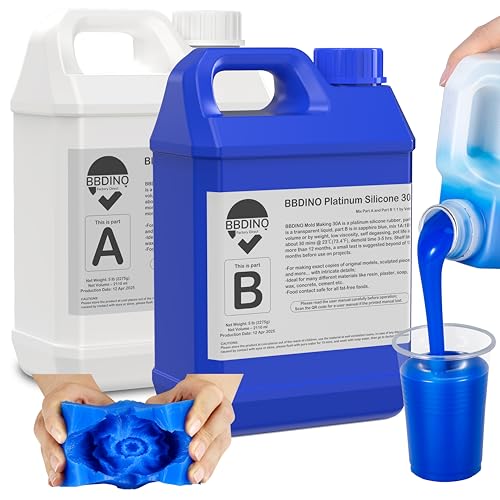
The BBDINO kit provides a 1A:1B by volume silicone system in a gallon sized package, suitable for mold making of resins, soap, wax, and concrete. It features self-degassing properties, low viscosity for easy mixing, and straightforward demolding. The working time is roughly 30 minutes with cure times of 3–4 hours at room temperature, making it a practical option for multi-part molds and detailed reproductions. The kit emphasizes a simple, no-weighing workflow for beginners and seasoned users alike.
Skelang Hexagon Pavement Mold

The Skelang Hexagon Pavement Mold is crafted from ABS material for durability and reuse. Measuring 11.4 by 11 inches with a height of 1.7 inches, this mold is designed to create decorative concrete paths and walkways. It’s praised for easy application with cement, simple shaping, and quick demolding, making it suitable for garden paths, patios, and other DIY hardscape projects where consistent texture is desired.
Stone Master Molds Panel Veneer Stone Rubber Mold

This professional grade rubber mold reproduces natural stone details for easy, stacked veneer panels. Made in the USA from recycled plastisol rubber, it avoids the need for release agents and supports hundreds of pours. The mold is designed to deliver realistic texture while facilitating clean color pigment release, reducing cleanup time and material waste. It’s a solid option for project-scale veneer installations on concrete or plaster surfaces.
Stone Master Molds Chiseled Edge Countertop Edge Form Liner

This chiseled edge form liner is 10 feet long, 2.5 inches wide, and 2 inches thick, designed to fasten directly to the substrate. It is self-supporting and thicker than many form liners, reducing the need for silicone in curing. No release agent is necessary, which can streamline workflows for countertop production. Reusability and robust construction help deliver long-term cost savings for frequent countertop projects.
RimCereal Edge Form Liner (If applicable)

Note: The RimCereal edge form liner listed in the catalog matches a robust set of options for edging and profiles. The provided details emphasize versatility and reusability, offering a concrete countertop or edging solution that pairs with various substrate types. This option is suitable when a distinct edge profile is desired for finishing touches on concrete surfaces.
Buying Guide: Key Considerations For Concrete Mold Materials
When selecting materials for concrete molds, consider the following perspectives to ensure you meet project goals and budget constraints.
- Project Type and Scale: For countertops, large edge liners or thick urethane/rubber molds provide durability and repeatable results. For decorative panels or pathways, rubber or ABS molds with intricate textures offer better fidelity.
- Release Mechanisms: Choose from stand-alone release agents, silicone molds that reduce sticking, or release-free molds to speed up production and cleanup. Consider whether you need a universal agent for multiple form materials.
- Material Compatibility: Ensure the mold or release is compatible with your concrete mix, pigments, sealers, and curing conditions. Some products perform best with specific cement blends or moisture levels.
- Reuse And Longevity: Evaluate the expected number of uses per mold, the ease of demolding, and how abrasion or chemical exposure affects mold life. Recycled or durable rubbers often offer long-term value for frequent projects.
- Finish And Detail: For fine textures or replicating stone, choose molds that capture depth and natural variation. Silicone and high-detail rubber molds are favored for complex reproductions.
- Safety And Clean-Up: Check for non-toxic formulations and ease of cleanup. Non-staining or residue-free releases help maintain the original substrate finish.
- Storage And Handling: Some materials require UV protection, temperature control, or special storage to maintain flexibility and prevent curing between uses.
In practice, a balanced toolkit may include a versatile release agent for forms (like Akona), a flexible silicone mold kit for custom shapes (like BBDINO), durable walkway and edge molds (like Skelang and Stone Master Molds), and robust panel or countertop liners for repeatable textures. Always test a small section before full-scale production to confirm demolding ease and surface quality.