Best Mechanical Vents for Sink Installations: A Clear Guide to Air Admittance Valves
Answering the common questions about venting for sinks, mechanical vents (air admittance valves) offer a compact, code-friendly alternative to traditional vent pipes. This guide highlights top options for residential sink systems, focusing on ease of installation, durability, and performance. Best for: renters or homeowners upgrading a single sink or a small group of fixtures; contractors seeking quick, code-conscious venting solutions. Below is a summary of the five chosen products to help you compare at a glance.
| Product | Best For | Key Benefit | Limitation |
|---|---|---|---|
| Oatey Sure-Vent 1-1/2 in.–2 in. 160 DFU | Single large sink or multiple fixtures | High DFU capacity with PVC adapter | May require exact sizing for stack venting |
| Oatey 39012 1.5 in. NPT ABS In-Line Vent | Under-sink venting with durable ABS | Spring-loaded action for automatic opening/closing | Black ABS; ensure compatibility with piping color |
| Enhon 1-1/2 Inch NPT ABS In Line Vent (4 Pcs) | Multiple fixtures; value pack | Durable ABS; gravity-driven operation | ABS exposure to harsh chemicals varies by site |
| Studor 20341 Mini-Vent With PVC Adapter | Compact venting for a single fixture | Compact size; up to 160 DFU branch | Limited to smaller fixture groups |
| Nkiy Quen 4 Pcs 1-1/2 Inch ABS In Line Vent | Multiple lines; affordable bulk option | Spring-less design with ABS robustness | Quality varies with batch; check compatibility |
Oatey Sure-Vent 1-1/2 in.–2 in. 160 DFU Air Admittance Valve

Best for large or multi-fixture sinks. This Sure-Vent model includes a PVC Sch. 40 adapter and functions as an alternative to a secondary vent in a DWV system. It vents up to 160 DFU Branch or 24 DFU Stack. The valve operates by gravity to admit air when negative pressure forms and closes when pressure stabilizes. Choose this if you need a robust, higher-capacity vent for a complex sink setup.
Who it’s for: homeowners with multiple fixtures or a larger sink arrangement seeking reliable venting without extensive piping. Limitation: sizing is essential; ensure the DFU rating matches your drain system.
Oatey 39012 1.5 in. NPT ABS In-Line Vent, Black
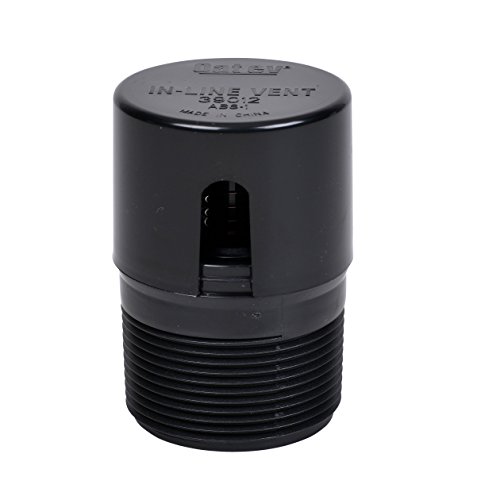
Best for under-sink installations requiring durable ABS construction. This in-line vent uses a spring-loaded mechanism to open under negative pressure and close when pressure equalizes, reducing sewer gas exposure. It’s well-suited for renovations where a visible vent stack isn’t desirable, and it helps maintain trap seals by providing a reliable air path.
Who it’s for: homes needing a compact, robust ABS vent that integrates neatly with existing pipework. Limitation: external appearance is black ABS; verify color compatibility with your plumbing scheme.
Enhon 1-1/2 Inch NPT ABS In Line Vent (4 Pcs)
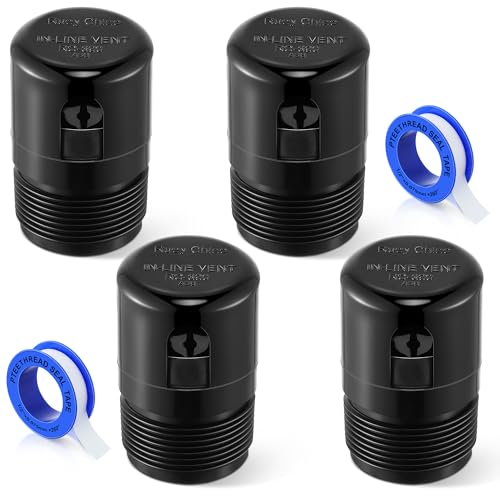
Best value option for multiple fixtures or higher kitchen/bath groups. Each unit uses ABS construction and operates by gravity to admit air when negative pressure occurs, then seals to prevent odors. This 4-pack provides flexibility for new installations or replacements across several drains.
Who it’s for: households upgrading multiple bathroom vanities, lavatories, or small appliances connected to a shared vent line. Limitation: data notes possible chemical sensitivity; ensure compatibility with your environment’s cleaners and exposure.
Studor 20341 Mini-Vent Air Admittance Valve

Best for compact installations or single fixtures. The Studor Mini-Vent with PVC adapter is designed to vent a single fixture or a small group with a capacity up to 160 DFUs on a branch. It uses gravity to close the seal and prevent odors. This option is ideal where space is at a premium and a discreet vent is needed.
Who it’s for: apartments or small kitchens where a tiny vent is essential. Limitation: not ideal for large fixtures or high-flow configurations; may require expansion for bigger drain lines.
Nkiy Quen 4 Pcs 1-1/2 Inch ABS In Line Vent

Best for bulk venting needs at an affordable price. This set comprises four ABS-based inline vents designed to prevent sewer gases and backflow odors. The springless operation relies on gravity to regulate air entry, providing a straightforward, reliable venting solution for multiple lines.
Who it’s for: families upgrading several fixtures or builders seeking a bulk purchase. Limitation: long-term chemical exposure should be assessed; ensure compatibility with household cleaners and drain treatments.
Buying Guide
What is an air admittance valve and when should you use one?
An air admittance valve (AAV) is a one-way valve that allows air to enter the drainage system when negative pressure occurs, preventing trap suction and sewer gas from escaping. Use AAVs as an alternative to traditional roof or wall vents when space, aesthetics, or existing piping makes venting challenging.
What should you consider when choosing an AAV for a sink?
- Fixture count and DFU capacity: Ensure the unit can handle the total drain fixture units on the branch and the stack.
- Material compatibility: ABS valves are robust but verify chemical resistance in your environment.
- Size and connection type: Check the NPT size (1-1/2 in vs 2 in) and PVC adapters to fit your piping.
- Vent location and accessibility: Under-sink vents should be accessible for inspection and maintenance.
- Code compliance: Some areas require specific code-compliant models; consult local plumbing codes.
Which features influence performance the most?
- Gravity-driven sealing: Ensures a quiet, reliable seal when negative pressure ends.
- DFU capacity: Higher DFU ratings support more fixtures on a branch.
- Material durability: ABS and PVC retain integrity against pressure and chemicals.
- Compact design: Especially important for under-sink or tight spaces.
When should you avoid an AAV?
- In areas with high humidity or aggressive cleaners that could affect seals.
- In systems with traps that require full venting for code compliance.
- In scenarios where a cleanability or maintenance plan is limited.
How do you install an AAV for a sink?
Follow manufacturer instructions and local codes. Typical steps include selecting the vent location, ensuring the valve is oriented correctly, sealing threaded connections, and testing the drainage system for proper air intake and odor containment after installation.
FAQ
- What is the main purpose of an air admittance valve?
To allow air into the drain system to prevent trap suction and sewer gas from entering the home. - Can AAVs replace all venting in a bathroom or kitchen?
They can replace some vents but may not be suitable for every configuration; check local codes. - Are AAVs maintenance-free?
Not entirely; inspect for cracks or wear over time and replace as needed. - Do AAVs affect odor control?
Yes—proper operation helps prevent sewer odors by maintaining trap seals. - Is there a difference between ABS and PVC AAVs?
Material affects durability and compatibility with piping; choose based on system design. - How many fixtures can a single AAV vent?
Depends on the DFU rating; refer to product specifications for exact numbers.