Best Media for Sandblasting: Top Abrasives for Metal, Glass, and Stone
Choosing the right blast media is essential for achieving clean, precise finishes across metal, glass, stone, and coated surfaces. This article highlights five high-performing aluminum oxide and glass bead options from trusted brands, focusing on hardness, longevity, and environmental considerations. The selections are suited for a variety of sandblasting cabinets, guns, and wet or dry blasting setups.
Summary of chosen products
| Product | Brand | Size | Grit / Type | Highlights |
|---|---|---|---|---|
| #80 Grit Aluminum Oxide Blast Media (8 LBS) | TITGGI | 8 LBS / 3.6 kg | #80 Aluminum Oxide | High hardness, long-lasting, eco-friendly |
| #80 Grit Aluminum Oxide Blast Media (19 LBS) | TITGGI | 19 LBS / 8.6 kg | #80 Aluminum Oxide | Premium, durable, reusable |
| Aluminum Oxide – 10 LBS – #120 | Generic | 10 LBS | #120 Grit Aluminum Oxide | Angular particles, clean & etch |
| Aluminum Oxide – 8 LBS – #80 | INTERACTIVIA | 8 LBS | #80 Grit Aluminum Oxide | Sharp, long-lasting, no silica |
| Aluminum Oxide – 12 LBS – #100 | INTERACTIVIA | 12 LBS | #100 Grit Aluminum Oxide | Long-lasting, efficient, versatile |
#80 Grit Aluminum Oxide Blast Media — TITGGI, 8 LBS
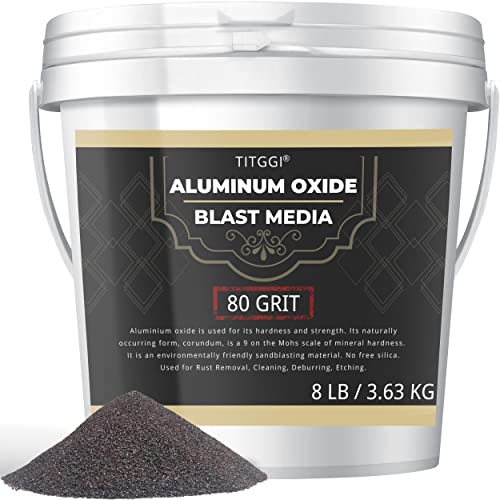
The TITGGI #80 Grit Aluminum Oxide Blast Media delivers a brown fused aluminum oxide with a Mohs hardness of 9, placing it near diamond in durability. It is designed to clean and etch a wide range of surfaces, including glass, granite, marble, ceramic, and steel, enabling fast rust removal and surface preparation. The media is promoted as long-lasting, offering a cycle life that outperforms silica-based alternatives, which translates into cost efficiency over time. It is also marketed as eco-friendly, with no free silica and 100% recycled content, suitable for dry or wet blasting applications.
Key features include high hardness and a robust cycle life, making this media a common choice for metal fabrication, automotive restoration, and workshop blasting cabinets. Users should plan for dust control and appropriate protective equipment, as harder media can be more aggressive on delicate coatings. This product is ideal for removing heavy oxidation and preparing rough surfaces for coating or painting, while providing a cleaner post-blast finish on harder substrates.
#80 Grit Aluminum Oxide Blast Media — TITGGI, 19 LBS

This larger TITGGI option uses the same high-hardness aluminum oxide formulation as the 8-pound variant, designed for extended blasting cycles and heavy-duty work. The 19-pound bag provides more media per run, reducing replenishment frequency in busy shops. The product emphasizes durability and reuse, helping to lower per-project costs. It also notes eco-friendly construction with no free silica and 100% recycled sand for metal blasting tasks, compatible with wet or dry blasting methods.
Expect strong performance when cleaning stubborn rust, scale, and heavy coatings on metal surfaces. For delicate finishes or painted substrates, operators should calibrate pressure and nozzle distance to minimize unintended etching. Like other high-hardness media, this option excels for rapid material removal and roughing surfaces ahead of finishing passes or coating application.
Aluminum Oxide – 10 LBS — #120 Grit

The Generic Aluminum Oxide media in #120 grit offers a balance between aggressiveness and surface finishing. With a Mohs hardness of 9, it can clean and etch a variety of materials while allowing more controlled abrasion compared with coarser grits. The angular particle shape enhances cutting efficiency, making it suitable for blasting cabinets and handheld blasting guns. It can be used in both wet and dry blasting applications, offering versatility for different project requirements.
On metal work, this grit can remove old coatings, rust, and scale with precision. It’s a practical choice for prepping surfaces prior to painting or powder coating, where a smoother but thorough surface is essential. Users should monitor media wear and chamber cleanliness to prevent contamination of finished surfaces, particularly when working with sensitive coatings or high-precision components.
#80 Grit Aluminum Oxide — INTERACTIVIA, 8 LBS

INTERACTIVIA’s #80 aluminum oxide media is characterized by a sharp angular grit that provides solid cutting efficiency. The hardness and refracted edges enable strong cleaning and etching on glass, metal, and other hard surfaces. The product emphasizes longevity, with a media design described as long-lasting and highly reusable, reducing waste and consumption over time. It is marketed as free of crystalline silica, contributing to a safer work environment for repeated blasting sessions.
For coatings prep on glass or metal, this media can deliver fast cleaning without excessive surface damage, making it a sensible choice for hobbyists and professional shops alike. Users should combine appropriate ventilation and PPE due to dust generation and ensure compatible equipment with the media’s hardness to prevent equipment wear.
Aluminum Oxide — 12 LBS — #100 Grit

INTERACTIVIA’s #100 grit aluminum oxide media provides a mid-range option that emphasizes longevity and efficiency. The angular grains enhance cutting action while minimizing damage to delicate edges compared to coarser grits. This media is positioned for use in metal, glass, stone, and wood preparation tasks, offering reliability across multiple blasting substrates. The product stresses no crystalline silica, aligning with safer handling practices in busy workshops.
In practical terms, the #100 grit balances material removal speed with surface finish quality. It’s well-suited for pre-coating surface prep, deburring, and finishing passes where a smooth, uniform texture is desired. Operators should track wear and residue buildup, ensuring that contaminated media does not compromise coating adhesion or cosmetic outcomes.
Buying Guide: Key Considerations For Sandblasting Media
- Material hardness and grit size: Higher hardness media (Mohs 9) remove material faster but can roughen or etch delicate surfaces. Choose grit based on substrate and finish requirements.
- Substrate compatibility: Aluminum oxide is versatile for metal, glass, ceramic, and stone. Glass beads are gentler and produce smoother finishes, ideal for preparing surfaces for painting rather than heavy material removal.
- Media longevity and cost per use: Longer-lasting media reduces replacement frequency. Factor in wheel wear, bag cost, and cabinet efficiency when evaluating value.
- Wet vs. dry blasting: Some media perform in both conditions; others are optimized for dry blasting. Wet blasting can reduce dust and improve coating adhesion on sensitive surfaces.
- Health and safety: Look for media labeled as silica-free and low-dust; always use appropriate PPE and ensure proper ventilation and filtration in blasting areas.
- Environmental impact: Recycled and post-consumer materials reduce waste. Consider media that minimizes silica exposure to protect workers and the environment.
- Equipment compatibility: Confirm nozzle size, blasting cabinet type, and compressor capacity to maximize media effectiveness and avoid equipment wear.
- Surface finish goals: Coarse grits (e.g., #80) remove material quickly; finer grits (e.g., #120, #100) yield smoother finishes and better coating adhesion.
- Storage and handling: Store media in dry, sealed containers to prevent moisture-induced clumping or corrosion of media particles.
The selections above cover a range of blasting needs—from heavy rust removal on metal parts to producing a clean, smooth base for coatings on glass and stone. When selecting media, balance removal rate with achievable surface finish, safety considerations, and economic factors to optimize results across projects.